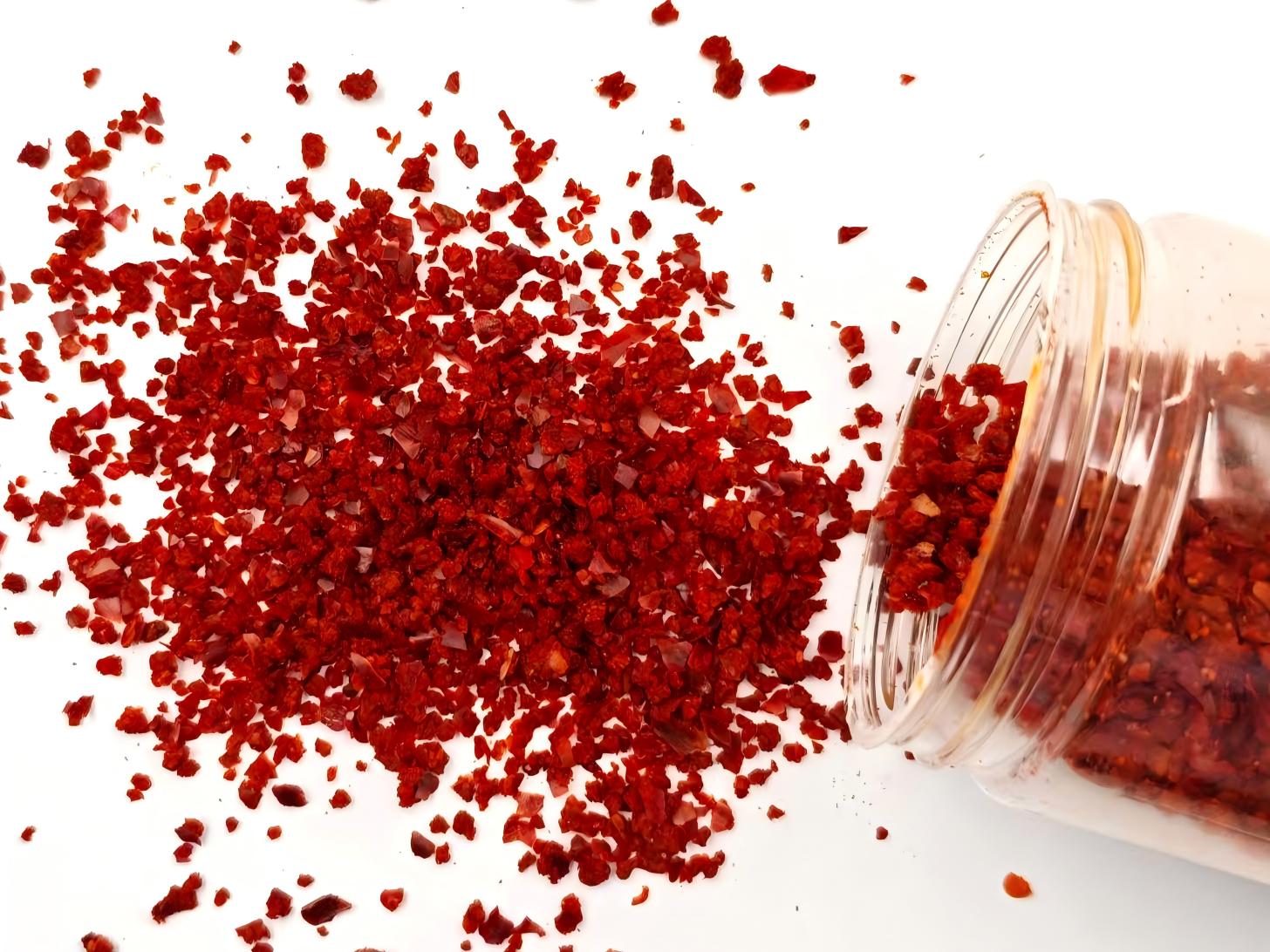
ASTA 80–100: proveedor y fabricante de copos de pimentón dulce
Copos de pimentón — Ficha técnica de la calidad estándar. Descargar
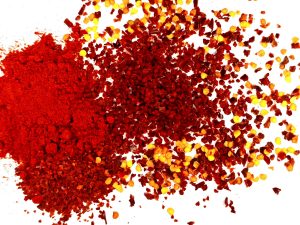
Las escamas de pimentón dulce ASTA 80–100 son un ingrediente de pimentón deshidratado de calidad económica, diseñado para la fabricación de alimentos a gran escala y la producción de condimentos. Procedentes principalmente de las principales regiones productoras de China, como Xinjiang, Gansu y Mongolia Interior, este tipo de pimentón ofrece un equilibrio entre un color rojo aceptable y una buena relación calidad-precio.
En los mercados de exportación, solemos observar que los compradores eligen este grado cuando el control de los costes de formulación es más importante que la intensidad del color. A diferencia de los grados superiores ASTA 120–200, este producto no está destinado a aplicaciones visuales de alta gama, pero ofrece un rendimiento fiable en sistemas de mezcla industriales en los que el pimentón es uno de los múltiples ingredientes que aportan color y sabor.
Muchos equipos de compras del sudeste asiático y África eligen las escamas ASTA 80-100 porque permiten una mezcla flexible con chile en polvo, sal y sistemas de condimentos a base de glutamato monosódico sin aumentar significativamente el coste de la materia prima. Sin embargo, un error habitual en la compra es utilizar este tipo de producto en recubrimientos de aperitivos muy visibles, en los que la pérdida de color se hace evidente tras la fritura o el almacenamiento.
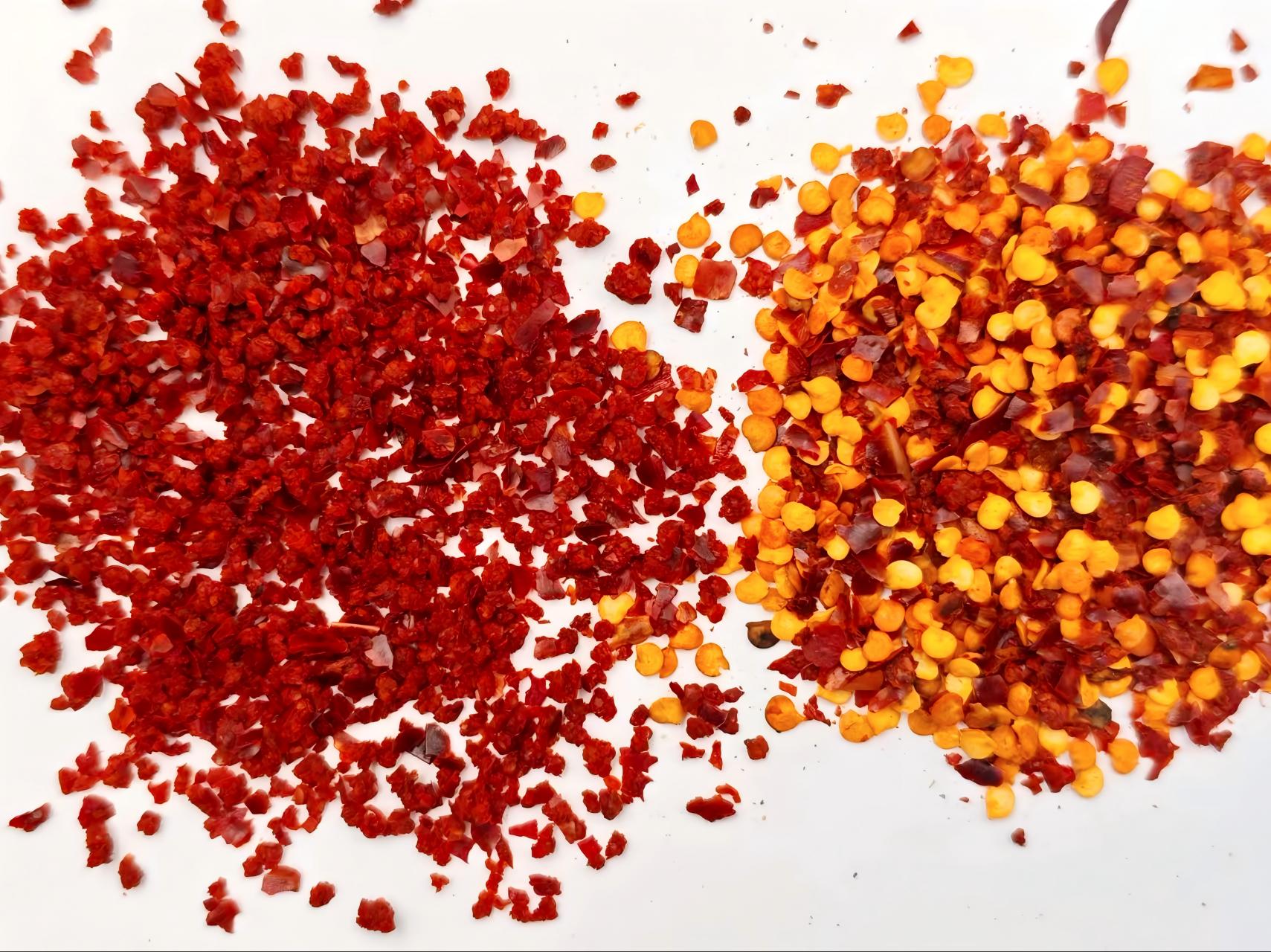
Desde el punto de vista de la fabricación, este tipo de producto se elabora utilizando escamas de distintos tamaños (3-12 mm), lo que reduce al mínimo los costes de procesamiento y permite un alto rendimiento. Es ideal para compradores que dan prioridad a la estabilidad, el suministro en grandes volúmenes y unos precios anuales predecibles, más que a una precisión cromática de alta calidad.
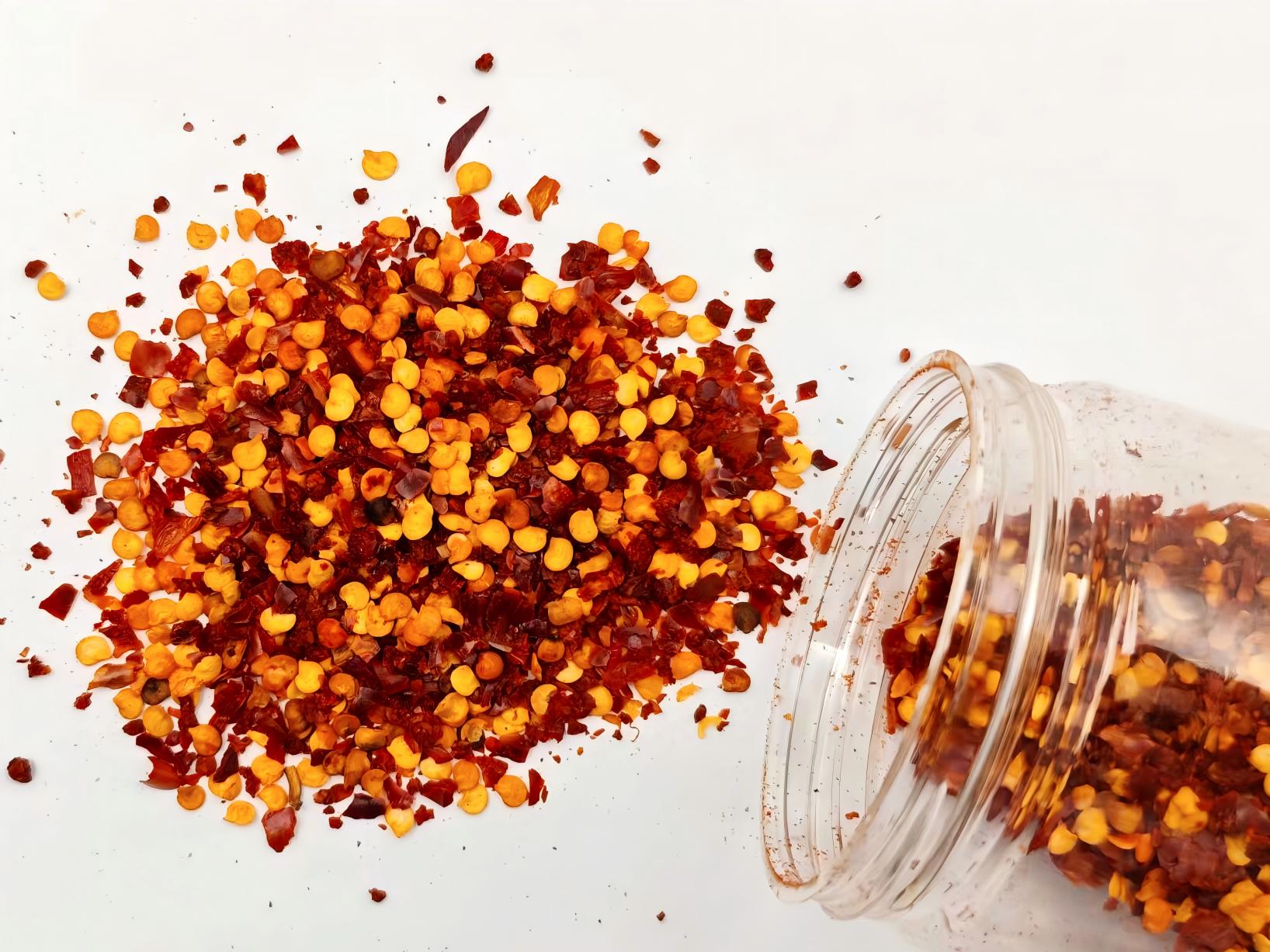
Las escamas de pimentón dulce ASTA 80–100 son escamas de pimiento rojo deshidratadas de gama básica que se utilizan en la producción alimentaria industrial. Aportan un rendimiento cromático moderado y un sabor ligeramente dulce. Los fabricantes de alimentos eligen este grado para formulaciones en las que el coste es un factor determinante, como mezclas de condimentos, fideos instantáneos y recubrimientos de aperitivos, en las que no es fundamental alcanzar la intensidad máxima de ASTA, pero sí se requiere una aportación de color estable a granel.
DESCRIPCIÓN GENERAL DEL PRODUCTO
Las escamas de pimentón dulce ASTA 80–100 constituyen un ingrediente industrial básico de pimentón, diseñado para entornos de fabricación de alimentos en los que el coste es un factor determinante. Este grado no está pensado para aplicaciones en las que se busque un aspecto visual de alta calidad, sino más bien para aportar color de forma funcional, en sistemas de condimentación a granel y en mezclas industriales en las que el pimentón actúa como ingrediente secundario y no como elemento visual principal.
Desde el punto de vista de la producción, este grado suele obtenerse a partir de lotes mixtos de pimiento cosechados en las principales regiones agrícolas de China, como Xinjiang, Gansu y Mongolia Interior. Estas regiones proporcionan un suministro constante de materia prima, pero presentan variaciones naturales en la concentración de pigmento debido a las diferencias climáticas estacionales. Esta variabilidad es una de las razones por las que la normalización según la norma ASTA resulta fundamental en el comercio de exportación.
En los mercados de exportación, solemos observar que los compradores eligen copos ASTA 80-100 cuando buscan optimizar el coste por tonelada en formulaciones de gran volumen, como los sobres de condimentos para fideos instantáneos, las mezclas para espolvorear aperitivos y los sistemas de condimentación básicos para embutidos. A diferencia de los grados ASTA superiores, que se utilizan para lograr una consistencia cromática de primera calidad, este grado está diseñado para aportar propiedades funcionales en recetas compuestas.
Un error habitual en el aprovisionamiento es dar por sentado que los grados inferiores de ASTA pueden “compensarse” simplemente con una dosis mayor. En realidad, esto suele provocar inestabilidad en la formulación, una distribución desigual del color y una mayor sedimentación en las mezclas de condimentos. Los fabricantes de alimentos con experiencia, en cambio, ajustan la matriz de la mezcla combinando este grado con chile en polvo o sistemas de oleorresina.
Desde el punto de vista de la relación calidad-precio, las escamas ASTA 80–100 se sitúan en el nivel más económico de la cadena de valor del pimentón. Los compradores suelen optar por este grado cuando:
- El producto tiene un sabor muy intenso y el color es secundario.
- La presión sobre los costes es elevada en la contratación pública mediante licitación
- El pimentón se utiliza como ingrediente auxiliar (formulación <5%).
Por el contrario, los compradores cambian a un modelo superior cuando:
- Es importante que se vea el color después de cocinar o freír
- El posicionamiento del producto se orienta hacia una imagen de marca de gama alta
- La estabilidad de conservación y la retención del color son fundamentales
En las compras en contenedores, este grado suele adquirirse en referencias mixtas para optimizar el aprovechamiento del espacio de carga. Muchos importadores combinan el ASTA 80–100 con grados superiores (ASTA 120–200) para equilibrar el coste y el rendimiento en un mismo envío.
ESPECIFICACIONES TÉCNICAS
| Parámetro | Especificaciones |
|---|---|
| Nombre del producto | Copos de pimiento dulce deshidratado |
| Valor de la ASTA | 80–100 |
| Formulario | Copos (mezcla de 3 a 12 mm) |
| Color | Rojo intenso, de tono ligeramente oscuro |
| Humedad | ≤10% |
| Ash | ≤8% |
| SHU (Calor) | <500 (normalmente entre 0 y 100) |
| SO₂ | Trace / opción personalizable con bajo contenido en azufre |
| Microbiología | TPC ≤ 100 000 ufc/g |
| Embalaje | Saco de papel kraft de 20 kg / 25 kg + revestimiento de PE |
| Vida útil | 24 meses |
| Almacenamiento | En un lugar fresco y seco, protegido de la luz solar |
| Origen | China (Xinjiang, Gansu, Mongolia Interior) |
CARACTERÍSTICAS Y VENTAJAS PRINCIPALES
- Calidad industrial con costes optimizados
Reduce el coste de las materias primas en la producción de condimentos a gran escala. - Gama de colores estable de 80 a 100 según la escala ASTA
Garantiza un rendimiento predecible en la mezcla en la fabricación en serie. - Granulometría mixta de las escamas (3–12 mm)
Ideal para aplicaciones de sazonado no uniforme y para reducir costes. - Perfil de dulzor suave
Contribuye a equilibrar los sabores en mezclas de especias. - Estabilidad de las exportaciones a gran escala
Adecuado para cadenas de suministro continuas de contenedores. - Integración flexible de formulaciones
Combina bien con el chile en polvo, la sal y el glutamato monosódico. - Estructura de costes de procesamiento más baja
Una opción económica para la contratación pública mediante licitación. - Apto para sistemas de mezcla a granel
Diseñado para mezcladoras industriales, más que para un uso visual de alta calidad.
GUÍA DEL COMPRADOR
¿Quién debería comprarlo?
- Fabricantes de fideos instantáneos
- Fabricantes de condimentos para aperitivos
- Máquinas para mezclar especias a granel
- Fábricas de embutidos y productos cárnicos procesados
- Proveedores de la administración pública
Quién NO debería comprarlo
- Marcas de aperitivos de gama alta que requieren un color rojo intenso
- Marcas de envases para venta al por menor listas para la exportación
- Fabricantes de condimentos gourmet
Las mejores industrias
- El sector agroalimentario
- Condimentos industriales
- Cadenas de suministro para la restauración colectiva
Lógica de las compras
Los compradores eligen esta calidad principalmente por su rentabilidad por unidad funcional, más que por su valor estético. En formulaciones a gran escala, el pimentón se utiliza a menudo en proporciones de 1–3%, por lo que la optimización según los criterios de la ASTA cobra mayor importancia que la intensidad visual.
Comportamiento habitual durante el año
Los grandes compradores suelen fijar los precios en contratos anuales debido a las fluctuaciones estacionales en el coste de las materias primas y a la volatilidad de los fletes.
APLICACIONES
1. Condimento para fideos instantáneos
- Uso: 0,5–21 TP3T
- Motivo: base de color con una buena relación calidad-precio
- Motivo de la elección: mezcla estable en sistemas en polvo
- No se aplica un ASTA más alto: aumento innecesario de los costes
2. Recubrimiento de condimentos para aperitivos
- Uso: 1–3%
- Aporta un tono rojo básico al polvo de condimentos
- Uso regional: gran demanda en el sudeste asiático
3. Elaboración de embutidos y productos cárnicos
- Uso: 0,3–11 TP3T
- Aporta una ligera coloración a los sistemas emulsionados
- Evita un ASTA elevado: riesgo de desequilibrio en el sabor
4. Mezclas de especias a granel
- Uso: variable
- Actúa como componente de color de relleno
5. Suministro de alimentos a instituciones
- Uso: producción de condimentos en grandes lotes
- Prioridad: la estabilidad de los costes frente a la precisión del color
PERSPECTIVAS SOBRE LA CONTRATACIÓN PÚBLICA
En las transacciones de exportación reales, las escamas ASTA 80–100 suelen adquirirse en contenedores completos, con un peso que oscila entre las 11 y las 13 toneladas por contenedor de 20 pies. Los compradores rara vez adquieren cantidades puntuales debido a la ineficiencia del transporte.
Observamos sistemáticamente tres comportamientos en materia de contratación pública:
- Comportamiento de anclaje de precios
Los compradores fijan este grado como referencia de precios de base para ajustar los modelos de costes. - Estrategia de optimización de la mezcla
Muchos fabricantes mezclan el ASTA 80–100 con grados superiores, como el ASTA 120–150, para reducir el coste total sin renunciar a un color aceptable. - Ciclos de compra estacionales
Los grandes compradores aumentan sus compras antes del tercer trimestre debido a los ciclos de cosecha de las materias primas y a la planificación del transporte.
Un error habitual es pedir una cantidad excesiva de este grado sin tener en cuenta las variaciones en la formulación. Dado que el ASTA 80–100 varía ligeramente según el lote de cosecha, los compradores con experiencia siempre solicitan un certificado de análisis (COA) para cada envío y ajustan las proporciones de la mezcla en consecuencia.
Desde el punto de vista de los precios, incluso una fluctuación de $100–200 por tonelada puede tener un impacto significativo en los contratos a gran escala que superan las 500 toneladas anuales.
EXPLICACIÓN DEL VALOR ASTA
El índice ASTA mide la intensidad del color en función de la concentración de pigmento. Cuanto mayor sea el valor ASTA, más intenso será el color rojo y mayor será el coste.
En aplicaciones industriales, el ASTA no es solo una cuestión visual, sino que influye directamente en:
- eficacia de la dosificación
- estabilidad de la mezcla
- coste de formulación
- aspecto del producto tras el tratamiento térmico
Los grados ASTA más bajos requieren una dosis mayor, lo que puede contrarrestar el ahorro inicial.
COMPARACIÓN DE GRADOS ASTA
| ASTA | Color | Solicitud | Nivel de costes | Tipo de comprador |
|---|---|---|---|---|
| 40–60 | Muy ligero | Rellenos de baja calidad | Muy bajo | Operadores de materias primas |
| 60–80 | Rojo claro | Condimentos básicos | Bajo | Fabricantes económicos |
| 80–100 | Rojo (clase turista) | Mezclas industriales | Graves-medios | Grandes productores de alimentos |
| 120–150 | Rojo medio | Uso equilibrado | Medio | Fábricas estándar |
| 150–200 | Rojo intenso | Condimentos de primera calidad | Alto | Fabricantes de marcas |
| 200–240 | Rojo intenso | Productos de exportación de primera calidad | Muy alto | Marcas minoristas |
Opta por una fórmula superior cuando el color sea importante. Opta por una fórmula más económica cuando el coste sea el factor determinante.
PROCESO DE FABRICACIÓN
- Abastecimiento de pimiento crudo
- Lavado y eliminación de impurezas
- Clasificación por vencimiento
- Secado controlado
- Corte en láminas (3–12 mm)
- Pruebas de color y mezcla de ASTA
- Detección y cribado de metales
- Control de calidad por lotes
- Embalaje para exportación de 20-25 kg
- Carga y precintado de contenedores
CONTROL DE CALIDAD
- Pruebas con espectrofotómetro ASTA por lote
- Control de humedad ≤10%
- Análisis microbiológicos (TPC, patógenos)
- Análisis de metales pesados (Pb, As, Cd)
- Cumplimiento de la normativa sobre residuos de plaguicidas
- Trazabilidad por lote de cosecha
- Homogeneidad de la mezcla entre lotes
PERSPECTIVAS DEL SECTOR
- Muchos compradores subestiman la pérdida de color durante el procesamiento térmico
- La humedad durante el almacenamiento es la causa principal de la degradación de la ASTA
- Las variaciones en la cosecha pueden provocar una fluctuación de ±5–10 en la escala ASTA
- En el sudeste asiático se prefieren los sistemas de pimentón mezclado de menor coste
- Europa da prioridad a la estabilidad frente al precio en los contratos a largo plazo
- Un secado excesivo puede reducir el aroma, pero mejora la estabilidad de conservación.
INFORMACIÓN DE MERCADO
- Sudeste asiático: uso de condimentos para fideos en grandes volúmenes y sensible al precio
- Oriente Medio: demanda con una relación calidad-precio equilibrada
- África: clara preferencia por las calidades económicas
- Europa: uso limitado; principalmente para mezclas industriales
- América Latina: demanda variada, a menudo mezclada con chiles en polvo
EXPORTACIÓN Y LOGÍSTICA
- Envase: sacos de papel kraft de 20 kg / 25 kg
- Contenedor: 11-13 toneladas por contenedor de 20 pies
- Carga: apilado de sacos paletizados o sueltos
- Documentos: COA, certificado fitosanitario, certificado de origen, ISO/HACCP
- Compatibilidad: hay disponibles referencias de contenedores mixtos
ASISTENCIA EN MATERIA DE MUESTRAS Y DOCUMENTACIÓN
- Hay muestras gratuitas disponibles de entre 200 y 500 g
- Certificado de análisis completo por lote
- Ficha técnica
- Fotos de producción e imágenes del embalaje
- Documentación sobre el cumplimiento de la normativa de exportación
¿POR QUÉ ELEGIR? PaprikaBulk.com
- Más de 15 años de experiencia en el sector de la fabricación
- Red estable de abastecimiento de materias primas
- Capacidad de exportación a gran escala
- Estrictas normas de clasificación de la ASTA
- Cantidad mínima de pedido flexible para pedidos de prueba
- Asistencia para la consolidación de contenedores mixtos
- Contratos de suministro fiables a largo plazo
Preguntas frecuentes
1. ¿Por qué los fabricantes eligen ASTA 80–100 en lugar de grados superiores?
Porque ofrece la mejor relación calidad-precio para sistemas de condimentación a granel en los que el color es un aspecto secundario.
2. ¿Un valor más bajo de ASTA implica siempre una menor calidad?
No, significa que la concentración de pigmento es menor, no que la seguridad o la funcionalidad sean inferiores.
3. ¿Se puede utilizar este tipo de producto en los tentempiés?
Sí, sobre todo en los condimentos en polvo y en los sistemas de recubrimiento.
4. ¿Por qué varía el ASTA de un lote a otro?
Las condiciones estacionales de cosecha y secado influyen en la concentración de pigmentos.
5. ¿Cómo controlan los compradores la uniformidad del color?
Mezclando varios grados de ASTA y solicitando un certificado de análisis (COA) para cada envío.
6. ¿Cuál es el error más habitual que cometen los compradores?
Uso de ASTA bajo directamente en aplicaciones visuales de alta calidad.
7. ¿Es este tipo de producto adecuado para el envase minorista destinado a la exportación?
En general, no; está diseñado para uso industrial.
8. ¿Cuánto tiempo se puede conservar?
Hasta 24 meses en un lugar seco y fresco.
9. ¿Influye la humedad en el valor ASTA?
Sí, la elevada humedad acelera la degradación de los pigmentos.
10. ¿Se puede mezclar con chile en polvo?
Sí, suele mezclarse para optimizar los costes.
11. ¿Cuál es el tamaño estándar de los contenedores?
Contenedor de 20 pies con una capacidad de entre 11 y 13 toneladas.
12. ¿Qué sectores son los que más compran?
Fabricantes de condimentos para fideos instantáneos y aperitivos.
13. ¿Es obligatorio esterilizarse?
No siempre; depende de las especificaciones del comprador.
14. ¿Por qué algunos compradores le quitan puntos a ASTA?
Para reducir los costes en formulaciones de gran volumen.
15. ¿Se puede actualizar ASTA durante la producción?
Solo mediante la mezcla, no por medios químicos.
16. ¿Qué es lo que más influye en la fijación de precios?
Rendimiento de la cosecha, coste del transporte y nivel ASTA.
17. ¿Ofrecéis muestras?
Sí, hay disponibles paquetes de muestras pequeñas.
18. ¿Se pueden mezclar los envíos?
Sí, se admite la combinación de referencias por contenedor.
CONSULTA
Para consultar precios, certificados de análisis (COA), muestras o presupuestos para contenedores a granel:
- Solicitar una muestra gratuita
- Solicitar el certificado de análisis y la ficha técnica
- Consulta los precios FOB/CIF
- Tratar el contrato de suministro anual
- Personalizar la proporción de mezcla de ASTA
- Iniciar la compra a granel