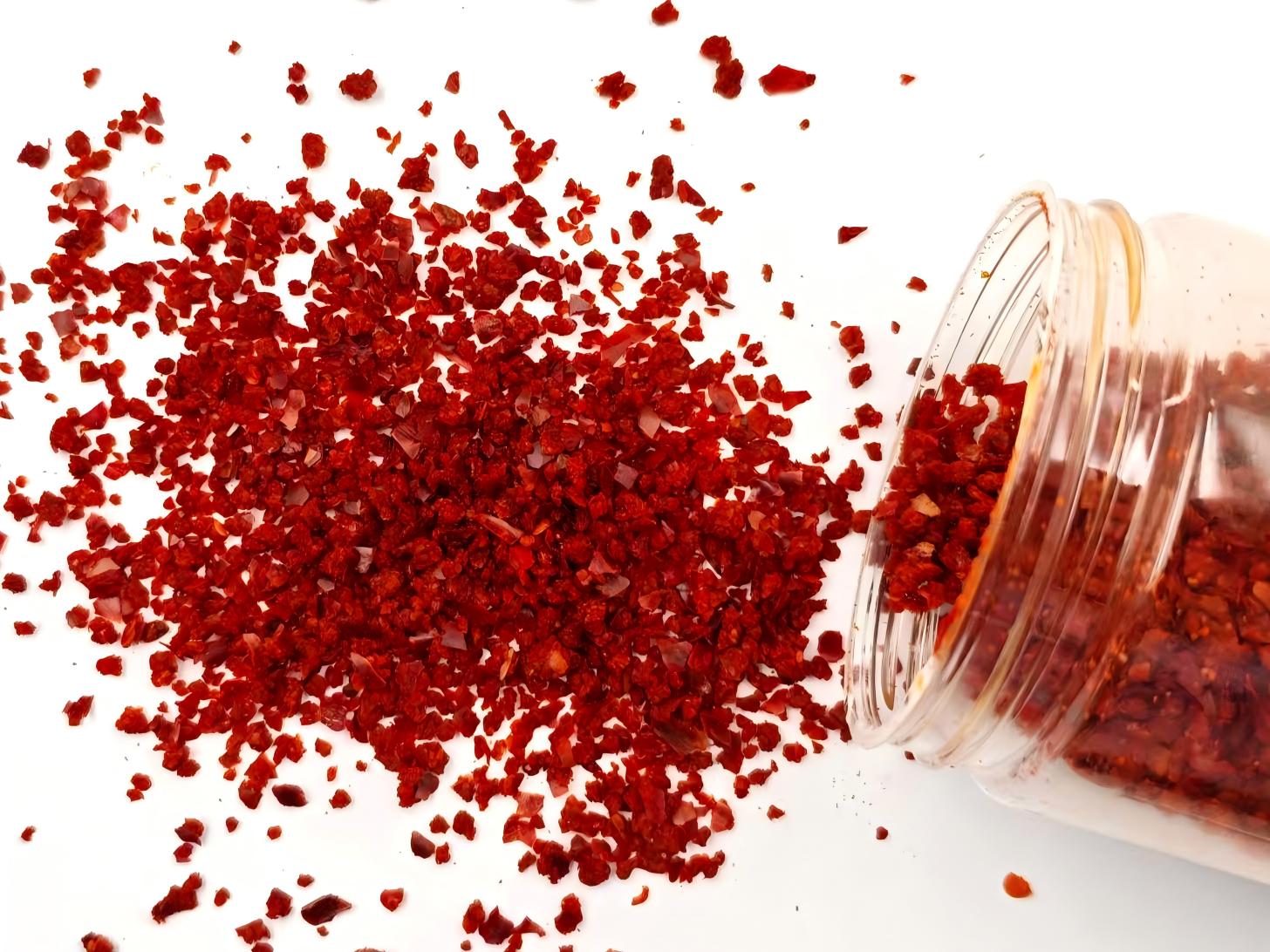
Lieferant und Hersteller von ASTA 80–100 Paprikaflocken
Paprikaflocken – Datenblatt zur Standardqualität herunterladen
ASTA 80–100 süße Paprikaflocken sind eine kostengünstige Zutat aus getrocknetem Paprika, die speziell für die großtechnische Lebensmittelherstellung und die Produktion von Gewürzmischungen entwickelt wurde. Diese Sorte stammt hauptsächlich aus den wichtigsten chinesischen Anbaugebieten, darunter Xinjiang, Gansu und die Innere Mongolei, und bietet ein ausgewogenes Verhältnis zwischen einer akzeptablen roten Färbung und Kosteneffizienz.
Auf den Exportmärkten stellen wir häufig fest, dass sich Käufer für diese Qualität entscheiden, wenn die Kostenkontrolle bei der Rezeptur wichtiger ist als eine kräftige Farbintensität. Im Gegensatz zu den höherwertigen Qualitäten mit einem ASTA-Wert von 120–200 ist dieses Produkt nicht für hochwertige optische Anwendungen vorgesehen, erweist sich jedoch als zuverlässig in industriellen Mischsystemen, in denen Paprika einer von mehreren Farb- und Aromaträgern ist.
Viele Einkaufsteams in Südostasien und Afrika entscheiden sich für ASTA 80–100-Flocken, da diese eine flexible Mischung mit Chilipulver, Salz und auf MSG basierenden Würzsystemen ermöglichen, ohne die Rohstoffkosten nennenswert zu erhöhen. Ein häufiger Fehler beim Einkauf ist jedoch die Verwendung dieser Sorte in auffälligen Snack-Panaden, bei denen nach dem Frittieren oder der Lagerung eine Farbveränderung sichtbar wird.
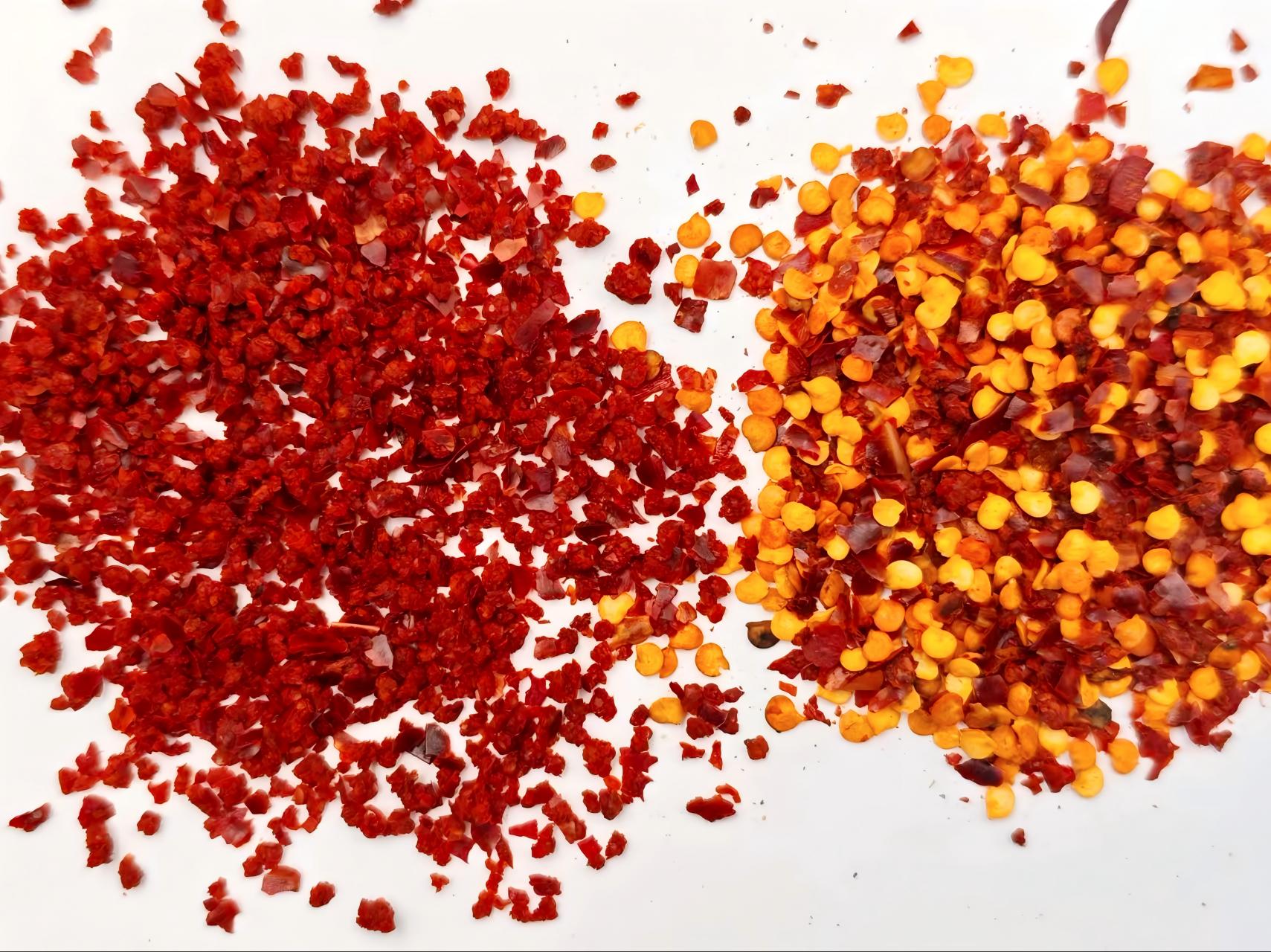
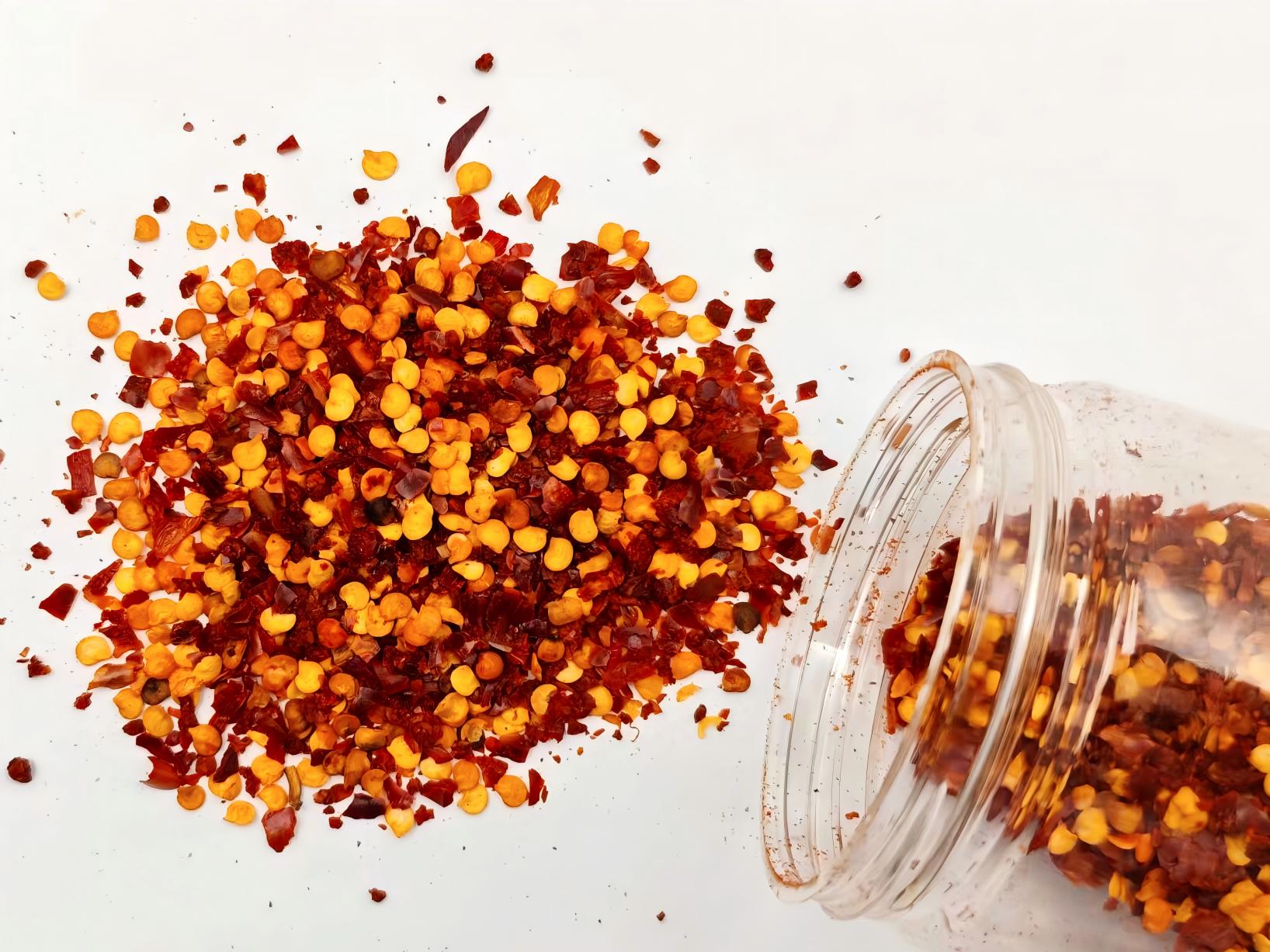
Aus fertigungstechnischer Sicht wird diese Sorte aus Flocken unterschiedlicher Größe (3–12 mm) hergestellt, wodurch die Verarbeitungskosten minimiert werden und ein hoher Durchsatz ermöglicht wird. Sie eignet sich ideal für Abnehmer, denen Stabilität, eine zuverlässige Liefermenge und vorhersehbare Jahrespreise wichtiger sind als höchste Farbgenauigkeit.
ASTA 80–100 süße Paprikaflocken sind getrocknete rote Paprikaflocken der Einstiegsklasse, die in der industriellen Lebensmittelproduktion zum Einsatz kommen. Sie bieten eine moderate Farbintensität und eine milde Süße. Lebensmittelhersteller wählen diese Qualität für kostenorientierte Rezepturen wie Gewürzmischungen, Instant-Nudeln und Snack-Überzüge, bei denen die volle ASTA-Intensität nicht entscheidend ist, aber ein stabiler Farbbeitrag erforderlich ist.
PRODUKTÜBERSICHT
ASTA 80–100 süße Paprikaflocken sind eine industrielle Paprika-Zutat der Einstiegsklasse, die für kostenbewusste Produktionsumgebungen in der Lebensmittelindustrie entwickelt wurde. Diese Sorte ist nicht für hochwertige optische Anwendungen gedacht, sondern vielmehr für die funktionelle Farbgebung, für Gewürzmischungen in Großmengen und für industrielle Mischungen, bei denen Paprika eher als unterstützende Zutat denn als primärer optischer Blickfang dient.
Aus produktionstechnischer Sicht wird diese Qualität in der Regel aus gemischten Paprikapartien gewonnen, die in den wichtigsten landwirtschaftlichen Regionen Chinas wie Xinjiang, Gansu und der Inneren Mongolei geerntet werden. Diese Regionen gewährleisten eine gleichbleibende Rohstoffversorgung, weisen jedoch aufgrund saisonaler Klimaschwankungen natürliche Unterschiede in der Pigmentkonzentration auf. Diese Schwankungen sind ein Grund dafür, warum die ASTA-Standardisierung im Exporthandel von entscheidender Bedeutung ist.
Auf den Exportmärkten beobachten wir häufig, dass Käufer sich für ASTA 80–100-Flocken entscheiden, wenn sie die Kosten pro Tonne in großvolumigen Rezepturen wie Gewürzbeuteln für Instant-Nudeln, Bestäubungsmischungen für Snacks und Basis-Wurstgewürzsystemen optimieren möchten. Im Gegensatz zu ASTA-Typen höherer Qualität, die für eine gleichbleibende Farbkonsistenz bei Premiumprodukten eingesetzt werden, ist dieser Typ auf den funktionalen Beitrag in Mischrezepturen ausgelegt.
Ein häufiger Fehler bei der Beschaffung besteht darin, anzunehmen, dass niedrigere ASTA-Qualitäten einfach durch eine höhere Dosierung “ausgeglichen” werden können. In der Praxis führt dies jedoch häufig zu einer Instabilität der Rezeptur, einer ungleichmäßigen Farbverteilung und einer verstärkten Sedimentation in Gewürzmischungen. Erfahrene Lebensmittelhersteller passen stattdessen die Mischungsmatrix an, indem sie diese Qualität mit Chilipulver oder Oleoresin-Systemen kombinieren.
Unter dem Gesichtspunkt des Preis-Leistungs-Verhältnisses gehören ASTA 80–100-Flocken zur wirtschaftlichsten Stufe der Paprika-Wertschöpfungskette. Käufer entscheiden sich in der Regel für diese Qualitätsstufe, wenn:
- Der Geschmack des Produkts steht im Vordergrund, die Farbe ist zweitrangig.
- Bei der ausschreibungsbasierten Beschaffung ist der Kostendruck hoch
- Paprika wird als Hilfsstoff verwendet (Formulierung <5%)
Umgekehrt entscheiden sich Käufer für ein Upgrade, wenn:
- Nach dem Kochen oder Braten ist es wichtig, die Farbe zu erkennen
- Die Produktpositionierung verlagert sich in Richtung Premium-Branding
- Die Haltbarkeit und der Farberhalt sind entscheidend
Bei der containerbasierten Beschaffung wird diese Güteklasse häufig in gemischten SKUs gekauft, um die Frachtauslastung zu optimieren. Viele Importeure bündeln ASTA 80–100 mit höheren Güteklassen (ASTA 120–200), um Kosten und Leistung innerhalb einer einzigen Sendung in Einklang zu bringen.
TECHNISCHE DATEN
| Parameter | Spezifikation |
|---|---|
| Produktname | Getrocknete Paprikaflocken |
| ASTA-Wert | 80–100 |
| Formular | Flocken (gemischt, 3–12 mm) |
| Farbe | Tiefrot, leicht dunkler Farbton |
| Feuchtigkeit | ≤10% |
| Asche | ≤8% |
| SHU (Wärme) | <500 (in der Regel 0–100) |
| SO₂ | Spuren / individuell anpassbare Option mit geringem Schwefelgehalt |
| Mikrobiologie | TPC ≤ 100.000 KBE/g |
| Verpackung | 20 kg / 25 kg Kraftpapiersack + PE-Innenbeutel |
| Haltbarkeit | 24 Monate |
| Lagerung | Kühl, trocken, vor Sonnenlicht geschützt |
| Herkunft | China (Xinjiang, Gansu, Innere Mongolei) |
HAUPTMERKMALE UND VORTEILE
- Kostenoptimiert, in Industriequalität
Senkt die Rohstoffkosten bei der großtechnischen Gewürzherstellung. - Stabiler ASTA-Farbbereich von 80–100
Gewährleistet eine vorhersehbare Mischleistung in der Serienfertigung. - Gemischte Flockengrößen (3–12 mm)
Ideal für Anwendungen mit ungleichmäßiger Würzung und zur Kostensenkung. - Leicht süßes Geschmacksprofil
Unterstützt den Geschmacksausgleich in komplexen Gewürzmischungen. - Stabilität bei Exporten in großen Mengen
Geeignet für durchgängige Lieferketten im Behälterbereich. - Flexible Integration von Formulierungen
Passt gut zu Chilipulver, Salz und MSG-Mischungen. - Günstigere Kostenstruktur bei der Verarbeitung
Eine kostengünstige Wahl für die Beschaffung im Rahmen einer Ausschreibung. - Geeignet für Großmischanlagen
Eher für industrielle Mischer als für hochwertige visuelle Anwendungen konzipiert.
KAUFRATGEBER
Für wen ist das Produkt geeignet?
- Hersteller von Instantnudeln
- Hersteller von Snackgewürzen
- Mischanlagen für Gewürze in Großmengen
- Wurst- und Fleischverarbeitungsbetriebe
- Lieferanten für öffentliche Ausschreibungen
Wer sollte das Produkt NICHT kaufen?
- Premium-Snackmarken, die eine leuchtend rote Farbe benötigen
- Exporttaugliche Marken für Einzelhandelsverpackungen
- Hersteller von Gourmet-Gewürzmischungen
Die besten Branchen
- Lebensmittelverarbeitung
- Gewürzmischungen für die Industrie
- Lieferketten für die Gemeinschaftsverpflegung
Beschaffungslogik
Käufer entscheiden sich für diese Qualität in erster Linie aufgrund der Kosteneffizienz pro Funktionseinheit und weniger wegen des ästhetischen Werts. In großvolumigen Rezepturen wird Paprika häufig in einer Dosierung von 1–3% eingesetzt, wodurch die ASTA-Optimierung wichtiger ist als die optische Intensität.
Typisches jährliches Verhalten
Großabnehmer schließen Preisverträge in der Regel jährlich ab, da die Rohstoffkosten saisonalen Schwankungen unterliegen und die Frachtkosten stark schwanken.
ANWENDUNGEN
1. Gewürzmischung für Instant-Nudeln
- Verwendung: 0,5–2%
- Grund: kostengünstige Farbbasis
- Gründe für die Auswahl: stabile Vermischung in Pulversystemen
- Nicht höher als ASTA: unnötige Kostensteigerung
2. Gewürzpanade für Snacks
- Verwendung: 1–3%
- Verleiht dem Gewürzpulver einen roten Grundton
- Regionale Nutzung: Hohe Nachfrage in Südostasien
3. Wurst- und Fleischverarbeitung
- Verwendung: 0,3–1%
- Sorgt für eine leichte Farbabgabe in emulgierten Systemen
- Vermeiden Sie hohe ASTA-Werte: Risiko einer Geschmacksunausgewogenheit
4. Gewürzmischungen in Großpackungen
- Verwendung: Variable
- Dient als Füllfarbkomponente
5. Institutionelle Lebensmittelversorgung
- Verwendungszweck: Herstellung von Gewürzmischungen in großen Chargen
- Schwerpunkt: Kostenstabilität vor Farbgenauigkeit
EINBLICK IN DIE BESCHAFFUNG
Bei tatsächlichen Exportgeschäften werden ASTA 80–100-Flocken in der Regel in Vollcontainerladungen von 11 bis 13 Tonnen pro 20-Fuß-Container gekauft. Aufgrund der ineffizienten Frachtkosten kaufen Käufer nur selten Spotmengen.
Wir beobachten immer wieder drei Verhaltensweisen bei der Beschaffung:
- Verhalten bei der Kostenverankerung
Die Einkäufer legen diesen Preis als Basis für die Preisgestaltung bei Kostenmodellen fest. - Strategie zur Optimierung der Mischung
Viele Hersteller mischen ASTA 80–100 mit höherwertigen ASTA 120–150-Sorten, um die Gesamtkosten zu senken und gleichzeitig eine akzeptable Farbe zu gewährleisten. - Saisonale Einkaufszyklen
Große Abnehmer stocken ihre Beschaffung vor dem dritten Quartal aufgrund der Erntezyklen bei Rohstoffen und der Frachtplanung auf.
Ein häufiger Fehler besteht darin, diese Güteklasse in zu großen Mengen zu bestellen, ohne die Abweichungen in der Zusammensetzung zu berücksichtigen. Da ASTA 80–100 je nach Erntecharge leicht variiert, fordern erfahrene Einkäufer stets ein Analysezertifikat (COA) pro Lieferung an und passen die Mischungsverhältnisse entsprechend an.
Aus preislicher Sicht kann sich bereits eine Schwankung von $100–200 pro Tonne erheblich auf Großaufträge mit einem Jahresvolumen von über 500 Tonnen auswirken.
ERLÄUTERUNG DES ASTA-WERTS
Der ASTA-Wert gibt die Farbintensität anhand der Pigmentkonzentration an. Ein höherer ASTA-Wert bedeutet eine kräftigere rote Farbe und höhere Kosten.
In industriellen Anwendungen ist ASTA nicht nur visuell wahrnehmbar – es wirkt sich auch direkt aus auf:
- Dosierungseffizienz
- Mischstabilität
- Formulierungskosten
- Aussehen des Produkts nach der Wärmebehandlung
Niedrigere ASTA-Werte erfordern eine höhere Dosierung, was die anfänglichen Einsparungen zunichte machen kann.
VERGLEICH DER ASTA-KLASSEN
| ASTA | Farbe | Anwendung | Kostenebene | Käufertyp |
|---|---|---|---|---|
| 40–60 | Sehr leicht | Minderwertige Füllstoffe | Sehr niedrig | Rohstoffhändler |
| 60–80 | Hellrot | Grundgewürze | Niedrig | Hersteller von preisgünstigen Produkten |
| 80–100 | Rot (Economy) | Industriemischungen | Tief-Mittel | Großhersteller von Lebensmitteln |
| 120–150 | Mittleres Rot | Ausgewogene Nutzung | Mitte | Standardfabriken |
| 150–200 | Kräftiges Rot | Hochwertige Gewürzmischung | Hoch | Markenhersteller |
| 200–240 | Tiefrot | Hochwertige Exportwaren | Sehr hoch | Einzelhandelsmarken |
Entscheiden Sie sich für eine hochwertigere Variante, wenn die Farbe eine Rolle spielt. Entscheiden Sie sich für eine kostengünstigere Variante, wenn die Kosten bei der Rezeptur im Vordergrund stehen.
HERSTELLUNGSVERFAHREN
- Beschaffung von rohem Pfeffer
- Waschen und Entfernen von Verunreinigungen
- Sortierung nach Laufzeit
- Kontrollierte Trocknung
- Flachschneiden (3–12 mm)
- ASTA-Farbprüfung und -mischung
- Metallerkennung und -kontrolle
- Qualitätsprüfung von Chargen
- 20–25 kg Exportverpackung
- Beladen und Versiegeln von Containern
QUALITÄTSKONTROLLE
- ASTA-Spektralphotometer-Prüfung pro Charge
- Feuchtigkeitsregelung ≤10%
- Mikrobiologische Untersuchung (Gesamtkeimzahl, Krankheitserreger)
- Schwermetalluntersuchung (Pb, As, Cd)
- Einhaltung der Grenzwerte für Pestizidrückstände
- Rückverfolgbarkeit pro Erntepartie
- Gleichmäßige Mischung zwischen den Chargen
BRANCHENEINBLICK
- Viele Käufer unterschätzen den Farbverlust bei der thermischen Verarbeitung
- Die Luftfeuchtigkeit bei der Lagerung ist die Hauptursache für den ASTA-Abbau
- Erntebedingte Schwankungen können zu Abweichungen von ±5–10 ASTA führen
- In Südostasien werden kostengünstigere Mischpaprika-Systeme bevorzugt
- In langfristigen Verträgen legt Europa mehr Wert auf Stabilität als auf den Preis
- Ein zu starkes Trocknen kann das Aroma beeinträchtigen, verbessert jedoch die Haltbarkeit.
MARKTANALYSE
- Südostasien: preisbewusster, großvolumiger Einsatz von Nudelgewürzen
- Naher Osten: ausgewogenes Preis-Leistungs-Verhältnis
- Afrika: Deutliche Präferenz für günstige Klassen
- Europa: begrenzte Verwendung; überwiegend zur industriellen Mischung
- Lateinamerika: uneinheitliche Nachfrage, oft gemischt mit Chilipulver
EXPORT & LOGISTIK
- Verpackung: 20 kg / 25 kg Kraftpapiersäcke
- Container: 11–13 Tonnen pro 20-Fuß-Container
- Verladung: Stapeln von Paletten oder losen Säcken
- Dokumente: COA, Pflanzengesundheitszeugnis, Ursprungszeugnis, ISO/HACCP
- Unterstützung: SKUs mit gemischten Behältern verfügbar
UNTERSTÜTZUNG BEI MUSTEREN UND DOKUMENTATION
- 200–500 g kostenlose Proben erhältlich
- Vollständiges COA pro Charge
- Technisches Datenblatt
- Produktionsfotos und Verpackungsbilder
- Unterlagen zur Einhaltung der Exportvorschriften
WARUM SICH FÜR UNS ENTSCHEIDEN PaprikaBulk.com
- Über 15 Jahre Erfahrung in der Fertigung
- Stabiles Netzwerk zur Rohstoffbeschaffung
- Umfangreiche Exportkapazitäten
- Strenges ASTA-Bewertungssystem
- Flexible Mindestbestellmenge für Probebestellungen
- Unterstützung bei der Konsolidierung gemischter Container
- Zuverlässige langfristige Lieferverträge
Häufig gestellte Fragen
1. Warum entscheiden sich Hersteller für ASTA 80–100 statt für höhere Güteklassen?
Weil es das beste Preis-Leistungs-Verhältnis für Großgewürzsysteme bietet, bei denen die Farbe eine untergeordnete Rolle spielt.
2. Bedeutet ein niedrigerer ASTA-Wert immer eine geringere Qualität?
Nein, das bedeutet lediglich eine geringere Pigmentkonzentration, nicht aber eine geringere Sicherheit oder Funktionalität.
3. Kann diese Sorte für Snacks verwendet werden?
Ja, vor allem in Gewürzmischungen und Beschichtungssystemen.
4. Warum variiert der ASTA-Wert von Charge zu Charge?
Die saisonalen Ernte- und Trocknungsbedingungen beeinflussen die Pigmentkonzentration.
5. Wie stellen Käufer die Farbkonsistenz sicher?
Durch die Mischung verschiedener ASTA-Qualitäten und die Anforderung eines COA für jede einzelne Lieferung.
6. Was ist der häufigste Fehler, den Käufer begehen?
Einsatz von ASTA mit niedrigem Wert direkt in hochwertigen visuellen Anwendungen.
7. Ist diese Qualität für Export-Verkaufsverpackungen geeignet?
Im Allgemeinen nein, es ist für den industriellen Einsatz konzipiert.
8. Wie lange ist es haltbar?
Bis zu 24 Monate unter trockenen, kühlen Bedingungen.
9. Hat Feuchtigkeit Einfluss auf den ASTA-Wert?
Ja, hohe Luftfeuchtigkeit beschleunigt den Pigmentabbau.
10. Kann man es mit Chilipulver mischen?
Ja, es wird üblicherweise gemischt, um die Kosten zu optimieren.
11. Welche Behältergröße ist Standard?
20-Fuß-Container mit 11–13 Tonnen.
12. Welche Branchen kaufen am meisten ein?
Hersteller von Gewürzmischungen für Instantnudeln und Snacks.
13. Ist eine Sterilisation erforderlich?
Nicht immer; das hängt von den Vorgaben des Käufers ab.
14. Warum stufen manche Käufer ASTA herab?
Zur Kostensenkung bei Formulierungen in großen Mengen.
15. Kann ASTA während der Produktion aktualisiert werden?
Nur durch Mischen, nicht chemisch.
16. Was hat den größten Einfluss auf die Preisgestaltung?
Ernteertrag, Frachtkosten und ASTA-Stufe.
17. Stellen Sie Muster zur Verfügung?
Ja, es sind kleine Probepackungen erhältlich.
18. Können Sendungen gemischt werden?
Ja, gemischte SKUs pro Container werden unterstützt.
ANFRAGE
Für Preisangaben, Zertifikate (COA), Muster oder Angebote für Großgebinde:
- Kostenloses Muster anfordern
- COA und Datenblatt anfordern
- FOB-/CIF-Preise anfordern
- Besprechung des Jahresliefervertrags
- ASTA-Mischungsverhältnis anpassen
- Massenbeschaffung starten