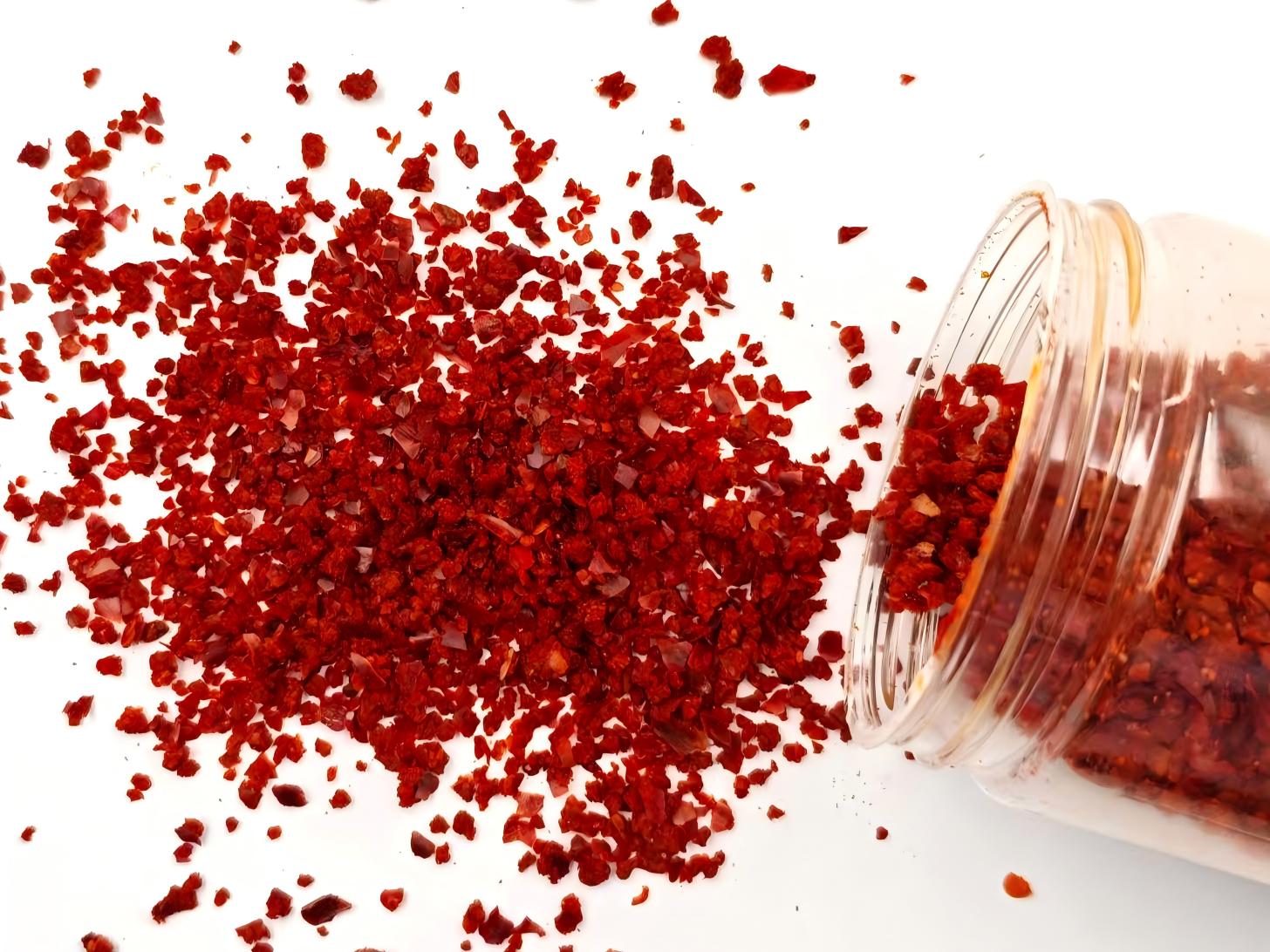
Fournisseur et fabricant de flocons de paprika doux ASTA 80–100
Flocons de paprika — Fiche technique de la catégorie standard Télécharger
Les flocons de paprika doux ASTA 80–100 constituent un ingrédient à base de poivron déshydraté de qualité économique, destiné à la fabrication alimentaire à grande échelle et à la production d'assaisonnements. Provenant principalement des principales régions de culture chinoises, notamment le Xinjiang, le Gansu et la Mongolie intérieure, cette qualité offre un bon compromis entre une couleur rouge satisfaisante et un bon rapport coût-efficacité.
Sur les marchés d'exportation, on constate souvent que les acheteurs optent pour cette qualité lorsque la maîtrise des coûts de formulation prime sur l'intensité des couleurs. Contrairement aux qualités supérieures ASTA 120–200, ce produit n'est pas destiné à des applications visuelles haut de gamme, mais offre des performances fiables dans les systèmes de mélange industriels où le paprika est l'un des nombreux ingrédients apportant couleur et saveur.
De nombreuses équipes d'approvisionnement en Asie du Sud-Est et en Afrique choisissent les flocons ASTA 80–100, car ils permettent des mélanges flexibles avec de la poudre de piment, du sel et des mélanges d'assaisonnement à base de glutamate monosodique sans augmenter de manière significative le coût des matières premières. Une erreur courante en matière d'approvisionnement consiste toutefois à utiliser cette qualité pour les enrobages de snacks très visibles, où la dégradation de la couleur devient perceptible après la friture ou le stockage.
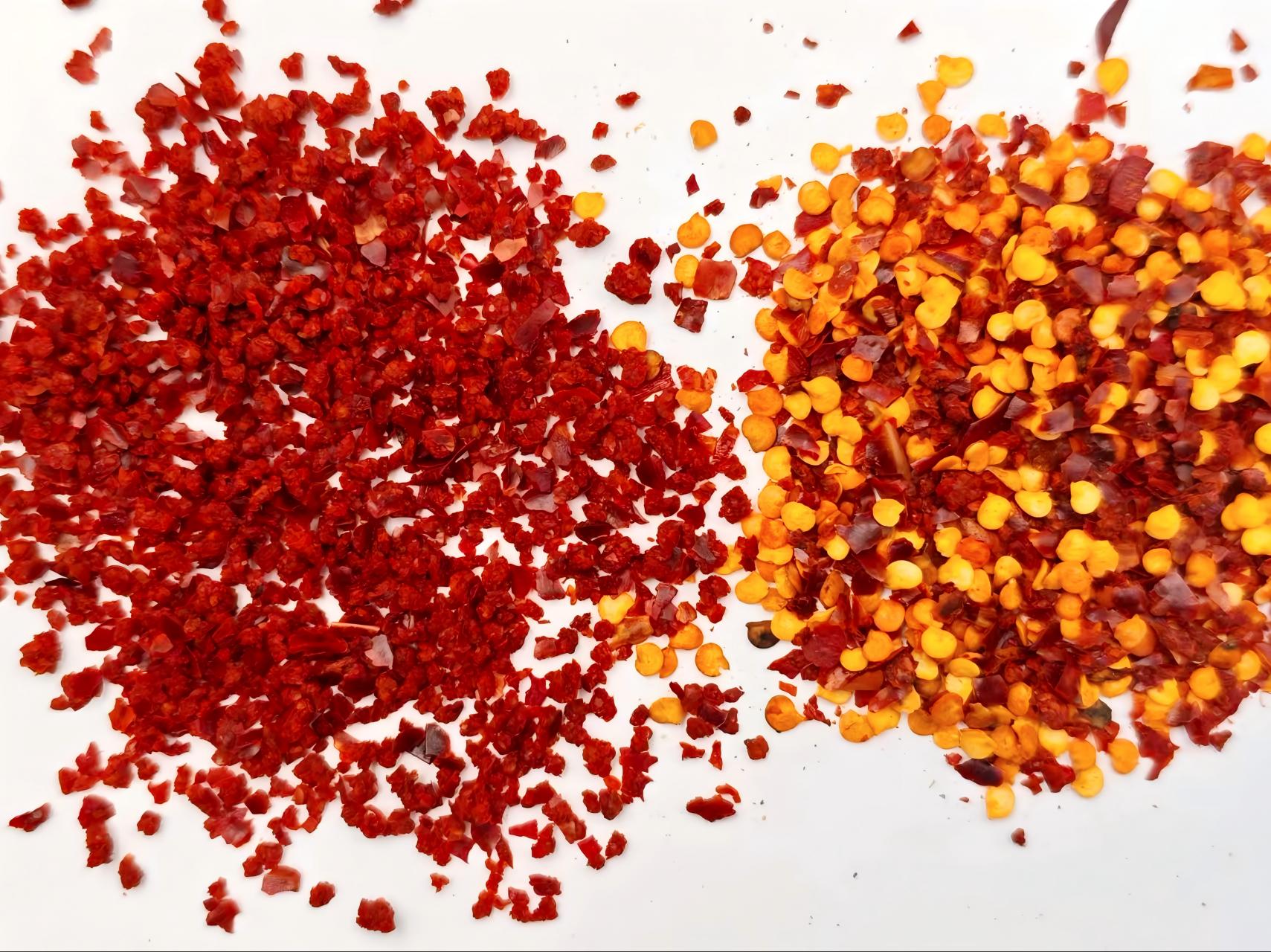
Du point de vue de la fabrication, cette qualité est produite à partir de paillettes de tailles variées (3 à 12 mm), ce qui permet de réduire au minimum les coûts de transformation et d'atteindre un débit élevé. Elle est idéale pour les acheteurs qui privilégient la stabilité, l'approvisionnement en volume et des prix annuels prévisibles plutôt qu'une précision optimale au niveau de la couleur.
ASTA 80–100 sweet paprika flakes are entry-level dehydrated red pepper flakes used for industrial food production. They provide moderate color performance and mild sweetness. Food manufacturers select this grade for cost-sensitive formulations such as seasoning blends, instant noodles, and snack coatings where full ASTA intensity is not critical but stable bulk color contribution is required.
PRÉSENTATION DU PRODUIT
ASTA 80–100 sweet paprika flakes represent an entry-level industrial paprika ingredient designed for cost-sensitive food manufacturing environments. This grade is not positioned for premium visual applications but rather for functional color contribution, bulk seasoning systems, and industrial blending where paprika acts as a supporting ingredient rather than a primary visual driver.
From a production standpoint, this grade is typically derived from mixed pepper lots harvested in China’s major agricultural regions such as Xinjiang, Gansu, and Inner Mongolia. These regions provide consistent raw material supply but naturally vary in pigment concentration due to seasonal climate differences. This variability is one reason why ASTA standardization becomes critical in export trade.
In export markets, we often observe that buyers select ASTA 80–100 flakes when they are optimizing cost per ton in high-volume formulations such as instant noodle seasoning sachets, snack dusting mixes, and base-level sausage seasoning systems. Unlike higher ASTA grades, which are used for premium color consistency, this grade is designed for functional contribution within composite recipes.
A common procurement mistake is assuming that lower ASTA grades can simply be “compensated” with higher dosage. In reality, this often leads to formulation instability, uneven color distribution, and increased sedimentation in seasoning blends. Experienced food manufacturers instead adjust the blend matrix by combining this grade with chili powder or oleoresin systems.
From a cost-performance perspective, ASTA 80–100 flakes sit at the most economical tier of the paprika value chain. Buyers typically downgrade to this grade when:
- The product is heavily flavored and color is secondary
- Cost pressure is high in tender-based procurement
- Paprika is used as a supporting ingredient (<5% formulation)
Conversely, buyers upgrade when:
- Color visibility is important after cooking or frying
- Product positioning shifts toward premium branding
- Shelf stability and color retention are critical
In container-based procurement, this grade is often purchased in mixed SKUs to optimize freight utilization. Many importers consolidate ASTA 80–100 with higher grades (ASTA 120–200) to balance cost and performance within a single shipment.
CARACTÉRISTIQUES TECHNIQUES
| Paramètre | Spécifications |
|---|---|
| Nom du produit | Dehydrated Sweet Pepper Flakes |
| Valeur ASTA | 80–100 |
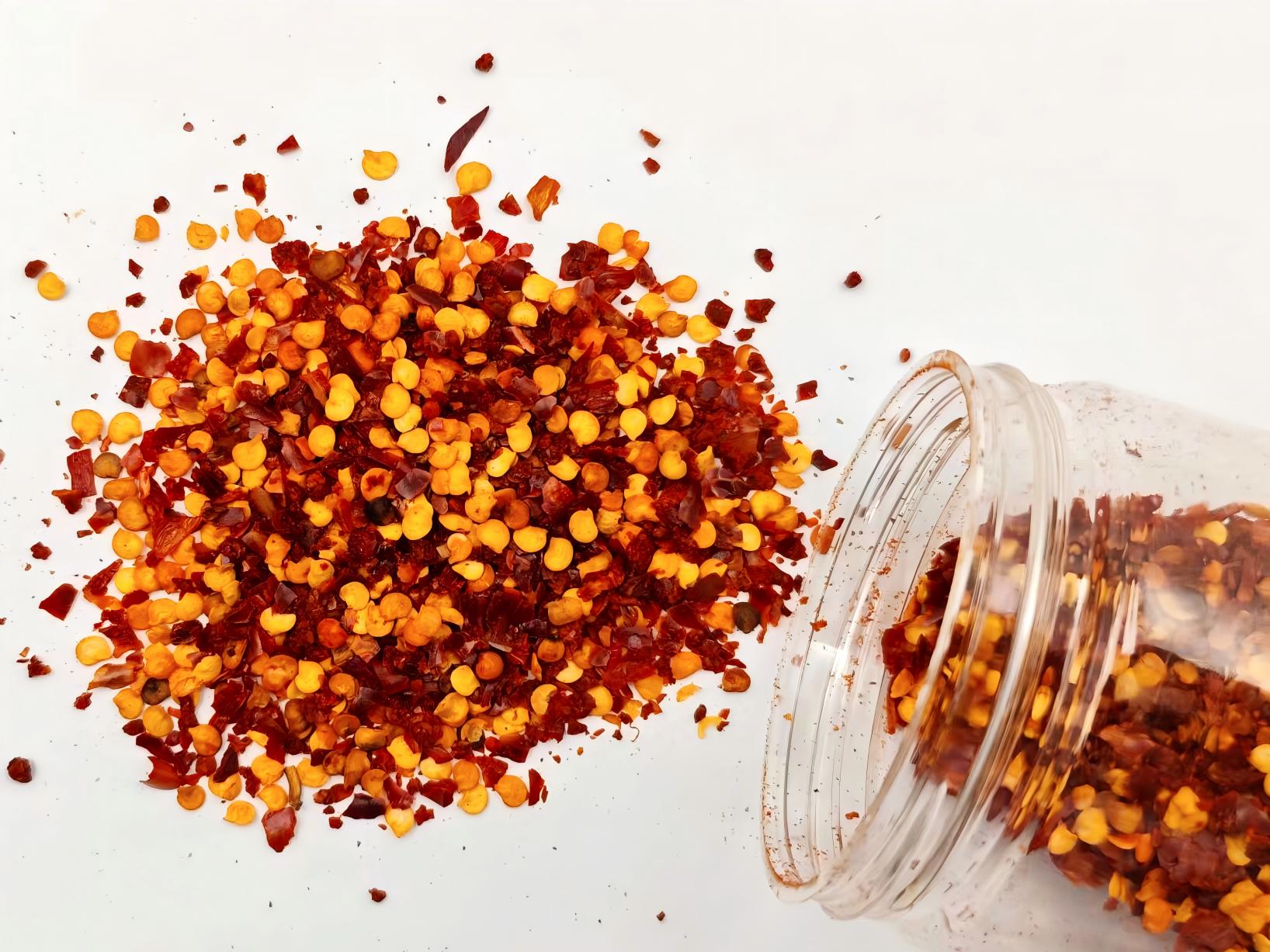
| Formulaire | Flakes (3–12mm mixed) |
| Couleur | Deep red, slightly dark tone |
| Humidité | ≤10% |
| Cendre | ≤8% |
| SHU (Heat) | <500 (typically 0–100) |
| SO₂ | Trace / customizable low-sulfur option |
| Microbiologie | TPC ≤100,000 cfu/g |
| Emballage | 20kg / 25kg kraft bag + PE liner |
| Durée de conservation | 24 mois |
| Stockage | Dans un endroit frais et sec, à l'abri de la lumière du soleil |
| Origine | Chine (Xinjiang, Gansu, Mongolie intérieure) |
PRINCIPALES CARACTÉRISTIQUES ET AVANTAGES
- Cost-optimized industrial grade
Reduces raw material cost in large-scale seasoning production. - Stable ASTA 80–100 color range
Ensures predictable blending performance in mass manufacturing. - Mixed flake sizing (3–12mm)
Ideal for non-uniform seasoning applications and cost reduction. - Mild sweetness profile
Supports flavor balancing in composite spice systems. - High-volume export stability
Suitable for continuous container supply chains. - Flexible formulation integration
Works well with chili powder, salt, and MSG systems. - Lower processing cost structure
Economical choice for tender-based procurement. - Suitable for bulk blending systems
Designed for industrial mixers rather than premium visual use.
GUIDE DE L'ACHETEUR
Who Should Buy
- Fabricants de nouilles instantanées
- Fabricants d'assaisonnements pour snacks
- Bulk spice blenders
- Sausage and processed meat factories
- Government tender suppliers
Who Should NOT Buy
- Premium snack brands requiring bright red color
- Export-ready retail packaging brands
- Gourmet seasoning producers
Best Industries
- Food processing
- Industrial seasoning
- Mass catering supply chains
Procurement Logic
Buyers choose this grade primarily for cost efficiency per functional unit rather than aesthetic value. In large formulations, paprika is often used at 1–3%, making ASTA optimization more important than visual intensity.
Common Annual Behavior
Large buyers typically lock pricing contracts annually due to seasonal fluctuations in raw material cost and freight volatility.
APPLICATIONS
1. Instant Noodle Seasoning
- Usage: 0.5–2%
- Reason: cost-effective color base
- Why chosen: stable blending in powder systems
- Not higher ASTA: unnecessary cost increase
2. Snack Seasoning Coating
- Usage: 1–3%
- Provides base red tone in seasoning dust
- Regional usage: Southeast Asia high demand
3. Sausage & Meat Processing
- Usage: 0.3–1%
- Adds mild color support in emulsified systems
- Avoid high ASTA: flavor imbalance risk
4. Bulk Spice Blends
- Usage: variable
- Acts as filler color component
5. Institutional Food Supply
- Usage: large batch seasoning production
- Focus: cost stability over color precision
LE POINT SUR LES MARCHÉS PUBLICS
In real export transactions, ASTA 80–100 flakes are typically purchased in full container loads ranging from 11–13 tons per 20FT container. Buyers rarely purchase spot quantities due to freight inefficiency.
We consistently observe three procurement behaviors:
- Cost anchoring behavior
Buyers lock this grade as baseline pricing reference for seasoning cost models. - Blend optimization strategy
Many manufacturers mix ASTA 80–100 with higher ASTA 120–150 grades to reduce total cost while maintaining acceptable color. - Seasonal purchasing cycles
Large buyers increase procurement before Q3 due to raw material harvest cycles and freight planning.
A common mistake is over-ordering this grade without considering formulation drift. Because ASTA 80–100 varies slightly by harvest batch, experienced buyers always request COA per shipment and adjust blending ratios accordingly.
From a pricing perspective, even a $100–200/ton fluctuation can significantly impact large-scale contracts exceeding 500 tons annually.
EXPLICATION DE LA VALEUR ASTA
ASTA measures color intensity based on pigment concentration. Higher ASTA = stronger red color and higher cost.
In industrial applications, ASTA is not just visual—it directly impacts:
- dosage efficiency
- blending stability
- formulation cost
- product appearance after heat processing
Lower ASTA grades require higher dosage, which may offset initial savings.
COMPARAISON DES NIVEAUX ASTA
| ASTA | Couleur | Candidature | Niveau de coût | Type d'acheteur |
|---|---|---|---|---|
| 40–60 | Very light | Low-grade fillers | Très faible | Commodity traders |
| 60–80 | Rouge clair | Assaisonnement de base | Faible | Budget manufacturers |
| 80–100 | Red (economy) | Industrial blends | Bas-moyen | Producteurs alimentaires de grande échelle |
| 120–150 | Rouge moyen | Balanced use | Milieu | Standard factories |
| 150–200 | Rouge vif | Premium seasoning | Élevé | Brand manufacturers |
| 200–240 | Rouge foncé | Premium export goods | Très élevé | Retail brands |
Upgrade when color matters. Downgrade when cost dominates formulation.
PROCÉDÉ DE FABRICATION
- Raw pepper sourcing
- Lavage et élimination des impuretés
- Sorting by maturity
- Controlled drying
- Flake cutting (3–12mm)
- ASTA color testing & blending
- Metal detection & screening
- Batch quality inspection
- 20–25kg export packaging
- Container loading & sealing
CONTRÔLE DE LA QUALITÉ
- Contrôle par spectrophotomètre ASTA pour chaque lot
- Moisture control ≤10%
- Microbiology screening (TPC, pathogens)
- Heavy metal testing (Pb, As, Cd)
- Conformité aux normes relatives aux résidus de pesticides
- Traceability per harvest lot
- Consistency blending between batches
PERSPECTIVES DU SECTEUR
- Many buyers underestimate color loss during thermal processing
- Storage humidity is the #1 cause of ASTA degradation
- Harvest variation can cause ±5–10 ASTA fluctuation
- Southeast Asia prefers lower-cost blended paprika systems
- Europe prioritizes stability over price in long-term contracts
- Over-drying can reduce aroma but improve shelf stability
INFORMATIONS SUR LE MARCHÉ
- Southeast Asia: price-sensitive, high-volume noodle seasoning use
- Middle East: balanced cost-performance demand
- Africa: strong preference for economy grades
- Europe: limited use; mostly industrial blending
- Latin America: mixed demand, often blended with chili powders
EXPORTATION ET LOGISTIQUE
- Packaging: 20kg / 25kg kraft bags
- Container: 11–13 tons per 20FT
- Loading: palletized or loose bag stacking
- Documents: COA, Phytosanitary, Certificate of Origin, ISO/HACCP
- Support: mixed container SKUs available
SAMPLE & DOCUMENTATION SUPPORT
- 200–500g free samples available
- Full COA per batch
- Technical specification sheet
- Production photos & packing images
- Export compliance documentation
POURQUOI CHOISIR PaprikaBulk.com
- 15+ years manufacturing experience
- Réseau d'approvisionnement stable en matières premières
- Large-scale export capacity
- Strict ASTA grading system
- Quantité minimale de commande (MOQ) flexible pour les commandes d'essai
- Mixed container consolidation support
- Reliable long-term supply contracts
Foire aux questions
1. Why do manufacturers choose ASTA 80–100 instead of higher grades?
Because it offers the best cost-performance ratio for bulk seasoning systems where color is secondary.
2. Does lower ASTA always mean lower quality?
No, it means lower pigment concentration, not inferior safety or functionality.
3. Can this grade be used in snacks?
Yes, especially in seasoning powders and coating systems.
4. Why does ASTA vary between batches?
Seasonal harvest and drying conditions affect pigment concentration.
5. How do buyers control color consistency?
By blending multiple ASTA grades and requesting COA per shipment.
6. What is the most common mistake buyers make?
Using low ASTA directly in premium visual applications.
7. Is this grade suitable for export retail packaging?
Generally no, it is designed for industrial use.
8. How long can it be stored?
Up to 24 months under dry, cool conditions.
9. Does moisture affect ASTA value?
Yes, high humidity accelerates pigment degradation.
10. Can it be mixed with chili powder?
Yes, it is commonly blended for cost optimization.
11. What container size is standard?
20FT container with 11–13 tons.
12. What industries buy the most?
Instant noodle and snack seasoning manufacturers.
13. Is sterilization required?
Not always; depends on buyer specification.
14. Why do some buyers downgrade ASTA?
To reduce cost in large-volume formulations.
15. Can ASTA be upgraded during production?
Only through blending, not chemically.
16. What affects pricing most?
Harvest yield, freight cost, and ASTA level.
17. Do you provide samples?
Yes, small sample packs are available.
18. Can shipments be mixed?
Yes, mixed SKUs per container are supported.
DEMANDE DE RENSEIGNEMENTS
For pricing, COA, samples, or bulk container quotations:
- Request Free Sample
- Demander le certificat d'origine et la fiche technique
- Get FOB/CIF Pricing
- Discuter du contrat d'approvisionnement annuel
- Customize ASTA Blending Ratio
- Start Bulk Procurement