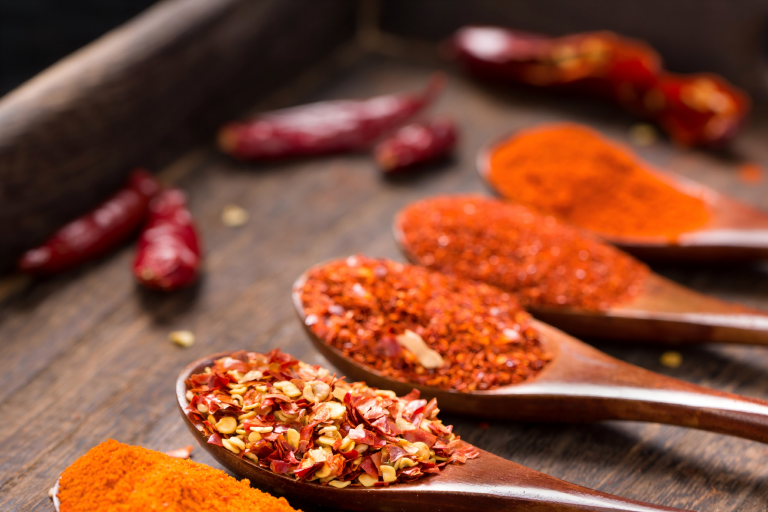
Análisis del mercado mundial del pimentón en 2026 y previsiones para 2026-2027
Información de mercado para compradores de ingredientes alimentarios industriales
Resumen ejecutivo
El mundial pimentón El mercado entra en 2026 en un momento crucial. El crecimiento estructural de la demanda —impulsado por la tendencia de los productos «clean label», la sustitución de los colorantes sintéticos y la expansión de los sectores de los aperitivos y los alimentos de origen vegetal— choca con las limitaciones de suministro provocadas por el cambio climático en regiones productoras clave. España se enfrenta a su tercer año consecutivo de sequía, Hungría está experimentando un calentamiento acelerado y la agricultura costera de Perú sufre estrés hídrico crónico. Estas presiones están reduciendo la oferta de calidad superior justo cuando se acelera la demanda industrial de colorantes naturales de tono rojo anaranjado (E160c).
China representa tanto un factor de estabilización del mercado como una oportunidad de crecimiento. Como mayor productor mundial de pimentón (aproximadamente entre el 30 y el 40% de la producción mundial de chile seco) y con los precios de exportación más competitivos en términos de costes, el pimentón chino —especialmente el procedente de Xinjiang y Gansu— está en condiciones de ganar cuota de mercado a los proveedores europeos, que se encuentran en una situación delicada. Para los compradores B2B de ingredientes alimentarios, el periodo 2026-2027 exige una estrategia de aprovisionamiento proactiva: diversificar las procedencias, formalizar los contratos con antelación y evaluar la sustitución por oleorresina cuando el color sea el principal requisito funcional.
Datos clave de un vistazo
| Métrico | Valor |
|---|---|
| Mercado mundial de la especia pimentón (2025) | $550–650 millones |
| Mercado de la oleorresina de pimentón (2025) | $ 180–220 millones |
| Tasa de crecimiento anual compuesto (CAGR) del mercado combinado | 5–7% |
| Tasa de crecimiento anual compuesto (CAGR) de la oleorresina | 6–8% (segmento más rápido) |
| Chile seco/pimentón de todo el mundo Producción | ~4,0–4,5 millones de toneladas métricas al año |
| La cuota de China en la producción mundial | ~30–40% |
| China Pimentón en polvo Exportaciones | 120 000–160 000 MT/año ($300–400M) |
| Déficit de cosecha en España en 2025 | De -15 a -251 TP3T por debajo de lo normal |
| Aumento del precio del pimentón de primera calidad (2023→2026) | +25–40% |
PARTE I: ANÁLISIS DEL MERCADO MUNDIAL DEL PIMENTÓN EN 2026
1. Tamaño, estructura y segmentación del mercado
1.1 Valoración de mercado
El mercado del pimentón se articula en torno a tres niveles interrelacionados:
| Segmento de mercado | Valor en 2025 | Tasa de crecimiento anual compuesto (CAGR) | Factores clave |
|---|---|---|---|
| Pimentón (en polvo, copos, vainas) | $550–650M | 5.2–5.8% | Elaboración de alimentos, condimentos para aperitivos, mezclas de especias |
| Oleorresina de pimentón (extracto E160c) | $180–220M | 6–8% | Sustitución de colorantes sintéticos, eficiencia industrial |
| Mercado de colorantes naturales de pimentón | $250–350M | 11.2% | Etiquetas limpias, factores regulatorios favorables, alimentos de origen vegetal |
| Mercado combinado | $1,0–1,2B | 5–7% | — |
El segmento de las oleorresinas es el que registra un crecimiento más rápido, impulsado por el hecho de que los fabricantes de alimentos están pasando de los extractos en polvo a los extractos líquidos estandarizados para lograr una mayor uniformidad del color, una manipulación más sencilla y un menor riesgo microbiano.
1.2 Panorama de la producción regional
La producción mundial de pimentón y chile (entre 4,0 y 4,5 millones de toneladas métricas al año) se concentra en Asia, donde China ocupa un lugar predominante:
| País / Región | Cuota de producción estimada | Características principales |
|---|---|---|
| China | 30–40% | El mayor del mundo; regiones de Xinjiang y Gansu; los valores ASTA más altos al menor coste |
| India | 15–20% | El mayor procesador de oleorresinas (capacidad global de 60–70%); materia prima de gama media |
| España | 10–12% | Pimentón ahumado de primera calidad con DOP (Pimentón de la Vera); una grave sequía afecta al suministro |
| Perú | 8–10% | De alta calidad, apto para la exportación; estrés hídrico debido al retroceso de los glaciares |
| Hungría | 5–7% | DOP Kalocsai/Szegedi; calentamiento regional acelerado |
| México | 5–7% | La sequía en el norte está reduciendo la superficie cultivada |
| EE. UU. (California, Nuevo México) | 3–5% | Recortes en la asignación de agua en el oeste |
| Otros | 15–20% | Turquía, Sudáfrica, Zimbabue, Serbia, Marruecos |
Cuota de producción mundial de pimentón
China ████████████████████████████████████  35%
India ██████████████████ 18%
España ████████████                          11%
Perú █████████ 9%
Hungría     ██████ 6%
México ██████ 6%
EE. UU. ████ 4%
Otros ████████████ 11%
1.3 Segmentación por uso final
El uso final del pimentón se centra principalmente en la transformación industrial de alimentos:
| Sector | Cuota de demanda | Aplicaciones principales |
|---|---|---|
| Condimentos para aperitivos | ~30% | Patatas fritas, aperitivos extruidos, palomitas de maíz, recubrimientos para frutos secos |
| Elaboración de carne y aves de corral | ~20% | Salchichas, embutidos, productos marinados, aperitivos de carne |
| Salsas, aderezos y condimentos | ~15% | Salsas para barbacoa, ketchup, mayonesa, salsas étnicas |
| Mezclas de especias y condimentos | ~12% | Mezclas de especias para barbacoa, mezclas étnicas (harissa, baharat, tandoori) |
| Comidas preparadas y productos precocinados | ~10% | Comidas congeladas, fideos instantáneos, kits de comida |
| Restauración rápida / Servicio de restauración | ~8% | Rebozado para pollo frito, condimento para hamburguesas, condimento para pizza |
| Alimento para mascotas | ~3% | Colorante natural para piensos y golosinas de alta calidad |
| Otros (farmacéutica, cosmética, piensos acuáticos) | ~2% | Nutracéuticos, cosméticos naturales, pienso para salmones |
Desglose de la demanda por uso final
Aperitivos ██████████████████████████████  30%
Carne ████████████████████ 20%
Salsas ███████████████ 15%
Mezclas de especias  ████████████ 12%
Comidas preparadas   ██████████ 10%
Restaurantes de comida rápida ████████ 8%
Alimentación para mascotas ███ 3%
Otros ██ 2%
2. El dominio y la posición competitiva de China
2.1 Base de producción
La industria del pimentón en China se concentra en dos regiones productoras principales:
| Región | Porcentaje de la producción de China | Gama ASTA | Ventaja |
|---|---|---|---|
| Xinjiang (Yanqi, Korla, Aksu, Ili) | 40–50% | 120–180+ | Alta radiación solar, baja humedad, ideal para el color |
| Gansu (Corredor de Hexi) | 20–25% | 100–150 | Semiárido, con muchas horas de sol |
| Mongolia Interior | 10–15% | 90–130 | Ampliación de la superficie cultivada, apoyo gubernamental |
| Otros (Henan, Shandong, Sichuan) | 15–20% | 60–100 | Diversas variedades de chile |
El clima de Xinjiang —días calurosos, noches frescas y escasas precipitaciones— da lugar a un pimentón con valores de color ASTA excepcionalmente altos que rivalizan con los mejores productos españoles y húngaros, a una fracción del coste.
2.2 Situación de las exportaciones
- Exportaciones de pimentón en polvo: 120 000–160 000 MT/año ($300–400M)
- Exportaciones de oleorresina de pimentón: 2.500–3.500 TM/año
- Destinos más populares: UE (España, Alemania, Países Bajos), EE. UU., Japón, Corea del Sur, Sudeste Asiático, Oriente Medio
- Ventaja en el precio: El pimentón chino de exportación se cotiza a $1.800–2.500/MT, frente al español, que se cotiza a $3.500–5.000/MT.
2.3 Posicionamiento competitivo: China frente a los países de origen tradicionales
| Dimensión | China (Xinjiang/Gansu) | España (Murcia/Vera) | Hungría (Szeged/Kalocsa) |
|---|---|---|---|
| Precio por tonelada métrica | ★★★★★ $ 1.800–2.800 | ★★☆☆ $3.500–5.500 | ★★☆☆ $4.000–5.000 |
| ASTA Color | ★★★★★ 120–180+ | ★★★★☆ 90–140 | ★★★☆☆ 80–130 |
| Perfil de sabor | ★★★☆☆ Ligeramente dulce | ★★★★★ Ahumado/intenso (DOP) | ★★★★★ Noble Sweet (DOP) |
| Estabilidad del suministro | ★★★★★ A gran escala y fiable | ★★☆☆ Sequía grave | ★★★☆☆ Afectado por el cambio climático |
| Fundación para la Seguridad Alimentaria | ★★★☆☆ En mejora; el legado del Rojo de Sudán | ★★★★★ Regulado por la UE | ★★★★★ Regulado por la UE |
| Disponibilidad orgánica | ★★★☆☆ En expansión, pero con limitaciones | ★★★★☆ Reconocido | ★★★★☆ Reconocido |
| Escalabilidad del volumen | ★★★★★ Inigualable | ★★☆☆ Limitado por tierra/agua | ★★☆☆ Limitada |
Conclusión clave: En el sector de la transformación industrial de alimentos, donde la intensidad del color (ASTA) y la relación calidad-precio son los principales criterios de decisión, la propuesta de valor de China no tiene rival. En cuanto a las aplicaciones de alta gama para el comercio minorista y la gastronomía, en las que la denominación de origen protegida (DOP) y la complejidad del sabor justifican precios más elevados, España y Hungría mantienen posiciones sólidas, aunque la fiabilidad de su suministro se está deteriorando.
3. Factores que impulsan la demanda: ¿qué está impulsando el crecimiento?
3.1 La megatendencia del «clean label»
El principal factor estructural que impulsa la demanda de pimentón es el cambio a nivel mundial de los colorantes alimentarios sintéticos a los naturales:
- 65–70% de los consumidores de todo el mundo evitan activamente los colorantes artificiales (NielsenIQ 2024)
- Dióxido de titanio de la UE (E171) prohibidos en 2022; revisión en curso de los colorantes azoicos sintéticos
- Ley de Seguridad Alimentaria de California (con efecto a partir de 2027) prohíbe el Rojo 3 y otros aditivos sintéticos
- FDA Se está llevando a cabo una revisión consultiva sobre los colorantes sintéticos; las declaraciones “Sin colorantes artificiales” crecen un 12% al año
El extracto de pimentón (E160c) es el el principal sustituto natural de color rojo anaranjado debido a su mayor estabilidad térmica y a la luz en comparación con la remolacha, las antocianinas y el licopeno —lo que supone una ventaja funcional fundamental para los alimentos procesados con una larga vida útil—.
3.2 El sector de los aperitivos: el mayor consumidor
El mercado mundial de aperitivos salados ($250B+, 5–6% de tasa de crecimiento anual compuesto) es el mayor consumidor industrial de pimentón:
- PepsiCo/Frito-Lay —el mayor comprador de pimentón del mundo— lo utiliza en todas sus líneas de Lay’s con sabor a pimentón, barbacoa y chile
- Los ciclos de innovación en los sabores de los aperitivos exigen una reformulación continua; el pimentón aporta tanto color como sabor, por lo que es un ingrediente con doble función.
- El mercado de los aperitivos de Asia-Pacífico es el que crece más rápidamente (tasa de crecimiento anual compuesto del 8–10%), lo que genera una nueva demanda de pimentón en los aperitivos extruidos y los productos a base de arroz.
3.3 Alimentos de origen vegetal: el acelerador emergente
El mercado mundial de alimentos de origen vegetal ($45–50 mil millones, 10–12% de tasa de crecimiento anual compuesto) es un motor estructural de crecimiento para la oleorresina de pimentón:
- Sustitutos de la carne se necesita pimentón para simular la transición de color de rojo a marrón, de crudo a cocido, que esperan los consumidores
- Queso de origen vegetal utiliza pimentón para conseguir un color entre el cheddar y el naranja
- Productos del mar de origen vegetal (sustitutos del salmón y las gambas) — una aplicación emergente que impulsa un aumento de la demanda de oleorresina
- Dosis de formulación: 0,3-1,51 % en peso de oleorresina TP3T en productos cárnicos de origen vegetal
3.4 Oleorresina: el formato de más rápido crecimiento
Los compradores industriales están pasando cada vez más del polvo a la oleorresina:
| Factor | Polvo | Oleorresina |
|---|---|---|
| Estandarización del color | Varía según el lote | Dosificación precisa de CU |
| Manejo | Polvo, problemas de higiene | Líquido bombeable, sistema cerrado |
| Riesgo microbiano | Superior (agrícola en bruto) | Casi cero (proceso de extracción) |
| Dispersión | Hay que mezclarlo | Uniforme en sistemas de aceite/agua |
| Almacenamiento | Voluminosos, sensibles a la humedad | Compacto, estable |
La oleorresina microencapsulada dispersable en agua es una innovación técnica clave que abre nuevas aplicaciones en bebidas, productos lácteos y sistemas alimentarios acuosos.
3.5 Restaurantes de comida rápida y servicios de restauración
- KFC/Yum! Brands — El pimentón es un ingrediente fundamental en el sazonado de la receta original; el sector mundial de la restauración rápida especializada en pollo frito crece entre un 7 % y un 81 % anual.
- McDonald’s, Burger King — pimentón en mezclas de especias para hamburguesas y en fórmulas de salsas especiales
- Restaurante mexicano de comida rápida (Chipotle, Taco Bell) — pimentón en las proteínas, el arroz y las salsas
- El crecimiento de los servicios de reparto a domicilio y las cocinas ocultas amplía el alcance de los restaurantes de comida rápida = mayor volumen de alimentos = mayor demanda de pimentón
4. La norma ASTA: calidad que impulsa el comercio
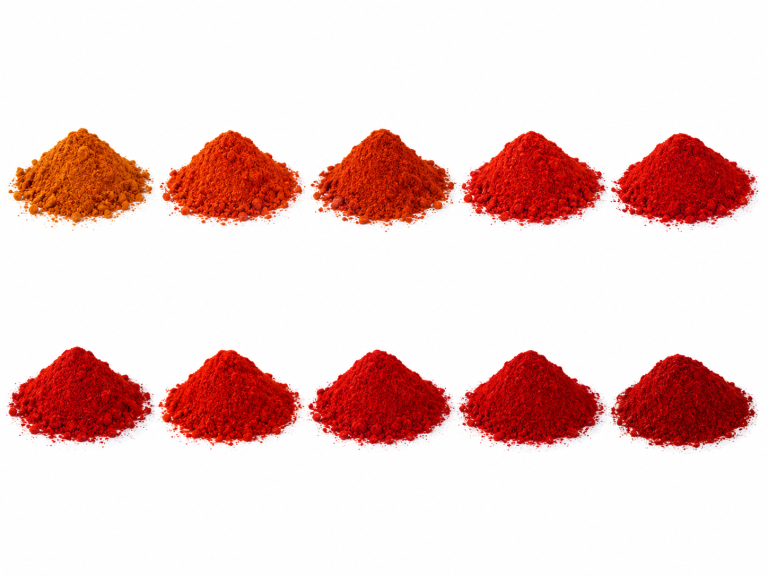
El sistema de clasificación por colores de la Asociación Americana del Comercio de Especias (ASTA) es el referente mundial en materia de calidad del pimentón, y mide el color extraíble mediante espectrofotometría a 460 nm:
| Valor de la ASTA | Grado de calidad | Aplicación típica | Disponibilidad en China |
|---|---|---|---|
| < 40 | Bajo / Industrial | Elaboración de alimentos a bajo coste | ✅ |
| 40–80 | Estándar Comercial | Fabricación de productos alimenticios en general | ✅ |
| 80–120 | Buena calidad | Productos alimenticios de primera calidad | ✅ |
| 120–160 | Alta calidad | Venta al por menor de productos de alta gama, extracción de oleorresinas | ✅ (punto óptimo chino) |
| 160–180 | Superior / Especial | Oleorresina de primera calidad | ✅ (Premium de Xinjiang) |
| > 180 | Excepcional | Extracto especial de alta intensidad cromática | ✅ (Seleccionar lotes) |
Además de ASTA, los compradores industriales evalúan:
- Humedad: < 11% (fundamental para la prevención de la aflatoxina)
- SHU (picante): Pimentón dulce < 500 SHU; semipicante 500–2.000 SHU
- Tamaño de malla: Malla 40-80 (uso industrial); malla 60-100 (uso doméstico)
- Microbiológicos: TPC < 100 000 UFC/g; ausencia de Salmonella en 25 g; la esterilización al vapor se está convirtiendo cada vez más en la norma
- Metales pesados: Cumplimiento de los LMR de la UE (plomo < 1,0 ppm, cadmio < 0,5 ppm)
5. Seguridad alimentaria: el panorama de cumplimiento normativo fundamental
5.1 El legado de Sudan Red
El escándalo del «Sudan Red» de 2003-2005 —en el que se añadieron ilegalmente colorantes industriales cancerígenos (Sudán I-IV) al pimentón y al chile en polvo para realzar su color— provocó la mayor retirada de productos alimenticios de la historia del Reino Unido y transformó radicalmente el sector:
- Un impacto duradero: Las pruebas obligatorias de «Sudan Red» son ahora imprescindibles para cualquier proveedor que suministre a los mercados de la UE y EE. UU.
- Respuesta china: Medidas restrictivas del Gobierno, requisitos de pruebas centralizadas y certificación por parte de laboratorios independientes
- Estado actual: La contaminación por «Sudan Red» es poco frecuente en las cadenas de suministro de exportación legítimas, pero sigue siendo la pregunta sobre la diligencia debida #1 que los compradores plantean a los proveedores chinos.
5.2 Límites máximos de residuos (LMR) de la UE
El cumplimiento de los LMR de la UE constituye el principal obstáculo técnico para la entrada del pimentón chino en los mercados europeos:
| Pesticida | Límite máximo de residuos de la UE (mg/kg) | Nivel de riesgo del pimentón chino |
|---|---|---|
| Clorpirifós | 0.01 | ALTO — muy utilizado a lo largo de la historia en China |
| Carbendazim | 0.1 | MEDIO |
| Acetamiprid | 0.3 | BAJO-MEDIO |
| Imidacloprid | 0.5 | BAJO |
| Lambda-cihalotrina | 0.1 | MEDIO |
| Triadimefón | 0.1 | MEDIO |
Las notificaciones del RASFF (Sistema de Alerta Rápida para Alimentos y Piensos) relativas al pimentón chino han disminuido de unas 35 al año (2015-2018) a unas 15 al año (2023-2025), lo que refleja una mejora significativa, aunque sigue siendo necesario mantener la vigilancia.
5.3 Riesgo de aflatoxinas
El pimentón es susceptible de sufrir contaminación por aflatoxinas (principalmente B1) si se seca o se almacena de forma inadecuada:
- Límite de la UE: 5 µg/kg (B1), 10 µg/kg (total)
- Medidas de control: Humedad < 11%, secado rápido tras la cosecha, almacenamiento en frío, análisis periódicos de los lotes
- El clima árido de Xinjiang supone una ventaja natural para la prevención de las aflatoxinas
PARTE II: PREVISIONES DE MERCADO PARA 2026-2027
6. Repercusiones del clima en las perspectivas de cosechas para 2026-2027
6.1 Evaluación regional de los cultivos
España: graves dificultades de abastecimiento
Andalucía y Extremadura —las principales regiones productoras de pimentón de España— están atravesando su tercer año consecutivo de grave sequía. Los niveles de los embalses, que se encuentran en mínimos históricos, obligaron a imponer restricciones en el uso del agua para la agricultura en 2025:
- Cosecha de 2025: 15–25% por debajo de lo normal; calidad afectada: vainas más pequeñas, valores ASTA más bajos
- Pimentón de la Vera (DOP): Se ha visto especialmente afectado debido a las variedades de pimiento de ciclo más largo
- Perspectivas para 2026: Persiste la escasez de agua; los agricultores están optando por cultivos que requieren menos agua (olivos, almendros)
- Es probable que la oferta de café español de alta calidad se vea limitada hasta 2026-2027
Hungría: Calentamiento regional acelerado
La cuenca de los Cárpatos se está calentando entre 2 y 2,5 °C por encima de los niveles preindustriales (frente a una media mundial de entre 1,2 y 1,4 °C):
- Las olas de calor de 2025, registradas entre julio y agosto (período de floración y fructificación), redujeron considerablemente los rendimientos.
- Las regiones de Szeged y Kalocsa se enfrentan a un déficit de humedad del suelo
- Disminución de la calidad de las denominaciones de origen protegidas (DOP) «Kalocsai» y «Szegedi» en las variedades dulces nobles
- Perspectivas para 2026: Los agricultores se están adaptando mediante el riego por goteo siempre que es posible; la recuperación será moderada si el verano es menos extremo.
China (Xinjiang, Gansu): Estabilizador del suministro
- Temporada de cultivo de 2025: condiciones dispares — el norte de Xinjiang contó con un riego adecuado procedente del deshielo; las zonas del sur sufrieron sequía
- La política agrícola del Gobierno chino, que está reorientando la superficie cultivada para reducir los cultivos que requieren un gran consumo de agua, ha dejado fuera a el pimentón (que es relativamente resistente a la sequía).
- Perspectivas para 2026: Se prevé que la producción de Xinjiang se mantenga estable o aumente ligeramente
- El papel de China: Establece un precio mínimo para el pimentón a nivel mundial, lo que evita los picos extremos observados en los orígenes europeos de alta calidad.
India: centro de procesamiento de oleorresinas
- La India procesa entre 60 y 70% de oleorresina de pimentón a nivel mundial (principalmente para su reexportación), y se abastece de materia prima tanto a nivel nacional como mediante importaciones.
- Monzón de 2025: precipitaciones irregulares, pero cercanas a lo normal, en las principales regiones productoras de chile; las lluvias de cosecha, inusuales para la época, provocaron algunos problemas de calidad
- Perspectivas para 2026: Previsión favorable para el monzón (el IMD prevé un régimen normal o superior a lo normal). Se espera que el suministro de oleorresina de la India se mantenga estable, lo que moderará los precios mundiales de la oleorresina.
Perú: Estrés hídrico a largo plazo
- El cultivo de pimentón en la costa peruana (Ica, Arequipa) depende del agua de deshielo de los Andes; los glaciares se están retirando
- 2025–2026: Transitioning from El Niño to ENSO-neutral; coastal temperature anomalies affecting yields
- Perspectivas para 2026: Moderately below trend; export-quality Peruvian paprika likely to command premium pricing
6.2 Escenarios de oferta agregada (2026-2027)
| Scenario | Probability | Descripción | Price Impact |
|---|---|---|---|
| Supply Deficit | 40% | Spain + Hungary + Peru all below normal; India/China cannot fully offset quality gap | Premium grades +20–35% |
| Tight but Balanced | 35% | India/China good crops offset European/Peruvian shortfalls | +10–20% |
| Adequate Supply | 25% | Favorable weather in all regions | Stable to slight increase |
Base case (August 2026): Tight but balanced to moderate deficit. The structural shortfall in Spain — a key supplier of premium high-ASTA paprika — is significant and cannot be fully replaced by Chinese or Indian production for buyers requiring specific flavor profiles (smoked, PDO-designated). Premium paprika grades (120–160 ASTA, smoked, PDO) face the highest risk of significant price escalation.
7. Previsión de precios para 2026-2027
7.1 Situación actual de los precios (mediados de 2026)
| Origin / Grade | Price (USD/MT) | vs. 2023–2024 Avg |
|---|---|---|
| Spanish sweet (120 ASTA) | $4,500–5,500 | +25–35% |
| Hungarian noble sweet | $4,000–5,000 | +20–30% |
| Spanish smoked PDO (Pimentón) | $8,000–12,000 | +30–40% |
| Chinese dehydrated (80–100 ASTA) | $2,200–2,800 | +5–10% |
| Indian (80–100 ASTA) | $2,500–3,000 | Stable to +8% |
| Paprika oleoresin (100,000 CU) | $25–35/kg | +10–15% |
7.2 Expectativas sobre los precios futuros
                     H2 2026               H1 2027              H2 2027
Premium Origins  ─────────────────────────────────────────────────────
(Spanish/Hungarian)   +15-25% ↑↑        PEAK PRICING          -10-25% ↓
                                                    (if new crop good)

Chinese/Indian    ─────────────────────────────────────────────────────
(Bulk industrial)     +5-10% ↑           +5-10% ↑             Stable →
                                                              (price floor)

Oleoresin         ─────────────────────────────────────────────────────
(E160c extract)       +10-18% ↑          +5-10% ↑             Stable →
                                                              (India supply)
7.3 Variables clave a tener en cuenta
- Spanish autumn/winter 2026 rainfall — determines reservoir levels for 2027 crop planting
- Indian monsoon 2027 — determines oleoresin raw material supply (60–70% of global capacity)
- EU regulatory developments — any further synthetic color restrictions accelerate E160c demand
- European energy prices — affect processing costs for smoked paprika (oak-burning drying)
- USD strength — paprika is primarily USD-traded; dollar strength impacts affordability for non-USD buyers
- China export policy — any changes to Xinjiang agricultural subsidies or export restrictions
8. Implicaciones estratégicas y recomendaciones en materia de contratación pública
8.1 Para compradores industriales
| Priority | Action | Rationale |
|---|---|---|
| 🔴 HIGH | Diversify origins now | Over-reliance on Spanish/Hungarian premium creates supply vulnerability |
| 🔴 HIGH | Contract early for 2027 | Lock in pricing before new-crop uncertainty tightens the market |
| 🟡 MEDIUM | Evaluate oleoresin substitution | Where color (not flavor) is primary requirement, oleoresin offers cost-in-use advantages and supply stability |
| 🟡 MEDIUM | Qualify Chinese suppliers | Chinese paprika offers best price-stability ratio; invest in supplier audits and MRL testing protocols |
| 🟢 ONGOING | Monitor Spanish reservoir levels | Q4 2026–Q1 2027 rainfall data will be the leading indicator for 2027 supply |
8.2 Para productores y exportadores de pimentón
| Priority | Action | Rationale |
|---|---|---|
| 🔴 HIGH | Invest in EU MRL compliance | The #1 differentiator separating Chinese exporters who access premium markets from those who don’t |
| 🔴 HIGH | Build organic certification pipeline | Organic paprika commands 30–50% price premium; demand growing 8–10% annually |
| 🟡 MEDIUM | Develop oleoresin extraction capacity | Captures value-add margin instead of exporting raw material to India for processing |
| 🟡 MEDIUM | Offer multi-origin portfolios | Buyers increasingly want single-supplier, multi-origin solutions for supply chain resilience |
| 🟢 ONGOING | Transparent food safety documentation | Sudan Red-free certificates, MRL batch testing, and aflatoxin reports are table stakes |
8.3 Por qué el pimentón chino será la mejor opción para los compradores industriales en 2026-2027
                Chinese Paprika         European Paprika
                (Xinjiang/Gansu)        (Spain/Hungary)

Price           ████████████ $2,200     ████████████████████ $5,000
ASTA Color      ████████████████ 160     ██████████ 120
Supply Stability ████████████████████    ██████ (DROUGHT)
Volume Scale    ████████████████████    ██████
Food Safety     ██████████ (improving)  ████████████████
Flavor Heritage ██████                  ████████████████████
Organic Avail.  ██████ (growing)        ██████████████
Verdict: For the 80% of industrial paprika use cases where color strength, cost predictability, and supply reliability matter most — Chinese paprika is the rational choice. The remaining 20% — premium retail, gourmet PDO applications, and smoke-forward flavor profiles — remains the domain of European origins, but even there, supply risk is pushing buyers to explore alternatives.
9. Acerca de PaprikaBulk / Dinweys® Qingdao
PaprikaBulk.com is the official B2B platform of Dinweys® Qingdao — a specialized Chinese manufacturer dedicated to industrial-scale paprika processing and global export.
Our Product Portfolio — View Full Catalog →
| Product Line | ASTA Grades | Format | Key Application |
|---|---|---|---|
| ASTA 40 Paprika Powder | 40 | Polvo | Budget industrial coloring |
| ASTA 80 Paprika Powder | 80 | Polvo | Mainstream food manufacturing |
| ASTA 100 Paprika Powder | 100 | Polvo | Premium commercial grade |
| ASTA 120 Pimentón en polvo | 120 | Polvo | Standard export specification |
| ASTA 120–150 Superior | 120–150 | Polvo | High-color food products |
| ASTA 160 Special Extra | 160 | Polvo | Top-tier oleoresin extraction |
| Copos de pimentón | 80–180 | Copos | Visual texture, topical coatings |
| Pimientos enteros | Export Grade | Total | Further processing, specialty |
Especificaciones de las instalaciones
| Métrico | Valor |
|---|---|
| Annual Processing Capacity | 4,500 metric tonnes |
| Daily Raw Material Intake | 20+ metric tonnes |
| Certifications | HACCP, ISO 22000 |
| Sudan Red Guarantee | 100% Sudan Red-Free; batch-level third-party testing |
| Location | Jiaozhou, near Qingdao Port, China |
Request a Quote → | Preguntas frecuentes | Norma del producto | Artículos
📚 Further Reading on PaprikaBulk:
- EU vs China Paprika Standards: What Buyers Should Actually Compare — Technical comparison guide
- Paprika Heavy Metal Limits Guide (China) — Compliance specifications
- Especificaciones microbiológicas del pimentón para la fabricación industrial de alimentos — Quality standards
- Normas sobre residuos de plaguicidas en el pimiento — MRL compliance
- Paprika Color E160c Explained for B2B Buyers — Oleoresin deep dive
- Normas de humedad del pimentón para la industria alimentaria — Aflatoxin prevention
- ¿Cómo se elabora el pimentón? — Production process
- Browse All Articles →
10. Metodología y fuentes de datos
Metodología de la investigación
This report employs multi-source triangulation, synthesizing data from:
- Market research firms: Mordor Intelligence, Grand View Research, Allied Market Research, SkyQuest, Data Bridge, MarketsandMarkets
- Trade data platforms: Volza, Tridge, UN Comtrade
- Industry associations: ASTA (American Spice Trade Association), ESA (European Spice Association), International Pepper Community
- Government data: USDA Foreign Agricultural Service, EU RASFF portal, FAOStat
- Climate data: NOAA ENSO forecasts, European Drought Observatory, IPCC regional assessments
- Company disclosures: Synthite, Oterra, Kalsec, McCormick annual reports
Mapa de cobertura de datos
Source Type         Count    Credibility
━━━━━━━━━━━━━━━━━━━━━━━━━━━━━━━━━━━━━━
Market Research       6      ★★★★☆  (independent, scope-diverse)
Trade Data            3      ★★★★★  (primary transaction data)
Industry Assoc.       3      ★★★★★  (high authority)
Government Data       4      ★★★★★  (verified, public)
Climate Data          3      ★★★★☆  (scientific, probabilistic)
Corporate Discls.     4      ★★★★☆  (self-reported, verified)
Aviso legal
This report is compiled from publicly available information as of August 12, 2026. Market data originates from third-party research organizations; variations in statistical methodology and sample design may produce discrepancies across sources. Forward-looking projections involve inherent uncertainty, particularly given climate volatility and geopolitical factors. This report does not constitute investment or procurement advice. Real-time verification is recommended for trading decisions.
© 2026 Dinweys® Qingdao. This report may be reproduced in full with attribution to PaprikaBulk.com