Китайская паприка: полное руководство по закупке высококачественной паприки из Китая (2026)
Вкратце: China is the world’s largest паприка producer, with Xinjiang and Shandong as the primary growing regions. Chinese paprika offers competitive pricing (30-50% below Spanish/Hungarian), a wide range of ASTA color grades (80-200), and established supply chains for порошок, dried стручки, and oleoresin. Key concerns — aflatoxin control and pesticide residues — are manageable with proper supplier vetting and third-party lab testing.
China Paprika: The Complete Guide to Sourcing Quality Paprika from China
If you’re sourcing paprika for your food business, you’ve probably looked at Spain, Hungary, and maybe India. But here’s the thing — China has quietly become the world’s biggest paprika producer, and chances are you’re already buying Chinese paprika without knowing it.
I’ve spent years in the spice trade, working with processors from Urumqi to Qingdao. This guide covers everything I wish someone had told me when I started sourcing from China — the good, the tricky, and the stuff most suppliers won’t tell you.
1. Why China Matters in the Global Paprika Trade
Let’s start with the numbers. China produces an estimated 380,000-420,000 metric tons of paprika annually, far exceeding Spain (~60,000 tons) and Hungary (~15,000 tons). The bulk comes from two regions:
| Регион | Annual Output | Primary Type | Сезон сбора урожая |
|---|---|---|---|
| Синьцзян | ~250,000 tons | High-oleoresin, deep red color | Aug-Oct |
| Шаньдун | ~80,000 tons | Mild, sweet paprika powder | Jul-Sep |
| Others (Gansu, Inner Mongolia) | ~50,000 tons | Mid-grade, mixed use | Aug-Oct |
Why does this matter for your supply chain? Three reasons:
Price. Chinese paprika typically runs 30-50% cheaper than Spanish or Hungarian equivalents. Right now, wholesale ASTA 100 paprika powder from China sits around $2.80-3.50/kg FOB, compared to $5.00-7.00/kg for Spanish.
Scale. When you need a container load — 13-20 tons per 20GP — Chinese processors can deliver consistently. They’re set up for volume in a way that European mills often aren’t.
Oleoresin supply. China dominates paprika oleoresin производство, supplying roughly 60% of the global market. If you’re in the natural color business, you’re probably already buying Chinese.
But price and scale aren’t everything. Let’s talk about what you actually get.
2. Types of Paprika from China
Not all Chinese paprika is the same. Here’s what you’ll find on the market:
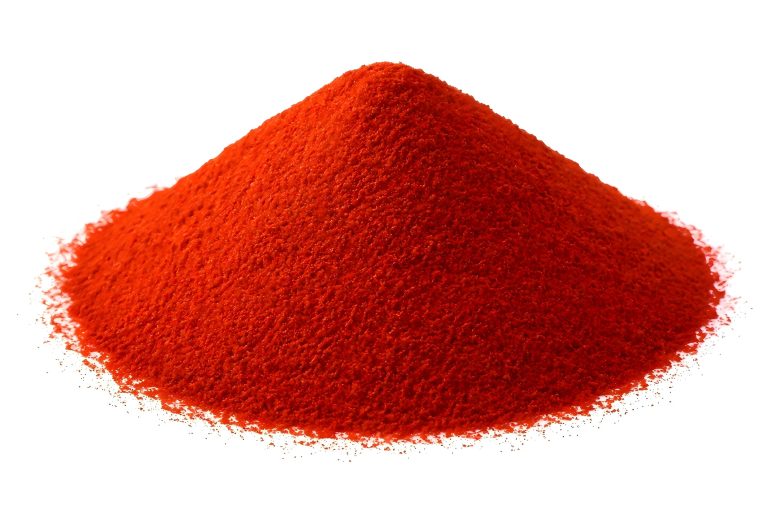
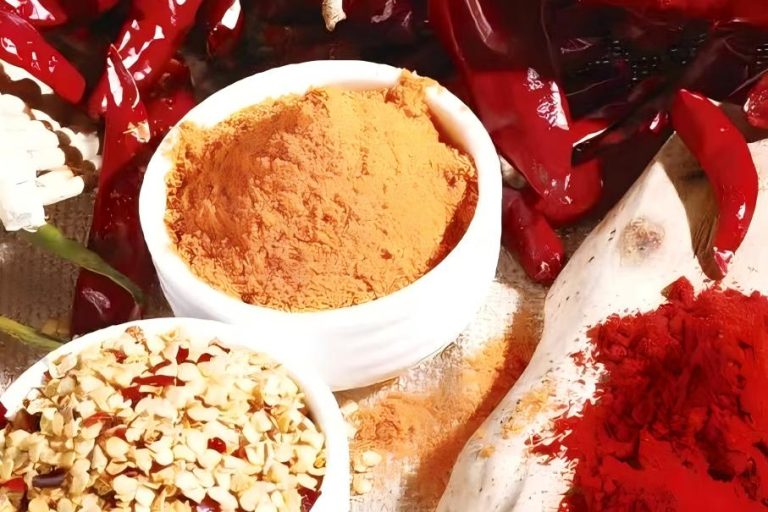
Paprika Powder (HS 0904.22)
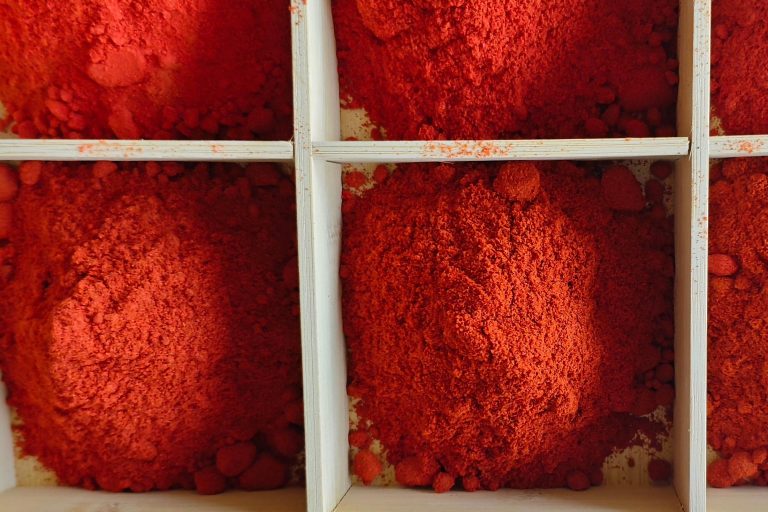
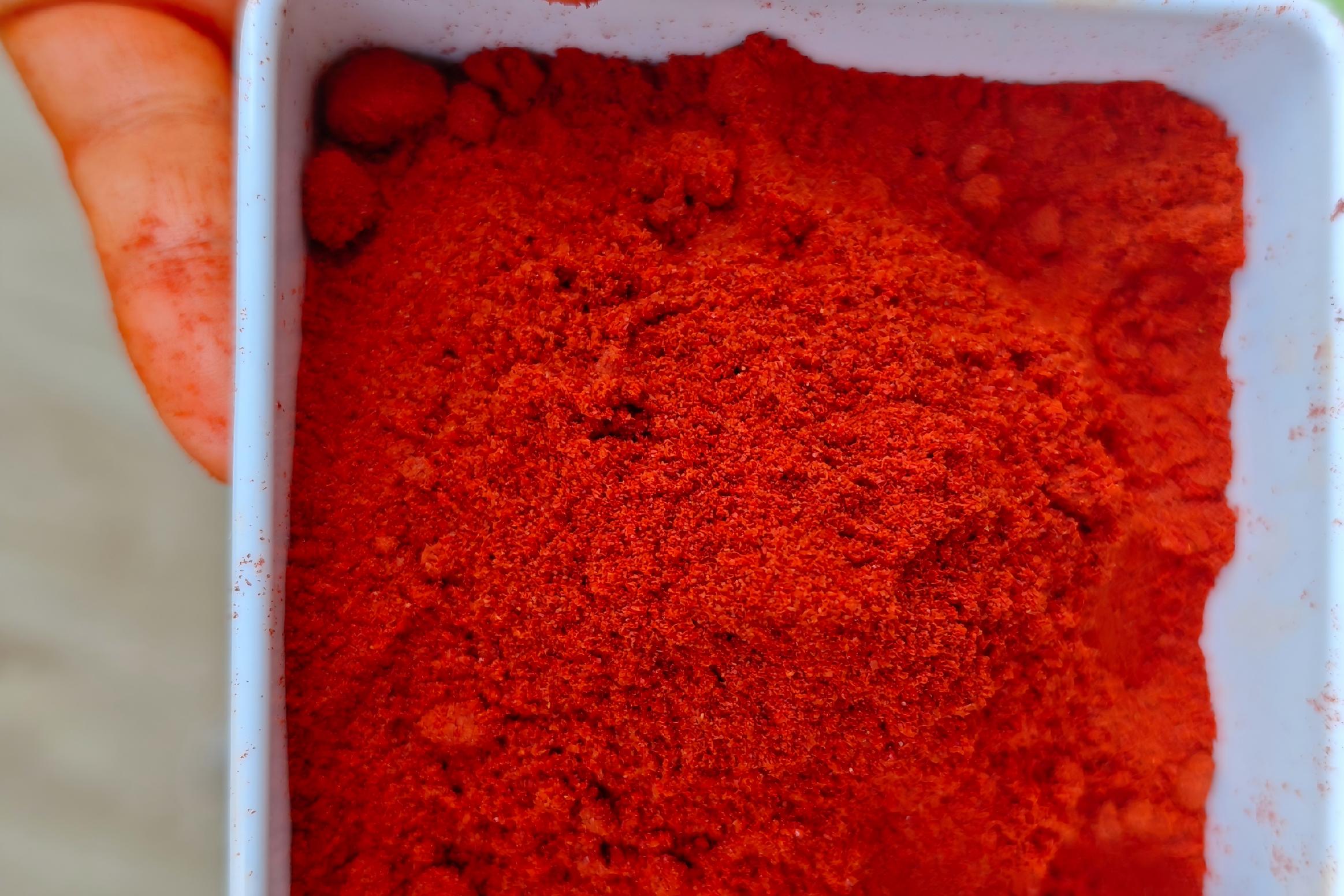
The most common export form. Ranges from light red (ASTA 80) to deep crimson (ASTA 200+).
Typical specs:
- Color value: ASTA 80-200
- Mesh size: 40-80 mesh (customizable)
- Moisture: ≤10%
- Total ash: ≤8%
- Packaging: 25kg cartons / 500kg jumbo bags
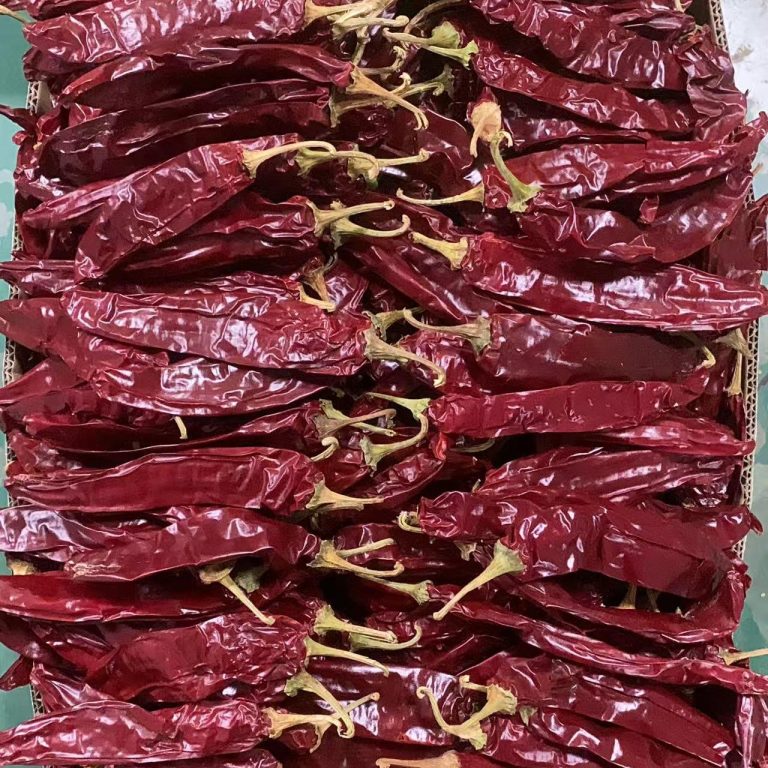
Dried Paprika Pods (HS 0904.21)
Whole dried pods, mainly from Xinjiang. Used for further processing or direct grinding. Lighter to ship (lower density than powder) but more variable in quality.
Paprika Oleoresin (HS 3302.10)
This is where China really shines. Oleoresin is the concentrated extract — deep red, viscous, used as a natural colorant in everything from sausages to snacks.
Common grades:
- 40,000 CU (color units) — стандартный
- 80,000 CU — high-concentration
- 100,000+ CU — premium, for cost-sensitive formulations
Organic Paprika
A growing segment, but still small — maybe 5-8% of exports. Certified organic paprika from China is usually handled through Jiangsu or Zhejiang processors with EU/USDA/NOP certification.
3. Quality: What to Check, What to Watch For
Here’s the honest truth: Chinese paprika can be excellent, or it can be a headache. The difference comes down to three things:
Цветовая шкала (ASTA)
Most Chinese paprika powder sits in the ASTA 80-140 range. Premium grades (160-200+) exist but cost more.
A common trick: some suppliers blend in synthetic red pigments to boost color. A quick lab test with a spectrophotometer catches this. Don’t skip it.
Афлатоксин
This is the #1 concern for Western buyers. Paprika is susceptible to aflatoxin B1, B2, G1, G2 — especially if drying conditions are poor.
European limits: Total aflatoxins ≤10 µg/kg, B1 ≤5 µg/kg
US limits: 20 µg/kg total
Good suppliers test every batch. If your supplier hesitates when you ask for aflatoxin certificates, walk away.
Остатки пестицидов
Xinjiang’s arid climate means fewer pest problems than Shandong, but excess residues still happen. Key things to test for: chlorpyrifos, carbendazim, and pyrethroids.
Тяжёлые металлы
Lead and cadmium are the usual culprits. Insist on ICP-MS testing for every shipment, not just a general COA.
4. How to Source Paprika from China (The Right Way)
I’ve seen too many importers get burned by skipping the basics. Here’s a process that works:
Step 1: Find the right supplier
Skip the middlemen in Shanghai or Shenzhen who don’t own processing facilities. You want:
- A processor in Xinjiang or Shandong with their own growing base
- ISO 22000 or HACCP certification (real ones, not fakes)
- Minimum 3 years of export history
Step 2: Order samples — and test them
Ask for 3 samples from different batches. Send them to an independent lab (Eurofins, SGS, Bureau Veritas). Test for:
- Значение цвета ASTA
- Афлатоксины
- Остатки пестицидов
- Тяжёлые металлы
- Microbiology (salmonella, E. coli, yeast & mold)
Step 3: Negotiate specs in the contract
Put everything in writing. Include:
- Rejection thresholds for aflatoxin and residue levels
- ASTA minimum and acceptable variance (±5 points)
- Arbitration terms (CIETAC is standard)
- Incoterms (FOB Qingdao or CIF destination port)
Step 4: Third-party inspection
Before loading, hire SGS or CCIC to inspect. They’ll check weight, packaging, moisture, and take samples for the lab.
Step 5: Ship
Standard lead time: 15-25 days after contract. Most shipments go through:
- Qingdao — main spice export port (Shandong processors)
- Shanghai — flexible, handles Xinjiang goods via rail
- Tianjin — less common but viable for northern shipments
Ocean freight to US West Coast runs about $4,000-6,000 per container as of mid-2026.
5. China vs. Other Origins
| Фактор | Китай | Испания | Индия | Венгрия |
|---|---|---|---|---|
| Price (ASTA 100) | $2.80-3.50/kg | $5.00-7.00/kg | $2.20-3.00/kg | $6.00-8.00/kg |
| Color potency | Good (80-200 ASTA) | Excellent (120-250) | Moderate (60-100) | Excellent (140-280) |
| Aflatoxin risk | Средний | Низкий | Высокий | Низкий |
| Lead time | 15-25 days | 10-20 days | 20-35 days | 10-20 days |
| Minimum order | 13-20 tons (FCL) | 5-10 tons | 5-10 tons | 5 tons |
| Supply reliability | Высокий | Moderate (weather dependent) | Умеренный | Low (small volumes) |
6. Key Export Markets
Chinese paprika reaches every continent. The top destinations in 2025:
- Соединенные Штаты — ~35% of exports, mainly powder and oleoresin
- Германия — ~15%, quality-sensitive, prefers tested batches
- Япония — ~10%, strictest pesticide limits globally
- South Korea — ~8%, growing fast
- Mexico — ~7%, re-export hub for Latin America
7. Certifications That Actually Matter
Not all certificates are created equal. Here’s what to look for:
| Certificate | What It Covers | Fake Risk |
|---|---|---|
| ISO 22000 | Food safety management | Medium — verify with certification body |
| HACCP | Hazard analysis | Low — usually legitimate |
| BRC / FSSC 22000 | GFSI-benchmarked, rigorous | Low — hard to fake |
| Organic (USDA/EU/NOP) | Organic farming + processing | Medium — verify serial # with certifier |
| Kosher (OU/Star-K) | Religious compliance | Низкий |
| Халяль | Islamic dietary compliance | Средний |
Pro tip: Don’t just accept a PDF. Ask for the certificate number and verify it directly with the issuing body. QR codes on certificates are increasingly common and harder to fake.
8. Common Problems — and How to Avoid Them
Problem 1: Color fade
High ASTA paprika exposed to heat or light degrades fast. Shipments arriving in summer months should use foil-lined bags and containers with temperature loggers.
Problem 2: Adulteration
Some processors cut paprika with chili pepper, tomato powder, or Sudan red dye. A simple TLC (thin-layer chromatography) test catches most adulterants.
Problem 3: Moisture issues
Paprika over 12% moisture grows mold. Check moisture at loading and on arrival. If the container sweats (container rain), reject the shipment.
Problem 4: Documentation delays
Chinese customs sometimes hold spice exports for phytosanitary checks. Build in 5-7 buffer days when planning inventory.
9. 2026 Market Outlook
The China paprika market is shifting in a few ways worth watching:
- Processing upgrading. New GMP-certified facilities in Shandong are raising the quality floor. Expect better consistency from top-tier suppliers.
- Concentration. The top 10 processors now control ~40% of export capacity. Smaller traders are getting squeezed out.
- Organic growth. Organic paprika exports grew ~18% year-over-year. If you’re not looking at certified supply yet, you will be soon.
- Price pressure. Domestic demand in China is rising (snack foods, instant noodles). This may push export prices up 5-10% over the next two years.
10. Key Takeaways
- China produces 380,000+ tons of paprika annually — more than Spain, Hungary, and India combined
- Xinjiang is the heart of production; Shandong handles most processing and export
- Chinese paprika is 30-50% cheaper than European equivalents, with competitive ASTA values
- Aflatoxin and pesticide control requires independent lab testing — don’t skip it
- The oleoresin market is dominated by China (~60% global share)
- Top exporters to check: Shandong-based processors with ISO 22000 + independent lab reports
Часто задаваемые вопросы
Q: Is Chinese paprika safe?
A: Yes, when sourced from reputable processors with proper testing. Stick to ISO 22000 or BRC-certified suppliers who test every batch for aflatoxins, pesticides, and heavy metals.
Q: What’s the minimum order quantity?
A: For full container load (FCL), about 13-20 tons depending on the product form. Some suppliers offer LCL (less than container load) at a premium.
Q: How does Chinese paprika compare to Spanish?
A: Spanish paprika generally has higher color values (ASTA 160-250 vs 80-140) and is perceived as more consistent. But Chinese paprika costs 40-50% less. For many industrial applications, Chinese paprika is perfectly adequate.
Q: Can I get organic certification?
A: Yes. Several Chinese processors hold EU organic, USDA NOP, and JAS certification. Expect to pay a 20-30% premium over conventional.
Q: How long does shipping take?
A: Production takes 15-25 days, ocean freight another 15-30 days depending on destination. Total lead time from order to arrival: 5-8 weeks.
This guide is based on industry experience and publicly available trade data. Prices and market conditions change — always verify current quotes with suppliers.