Parte de la El pimentón en la industria alimentaria Guía: una visión general completa de pimentón aplicaciones en todo el sector alimentario.
El pimentón como colorante alimentario natural (E160c): la guía industrial para la fabricación de productos «clean label»
La revolución del color natural
El mercado mundial de los colorantes alimentarios está experimentando su transformación más significativa en un siglo. Dado que los consumidores rechazan cada vez más los aditivos sintéticos y que las autoridades reguladoras están endureciendo los marcos de autorización, los colorantes naturales han pasado de ser un nicho de mercado a convertirse en la norma. Entre ellos, color de pimentón (E160c) — derivado de Capsicum annuum — se ha convertido en uno de los pigmentos naturales de color rojo anaranjado más versátiles y de mayor importancia comercial.
Las previsiones del mercado mundial sitúan el mercado de los colorantes alimentarios naturales en 3.800 millones de dólares para 2030, con un crecimiento a una tasa compuesta anual (CAGR) del 8,51 TP3T, en el que los colorantes a base de pimentón ocupan una cuota de mercado líder gracias a su estabilidad térmica, su tolerancia al pH y su amplia gama de aplicaciones.
Entender el color del pimentón: del polvo a la oleorresina
El pimentón aporta color a través de dos formas comerciales principales, cada una de ellas adecuada para diferentes aplicaciones:
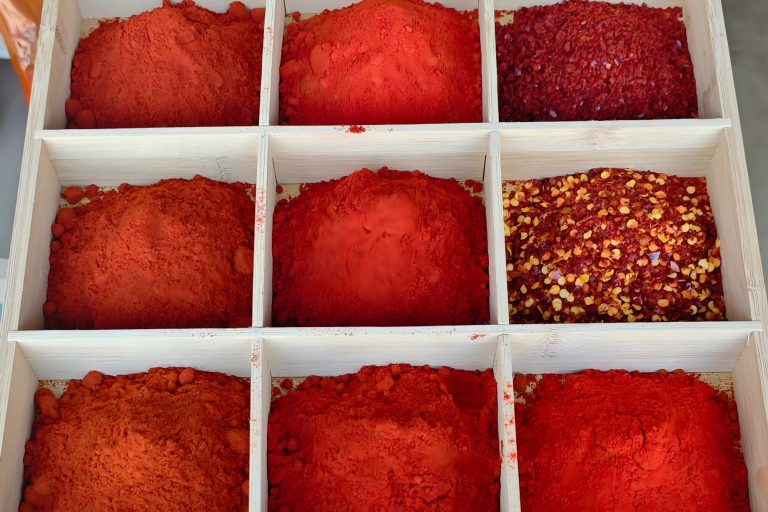
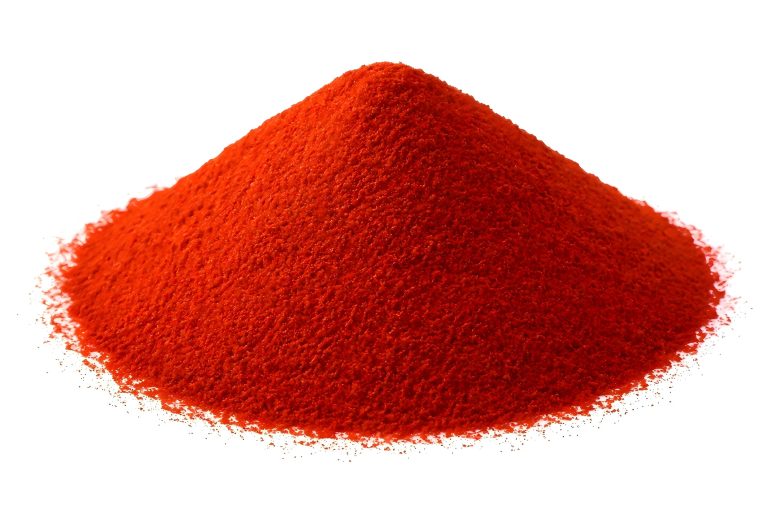
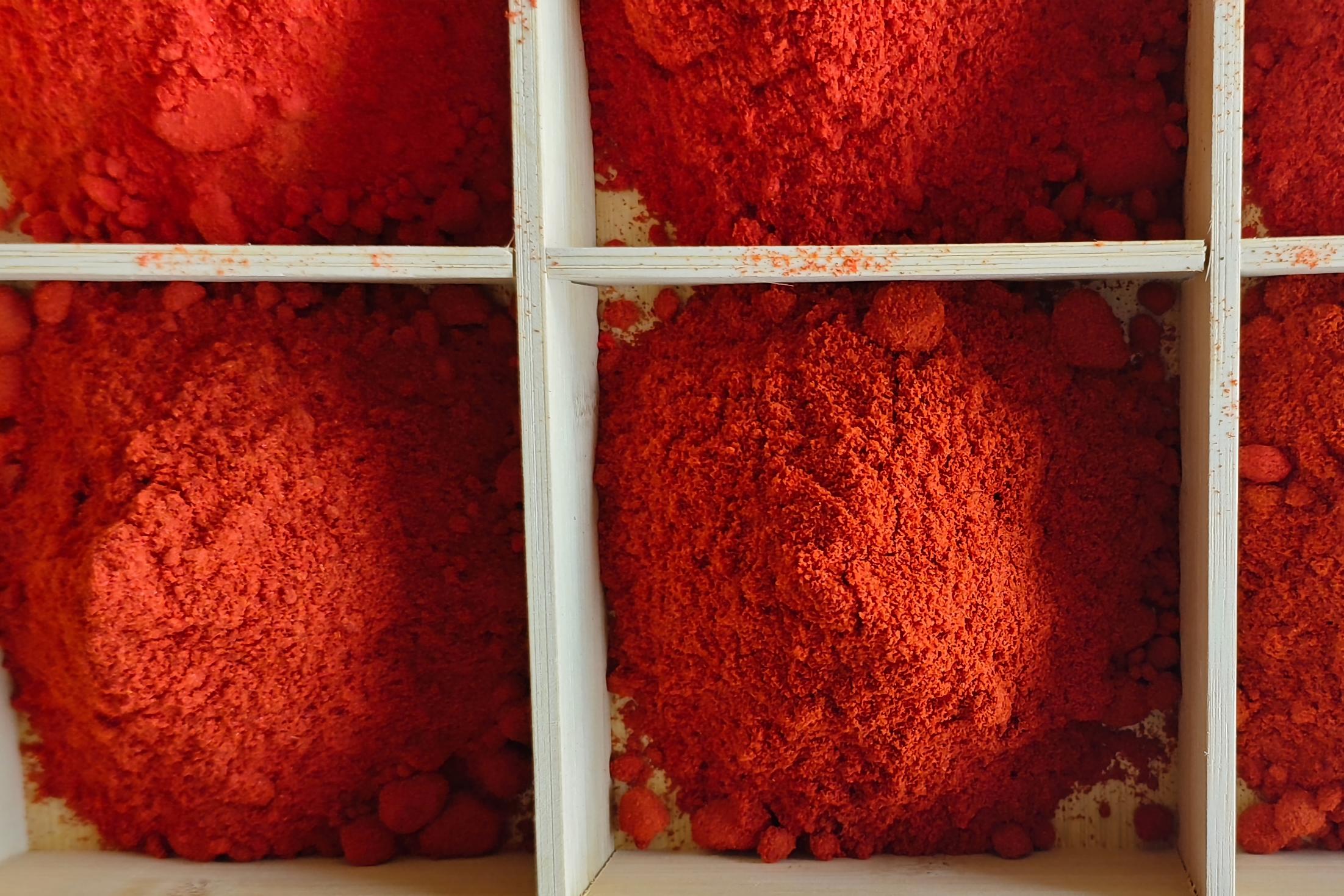
Pimentón en polvo (especia molida)
- Portador del color: Molido entero vainas (piel, pulpa, semillas)
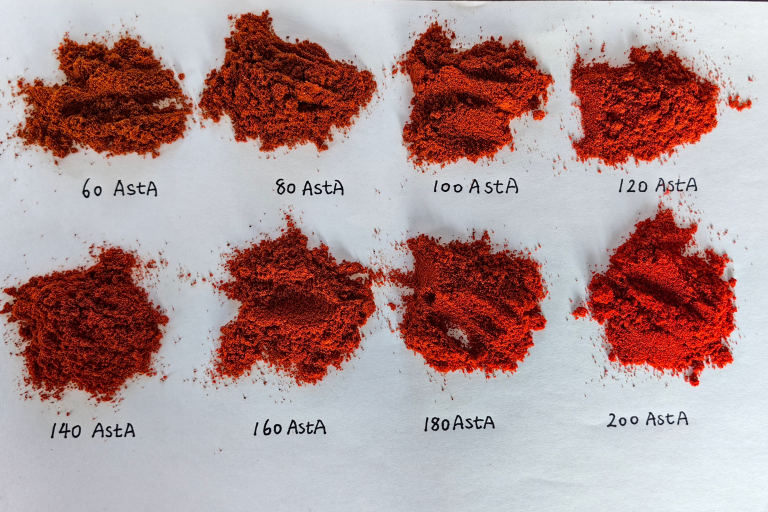
- Gama ASTA: 80–150+
- Solubilidad: Dispersable en agua (no totalmente soluble)
- Mejores aplicaciones: Condimentos secos, recubrimiento superficial, incorporación a la masa
- Declaración de la etiqueta: “Paprika” o “Pimentón en polvo”
Oleorresina de pimentón (extracto líquido)
- Portador del color: Extracto soluble en aceite
- Intensidad del color: 40 000–100 000 CU (unidades de color), lo que equivale a entre 10 y 40 veces la intensidad del color de estándar polvo
- Solubilidad: Soluble en aceite; puede emulsionarse para sistemas a base de agua
- Mejores aplicaciones: Salmueras para inyectar en la carne, salsas a base de aceite, adobos, queso fundido
- Declaración de la etiqueta: “Extracto de pimentón (E160c)” o “oleorresina de pimentón”
| Comparación | Pimentón en polvo | Oleorresina de pimentón |
|---|---|---|
| Intensidad del color | 80-150 ASTA | 40 000–100 000 CU |
| Formulario | Polvo seco | Líquido viscoso |
| Solubilidad | Dispersable en agua | Soluble en aceite |
| Vida útil | 12-24 meses | 18-24 meses (en envase hermético) |
| Coste por unidad de color | Más bajo para uso en superficies | Más bajo para la coloración a granel |
| Ideal para | Mezclas secas, condimentos para patatas fritas | Emulsiones, salmueras, sistemas líquidos |
Aplicaciones del E160c por categoría de alimentos
Productos cárnicos y avícolas
El extracto de pimentón es el colorante rojo natural más utilizado en los productos cárnicos procesados:
- Salchichas cocidas: 0,02–0,051 de oleorresina TP3T (40 000 CU) en emulsión
- Aves marinadas: 0,01–0,031 TP3T en la salmuera de inyección
- Recubrimiento de salchicha seca: Aplicación superficial de pimentón en polvo a 0,3–0,51 TP3T
- Ventaja: Resistente al calor hasta 200 °C; soporta los procesos de esterilización en autoclave y de cocción
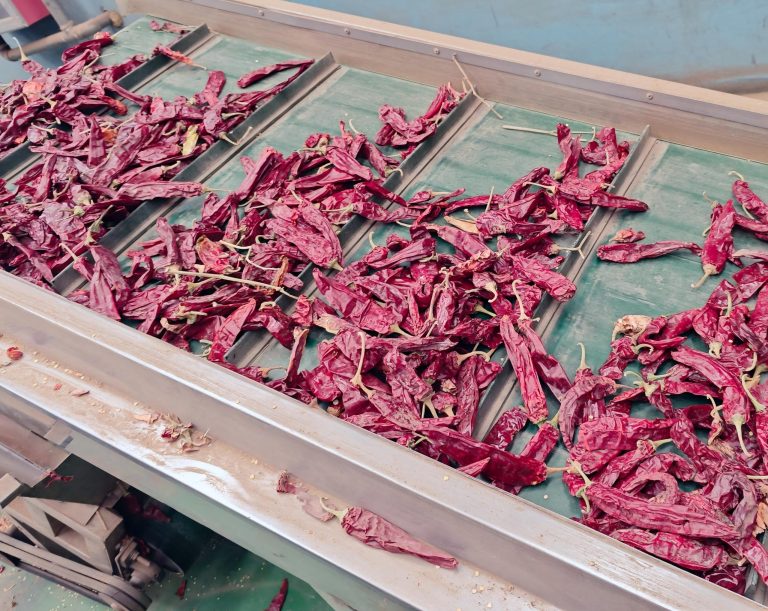
Ventajas del abastecimiento en China: El clúster de procesamiento de Jiaolai, en Shandong, produce pimentón específicamente optimizado para la extracción de oleorresina, con un contenido de capsantina entre un 15 % y un 25% superior al del material de calidad comercial.
Aperitivos y condimentos
El color natural del pimentón aporta un atractivo visual a todas las categorías de aperitivos:
- Patatas fritas: Polvo a 1,5–3,51 TP3T en el proceso de secado y sazonado
- Aperitivos extruidos: Oleorresina en una concentración de 0,005–0,021 TP3T en aerosol de aceite
- Galletas saladas al horno: Polvo en una proporción de 0,5–2,01 TP3T en la masa
- Ventaja: Las versiones de oleorresina microencapsulada ofrecen una mayor estabilidad a la luz para los envases transparentes
Salsas, aderezos y condimentos
El color «Paprika» ofrece un rendimiento excepcional en sistemas ácidos y a base de aceite:
- Salsa barbacoa: Oleorresina en una proporción de 0,01–0,031 TP3T para obtener un tono rojo intenso
- Salsas a base de tomate: 0,005–0,021 TP3T para realzar el color rojo
- Aderezos para ensaladas: 0,01–0,051 TP3T en fase oleosa
- Salsa picante: Tanto en polvo como en oleorresina para combinar color y sabor
Sopas, caldos y platos preparados
- Mezclas para sopas instantáneas: Polvo en una proporción de 0,3–1,01 TP3T en la mezcla seca
- Sopas líquidas: Oleorresina: 0,005–0,021 TP3T
- Platos preparados congelados: El color, resistente al calor, se mantiene tras el recalentamiento en el microondas
- Sobres de condimentos para fideos: Pimentón en polvo en una proporción de 2–8% de la fórmula de condimentos
Productos lácteos y quesos
- Queso fundido: Oleorresina en una proporción de 0,005–0,011 TP3T para obtener un tono rojo anaranjado
- Quesos en polvo: Pimentón en polvo en una proporción de 0,5–2,01 TP3T en el condimento para queso seco
- Untables lácteos: La oleorresina soluble en aceite se mezcla fácilmente con la fase grasa
Panadería y pastelería
- Galletas saladas: Polvo en la masa en una proporción de 0,5–1,51 TP3T
- Rebozados de pan: Aplicación superficial con adhesión al aceite
- Rellenos y pastas: Oleorresina en rellenos a base de grasa
Estabilidad del color: consideraciones técnicas
Comprender la estabilidad del color del pimentón es fundamental para garantizar la uniformidad en la fabricación:
Sensibilidad a la luz
Los pigmentos de pimentón son susceptibles a la fotodegradación. Entre las estrategias para mantener el color se incluyen:
- Uso de oleorresina microencapsulada — mejora la estabilidad a la luz entre un 40 y un 60%
- Envases opacos — evita la decoloración provocada por los rayos UV
- Sinergia antioxidante — La adición de tocoferol (vitamina E) en una proporción de 0,01 a 0,051 TP3T estabiliza el color
Tolerancia al pH
El colorante de pimentón presenta una excelente estabilidad en un rango de pH de 3,0 a 8,0, lo que lo hace adecuado para salsas ácidas (pH 3,5-4,5) y preparaciones cárnicas casi neutras (pH 5,5-6,5).
| Rango de pH | Estabilidad | Productos típicos |
|---|---|---|
| 3.0–4.5 | Bien | Vinagretas, salsa picante |
| 4.5–6.0 | Excelente | Salsa de tomate, embutidos |
| 6.0–8.0 | Bien | Sopas, productos lácteos, productos de panadería |
Estabilidad térmica
La oleorresina de pimentón resiste los procesos térmicos habituales:
- Pasteurización (72 °C, 15 segundos): >Retención del color del 95%
- Retorta (121 °C, 20 min): 70–85%: retención del color
- Fritura (170–190 °C): 50–70%: retención del color (aplicación superficial)
Sustituir los colorantes rojos sintéticos por pimentón
Muchos fabricantes están pasando de los colorantes rojos sintéticos (rojo FD&C 40, rojo 3 o sus equivalentes de la UE, E124 y E129) a alternativas naturales a base de pimentón:
| Color sintético | Alternativa al pimentón | Índice de sustitución | Consideraciones |
|---|---|---|---|
| Rojo 40 (Rojo Allura) | Oleorresina de pimentón (40 000 CU) | De 1:10 a 1:20 en peso | Tono ligeramente más anaranjado; puede que sea necesario mezclarlo con otros rojos naturales |
| Rojo 3 (eritrosina) | Pimentón + zumo de remolacha | Mezcla personalizada | Se puede alcanzar un espectro rojo más amplio |
| Ponceau 4R (E124) | Pimentón en polvo (ASTA 120+) | Sustitución 3–5:1 | Forma en polvo para aplicaciones en seco |
Traducción de «Clean Label»
Al cambiar al color pimentón, modifica la declaración de ingredientes:
Antes (con ingredientes sintéticos):
"Ingredientes: ... Rojo 40 y Amarillo 6 de la FD&C ..."

Después (etiqueta limpia):
"Ingredientes: ... Extracto de pimentón (como colorante) ..."
Información de mercado: Una encuesta a los consumidores realizada en 2025 por Innova Market Insights reveló que el 67% de los consumidores de todo el mundo considera que las declaraciones sobre colorantes naturales son un factor importante a la hora de decidir la compra de aperitivos.
Certificaciones de calidad para los colorantes de pimentón
En el caso del pimentón destinado a su uso como colorante natural, se aplican parámetros de calidad adicionales a los que se exigen a las especias culinarias:
| Parámetro | Especificaciones | Por qué es importante |
|---|---|---|
| Contenido de capsantina | ≥ 3.500 mg/kg (polvo) / ≥ 15.000 mg/kg (oleorresina) | Compuesto colorante primario |
| Residuos de plaguicidas | Cumple con el Reglamento (CE) n.º 396/2005 o con los límites de la EPA de EE. UU. | Requisitos normativos para todas las solicitudes relacionadas con productos alimenticios |
| Disolventes residuales (oleorresina) | ≤ 50 mg/kg (en total) | Solo se aplica si se utiliza extracción con disolvente; la extracción con CO₂ no requiere disolventes. |
| Declaración sobre alérgenos | Se debe declarar si se procesa en líneas compartidas | Fundamental para el cumplimiento de la normativa de la UE (Reglamento (UE) n.º 1169/2011) y de EE. UU. (FALCPA) |
| Situación respecto a los OMG | Declaración de ausencia de OMG disponible | Requisito para la certificación ecológica de la UE |
Adquisición de colorantes de pimentón procedentes de China: qué hay que comprobar
China se ha convertido rápidamente en la mayor fuente mundial de pimentón, tanto en su forma de polvo como de oleorresina. A la hora de evaluar a los proveedores chinos:
1. Integración vertical
Proveedores como Dinweys® Qingdao que controlan toda la cadena de valor —desde el abastecimiento de chiles crudos hasta su procesamiento y extracción— ofrecen una trazabilidad y una uniformidad superiores.
2. Cartera de certificaciones
Para los fabricantes internacionales de productos alimenticios, los requisitos mínimos son:
- HACCP (obligatorio para todas las exportaciones de productos alimenticios)
- FSSC 22000 o ISO 22000 (gestión de la seguridad alimentaria)
- Kosher y Halal certificación (en función de los mercados de destino)
- Ecológico de la UE / USDA NOP (para líneas de productos ecológicos)
3. Capacidades del laboratorio
Análisis in situ mediante HPLC y espectrofotómetro para:
- Cuantificación del valor cromático ASTA
- Perfil de capsantina/capsorrubina
- Análisis de metales pesados (ICP-MS)
- Análisis microbiológico
Tendencias futuras: hacia dónde se dirige el color pimentón
Microencapsulación
Las nuevas tecnologías de emulsión mejoran la estabilidad a la luz de la oleorresina de pimentón hasta en un 300%, lo que permite su uso en productos envasados en envases transparentes, donde antes los rojos sintéticos eran la única opción.
Pimentón dispersable en agua fría
Los pimentones en polvo sometidos a un tratamiento especial que se disuelven al instante en agua fría (sin formar grumos) están abriendo nuevas posibilidades de aplicación en mezclas de bebidas en polvo y sopas instantáneas.
Mezclas naturales sinérgicas
Se están comercializando mezclas de pimentón con extracto de zanahoria, pimentón con remolacha y pimentón con achiote para conseguir espectros de color que los pigmentos naturales por sí solos no pueden ofrecer, en particular tonos rojos intensos y carmesí.
Dinweys® Qingdao Suministra tanto pimentón en polvo como extracto de pimentón (oleorresina) para aplicaciones como colorantes naturales. Nuestro laboratorio puede adaptar a medida los productos para cumplir con las especificaciones de color deseadas. Ponte en contacto con nuestro equipo para obtener muestras y datos técnicos.
Recursos relacionados: