Teil der Paprika in der industriellen Lebensmittelherstellung Leitfaden – ein umfassender Überblick über Paprika Anwendungen in der gesamten Lebensmittelindustrie.
Paprika als natürlicher Lebensmittelfarbstoff (E160c): Der industrielle Leitfaden für die „Clean-Label“-Herstellung
Die Revolution der natürlichen Farben
Der weltweite Markt für Lebensmittelfarbstoffe durchläuft derzeit den tiefgreifendsten Wandel seit einem Jahrhundert. Da Verbraucher synthetische Zusatzstoffe zunehmend ablehnen und die Aufsichtsbehörden die Zulassungsvorschriften verschärfen, haben sich natürliche Farbstoffe von einer Nische zum Mainstream entwickelt. Unter ihnen sind, Paprikafarbe (E160c) — abgeleitet aus Capsicum annuum — hat sich zu einem der vielseitigsten und wirtschaftlich bedeutendsten natürlichen rot-orangefarbenen Pigmente entwickelt.
Globale Marktprognosen beziffern den Markt für natürliche Lebensmittelfarbstoffe auf 3,8 Milliarden US-Dollar bis 2030, mit einer durchschnittlichen jährlichen Wachstumsrate (CAGR) von 8,51 TP3T, wobei Farbstoffe auf Paprikabasis aufgrund ihrer Hitzebeständigkeit, pH-Toleranz und ihres breiten Anwendungsspektrums einen führenden Marktanteil einnehmen.
Paprikafarben verstehen: Vom Pulver zum Oleoresin
Paprika sorgt in zwei gängigen Handelsformen für Farbe, die jeweils für unterschiedliche Anwendungsbereiche geeignet sind:
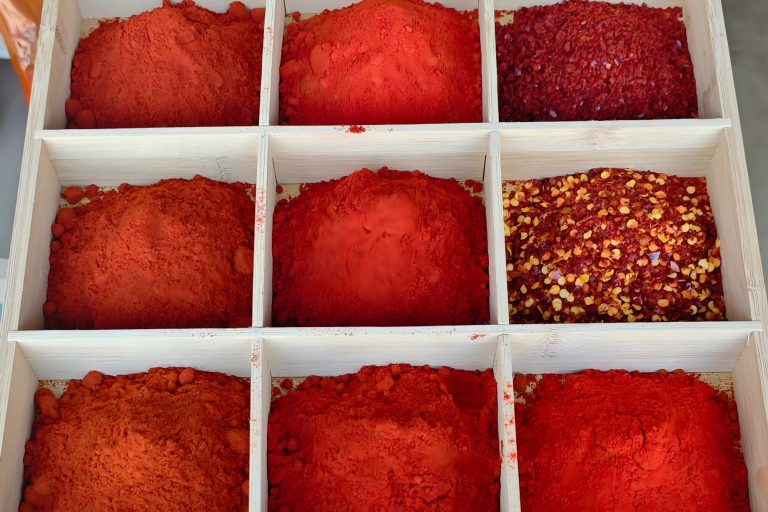
Paprikapulver (gemahlenes Gewürz)
- Farbträger: Ganze Bohnen Schoten (Schale, Fruchtfleisch, Kerne)
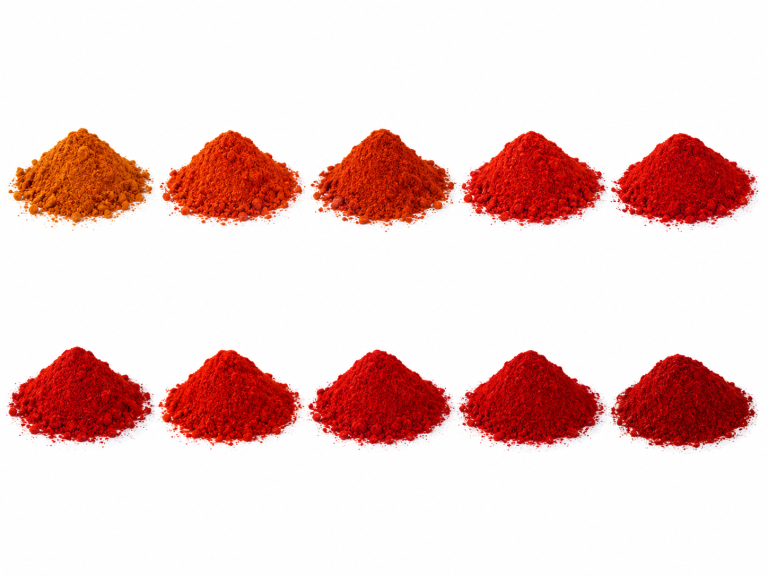
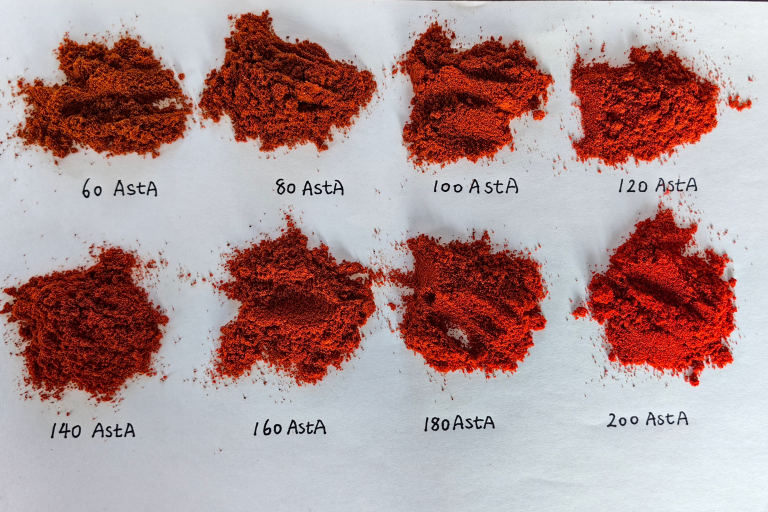
- ASTA-Sortiment: 80–150+
- Löslichkeit: In Wasser dispergierbar (nicht vollständig löslich)
- Beste Anwendungsbereiche: Trockene Gewürze, Oberflächenbeschichtung, Einarbeitung in den Teig
- Angaben auf dem Etikett: “Paprika” oder “Paprikapulver”
Paprika-Oleoresin (flüssiger Extrakt)
- Farbträger: Öllöslicher Extrakt
- Farbintensität: 40.000–100.000 CU (Farbeinheiten), was dem 10- bis 40-fachen der Farbstärke von Standard Pulver
- Löslichkeit: Öllöslich; lässt sich für wasserbasierte Systeme emulgieren
- Beste Anwendungsbereiche: Fleisch-Injektionslake, Saucen auf Ölbasis, Marinaden, Schmelzkäse
- Angaben auf dem Etikett: “Paprika-Extrakt (E160c)” oder “Paprika-Oleoresin”
| Vergleich | Paprikapulver | Paprika-Oleoresin |
|---|---|---|
| Farbintensität | 80–150 ASTA | 40.000–100.000 CU |
| Formular | Trockenpulver | Viskose Flüssigkeit |
| Löslichkeit | Wasserdispergierbar | Öllöslich |
| Haltbarkeit | 12–24 Monate | 18–24 Monate (versiegelt) |
| Kosten pro Farbeinheit | Tiefer für den Einsatz auf ebenen Flächen | Niedriger für die Färbung großer Mengen |
| Am besten geeignet für | Trockenmischungen, Gewürzchips | Emulsionen, Salzlösungen, flüssige Systeme |
E160c – Verwendungszwecke nach Lebensmittelkategorien
Fleisch- und Geflügelprodukte
Paprikaextrakt ist der am häufigsten verwendete natürliche rote Farbstoff in Fleischwaren:
- Gekochte Würstchen: 0,02–0,051 TP3T-Oleoresin (40.000 CU) in Emulsion
- Mariniertes Geflügel: 0,01–0,031 TP3T in der Injektionssole
- Trockenwurst-Panade: Oberflächenbeschichtung mit Paprikapulver bei 0,3–0,51 TP3T
- Vorteil: Hitzebeständig bis 200 °C, übersteht Autoklavier- und Kochprozesse
Vorteile der Beschaffung in China: Der Verarbeitungscluster Jiaolai in Shandong produziert Paprika, der speziell für die Oleoresin-Gewinnung optimiert ist und einen um 15–25% höheren Capsanthin-Gehalt aufweist als Material in Handelsqualität.
Snacks & Gewürze
Die natürliche Farbe von Paprika sorgt in allen Snack-Kategorien für eine ansprechende Optik:
- Kartoffelchips: Pulver bei 1,5–3,51 TP3T bei der Trockenwürzung
- Extrudierte Snacks: Oleoresin in einer Konzentration von 0,005–0,021 TP3T im Ölnebel
- Gebackene Cracker: Pulver in einer Menge von 0,5–2,01 TP3T im Teig
- Vorteil: Mikroverkapselte Oleoresin-Varianten bieten eine verbesserte Lichtbeständigkeit für transparente Verpackungen
Soßen, Dressings und Würzmittel
Die Farbe „Paprika“ zeigt in sauren und ölbasierten Systemen eine außergewöhnlich gute Leistung:
- BBQ-Sauce: Oleoresin in einer Konzentration von 0,01–0,031 TP3T für einen satten Rotton
- Saucen auf Tomatenbasis: 0,005–0,021 TP3T zur Verstärkung der roten Farbe
- Salatsaucen: 0,01–0,051 TP3T in der Ölphase
- Scharfe Soße: Sowohl Pulver als auch Oleoresin für eine Kombination aus Farbe und Geschmack
Suppen, Brühen und Fertiggerichte
- Instant-Suppenmischungen: Pulver in einer Menge von 0,3–1,01 TP3T in der Trockenmischung
- Flüssige Suppen: Oleoresin bei 0,005–0,021 TP3T
- Tiefgekühlte Fertiggerichte: Die hitzebeständige Farbe bleibt auch beim Aufwärmen in der Mikrowelle erhalten
- Nudel-Gewürzmischungen: Paprikapulver in einer Menge von 2–8% der Gewürzmischung
Milch- und Käseprodukte
- Schmelzkäse: Oleoresin bei 0,005–0,011 TP3T für einen orange-roten Farbton
- Käsepulver: Paprikapulver in einer Menge von 0,5–2,01 TP3T in der Trockenkäse-Gewürzmischung
- Milchaufstriche: Das öllösliche Oleoresin lässt sich leicht in die Fettphase einmischen
Bäckerei & Konditorei
- Herzhafte Cracker: Pulver im Teig bei 0,5–1,51 TP3T
- Brotpanaden: Oberflächenbeschichtung mit Ölhaftung
- Füllungen und Pasten: Oleoresin in Füllungen auf Fettbasis
Farbstabilität: Technische Überlegungen
Das Verständnis der Farbstabilität von Paprika ist für eine gleichbleibende Produktion von entscheidender Bedeutung:
Lichtempfindlichkeit
Paprikapigmente sind anfällig für Lichtzerfall. Zu den Strategien zur Farberhaltung gehören:
- Verwendung von mikroverkapselten Oleoresinen — verbessert die Lichtbeständigkeit um 40–60%
- Undurchsichtige Verpackung — verhindert das Ausbleichen durch UV-Strahlung
- Synergie der Antioxidantien — Die Zugabe von Tocopherol (Vitamin E) in einer Menge von 0,01–0,051 TP3T stabilisiert die Farbe
pH-Toleranz
Die Paprika-Farbe weist im pH-Bereich von 3,0 bis 8,0 eine hervorragende Stabilität auf und eignet sich daher sowohl für saure Soßen (pH 3,5–4,5) als auch für nahezu neutrale Fleischzubereitungen (pH 5,5–6,5).
| pH-Bereich | Stabilität | Typische Produkte |
|---|---|---|
| 3.0–4.5 | Gut | Vinaigrettes, scharfe Soße |
| 4.5–6.0 | Ausgezeichnet | Tomatensoße, Fleischprodukte |
| 6.0–8.0 | Gut | Suppen, Milchprodukte, Backwaren |
Wärmestabilität
Paprika-Oleoresin hält einer üblichen thermischen Verarbeitung stand:
- Pasteurisierung (72 °C, 15 Sekunden): >95% Farbbeständigkeit
- Retorte (121 °C, 20 min): 70–85% Farbbeständigkeit
- Frittieren (170–190 °C): 50–70% Farbbeständigkeit (Oberflächenbehandlung)
Ersetzen von synthetischen roten Farbstoffen durch Paprika
Viele Hersteller stellen derzeit von synthetischen Farbstoffen (FD&C Rot 40, Rot 3 oder die entsprechenden EU-Farbstoffe E124, E129) auf natürliche Alternativen auf Paprikabasis um:
| Synthetische Farbe | Paprika-Alternative | Ersatzquote | Überlegungen |
|---|---|---|---|
| Rot 40 (Allura-Rot) | Paprika-Oleoresin (40.000 CU) | 1:10 bis 1:20 nach Gewicht | Etwas orangefarbenerer Farbton; muss möglicherweise mit anderen natürlichen Rotfarbtönen gemischt werden |
| Rot 3 (Erythrosin) | Paprika + Rote-Bete-Saft | Individuelle Mischung | Ein breiteres rotes Spektrum ist erreichbar |
| Ponceau 4R (E124) | Paprikapulver (ASTA 120+) | Ersatz im Verhältnis 3:1 bis 5:1 | Pulverform für Trockenanwendungen |
Übersetzung des Begriffs „Clean Label“
Wenn Sie auf die Farbe Paprika umstellen, passen Sie bitte Ihre Zutatenangabe entsprechend an:
Vorher (mit synthetischen Inhaltsstoffen):
"Zutaten: … FD&C Rot 40, Gelb 6 …"

Nachher (Clean Label):
"Zutaten: … Paprikaextrakt (als Farbstoff) …"
Marktinformationen: Eine Verbraucherumfrage von Innova Market Insights aus dem Jahr 2025 ergab, dass 67% der Verbraucher weltweit Angaben zu natürlichen Farbstoffen als wichtigen Faktor bei der Kaufentscheidung für Snacks betrachten.
Qualitätszertifizierungen für Paprika-Farbstoffe
Für Paprika, der als natürlicher Farbstoff verwendet werden soll, gelten zusätzlich zu den Qualitätsanforderungen für Gewürze weitere Qualitätsparameter:
| Parameter | Spezifikation | Warum das wichtig ist |
|---|---|---|
| Capsanthin-Gehalt | ≥ 3.500 mg/kg (Pulver) / ≥ 15.000 mg/kg (Oleoresin) | Primäre Farbstoffverbindung |
| Pestizidrückstände | Entspricht den Grenzwerten der EU-Verordnung 396/2005 bzw. der US-Umweltschutzbehörde (EPA) | Gesetzliche Anforderungen für alle Lebensmittelanträge |
| Lösungsmittelrückstände (Oleoresin) | ≤ 50 mg/kg (insgesamt) | Gilt nur bei Verwendung der Lösungsmittelextraktion; die CO₂-Extraktion erfolgt lösungsmittelfrei |
| Allergenhinweis | Muss angegeben werden, wenn auf gemeinsam genutzten Leitungen verarbeitet wird | Von entscheidender Bedeutung für die Einhaltung der Vorschriften der EU (EU-Verordnung FIC 1169/2011) und der USA (FALCPA) |
| GVO-Status | Erklärung zur GVO-Freiheit verfügbar | Voraussetzung für die EU-Bio-Zertifizierung |
Beschaffung von Paprika-Farbstoffen aus China: Was ist zu prüfen?
China hat sich in kurzer Zeit zum weltweit größten Lieferanten von Paprika für die Verwendung als Pulver und Oleoresin entwickelt. Bei der Bewertung chinesischer Lieferanten gilt Folgendes:
1. Vertikale Integration
Lieferanten wie Dinweys® Qingdao die die gesamte Wertschöpfungskette steuern – von der Beschaffung der Chili-Rohware über die Verarbeitung bis hin zur Extraktion – bieten eine hervorragende Rückverfolgbarkeit und gleichbleibende Qualität.
2. Zertifizierungsportfolio
Für internationale Lebensmittelhersteller gelten folgende Mindestanforderungen:
- HACCP (obligatorisch für alle Lebensmittelexporte)
- FSSC 22000 oder ISO 22000 (Lebensmittelsicherheitsmanagement)
- Koscher und Halal Zertifizierung (je nach Zielmärkten)
- EU-Bio / USDA NOP (für Bio-Produktlinien)
3. Laborleistungen
HPLC- und Spektralphotometer-Untersuchungen vor Ort zur Bestimmung von:
- Quantifizierung des ASTA-Farbwerts
- Bestimmung des Capsanthin-/Capsorubin-Gehalts
- Schwermetalluntersuchung (ICP-MS)
- Mikrobiologische Untersuchung
Zukünftige Trends: Wohin sich die Farbe Paprika entwickelt
Mikroverkapselung
Neue Emulsionstechnologien verbessern die Lichtbeständigkeit von Paprika-Oleoresin um bis zu 300% und ermöglichen so dessen Einsatz in Produkten mit transparenter Verpackung, bei denen bisher ausschließlich synthetische Rotfarbstoffe zur Auswahl standen.
In kaltem Wasser dispergierbares Paprikapulver
Speziell aufbereitete Paprikapulver, die sich sofort in kaltem Wasser auflösen (ohne Klumpenbildung), eröffnen neue Anwendungsmöglichkeiten in Trockengetränkemischungen und Instant-Suppen.
Synergistische Naturmischungen
Paprika- und Möhrenextrakt, Paprika und Rote Bete sowie Paprika und Annatto werden auf den Markt gebracht, um Farbspektren zu erzielen, die einzelne natürliche Pigmente allein nicht liefern können – insbesondere tiefe Rot- und Purpurtöne.
Dinweys® Qingdao liefert sowohl Paprikapulver als auch Paprikaextrakt (Oleoresin) für Anwendungen als natürliche Farbstoffe. Unser Labor kann die Farbtöne individuell an die gewünschten Farbspezifikationen anpassen. Kontaktieren Sie unser Team für Muster und technische Daten.
Weiterführende Ressourcen: