¿El pimentón es libre de gluten? Una guía B2B sobre el riesgo de alérgenos, el abastecimiento y el control de la contaminación cruzada
Respuesta general
Pure pimentón derived from Capsicum annuum is botanically gluten-free, containing no native gliadin or glutenin proteins. However, commercial food manufacturers cannot assume safety based on botanical classification alone; industrial bulk paprika carries clear operational risks for gluten cross-contact across global supply chains. This risk primarily materializes during agricultural co-mingling in regional crop rotations, on shared milling lines in multi-commodity facilities, or through undocumented processing carriers in secondary spot markets. To safely validate a finished product as “gluten-free” under global regulatory frameworks, procurement teams must mandate bulk paprika backed by lot-specific R5 ELISA testing showing values below 20 ppm (or 5 ppm for ultra-strict formulations), alongside a verified GFSI-benchmarked Allergen Control Plan.
The Botanical Reality vs. Industrial Manufacturing Risk
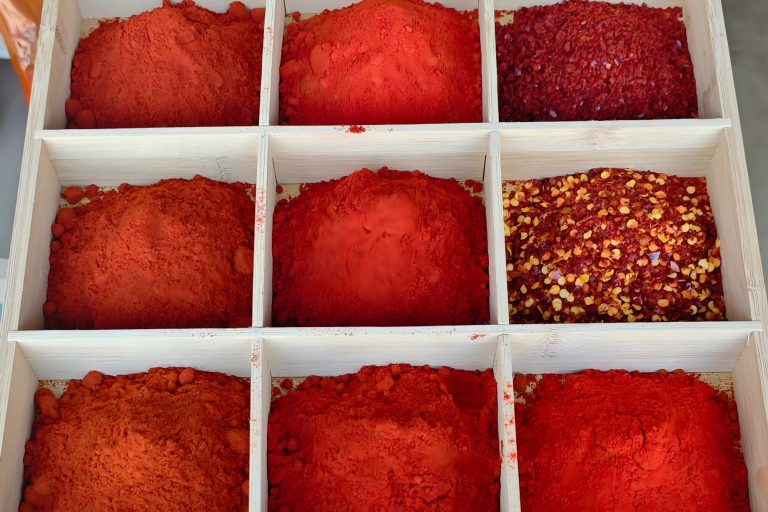
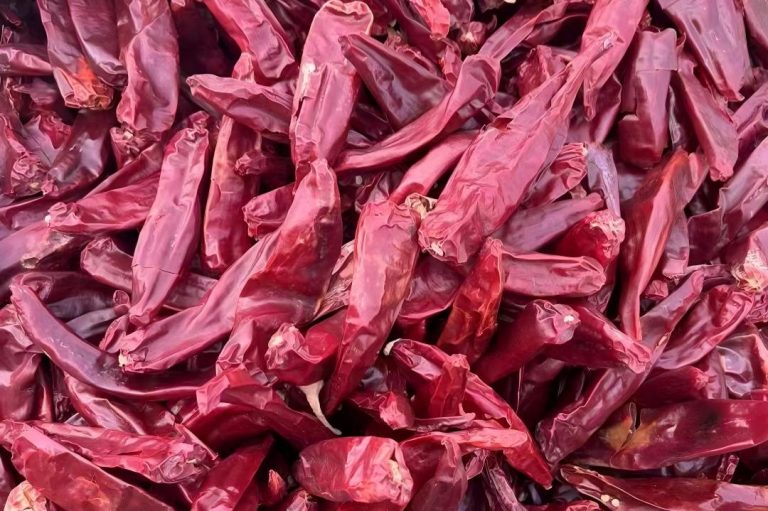
From a purely agricultural and biological standpoint, sweet, hot, and smoked paprika powders are derived entirely from drying and milling the vainas of Capsicum annuum. This plant family is completely distinct from gluten-producing cereal grains.
In industrial ingredient procurement, however, the primary risk vector is not the plant itself, but the operational realities of the processing chain. For QA managers approving a raw material for clean-label or allergen-free food formulations, the focus must shift entirely toward validating supply chain segregation from field to processing facility.
The Hidden Hotspots for Gluten in the Paprika Supply Chain
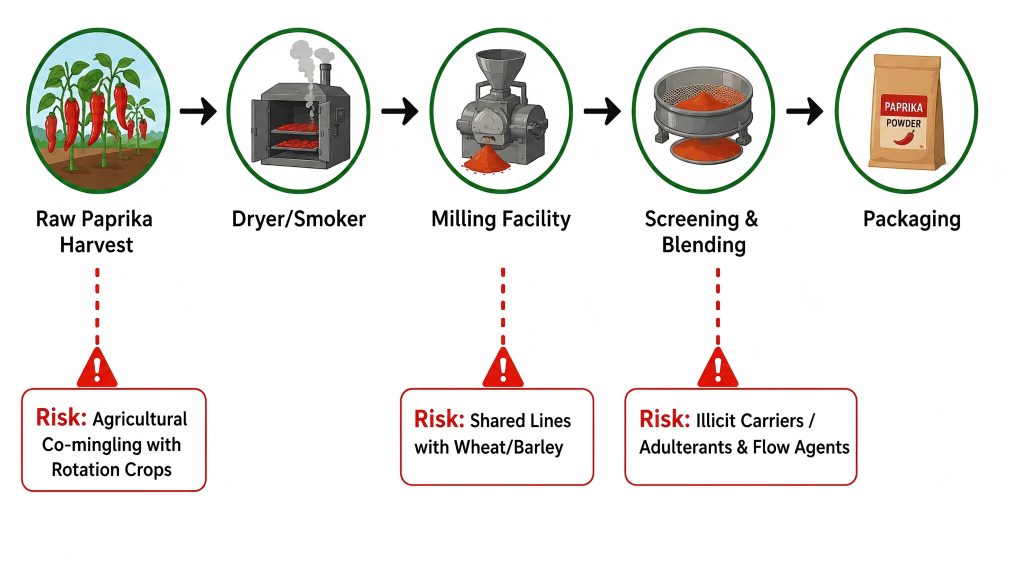
1. Agricultural Co-Mingling and Crop Rotation
In major spice-growing regions, capsicum varieties are frequently cultivated in multi-year rotations with cereal grains (such as wheat or barley) to manage soil health and break pest cycles. If harvesting equipment, transport vehicles, or regional consolidation silos are shared between grains and spices without validated allergen clean-downs, airborne grain dust and residual seeds can introduce trace gluten before the raw peppers ever enter a processing facility.
2. Multi-Commodity Milling and Shared Equipment
The highest cross-contact risk occurs during mechanical milling. Many regional spice mills operate shared infrastructure rather than dedicated facilities. A single industrial hammer mill, roller mill, or air classifier may grind wheat-inclusive seasoning blends, breading ingredients, or grain-based texturizers before switching to pure paprika.
Because fine spice dust remains airborne and settles on overhead structures, rafters, and packaging equipment, estándar facility wash-downs may fail to eliminate trace allergen residues unless a dedicated allergen clean-down protocol is enforced.
3. Flow Carriers, Anti-Caking Agents, and Adulteration Risks
Paprika contains inherent sugars and lipids that make it highly hygroscopic, accelerating its tendency to cake or lump under changing storage temperatures. To maintain free-flowing characteristics in bulk sacks, commercial processors introduce anti-caking agents.
- Premium Standards: First-tier processors utilize validated, non-grain mineral additives such as silicon dioxide SiO2, tricalcium phosphate, or magnesium carbonate.
- Low-Transparency Supply Chains: In unverified, secondary spot markets, undocumented or low-cost starches are occasionally introduced as processing carriers or standardization agents. While rare among tier-1 international exporters due to severe regulatory penalties, this economic adulteration instantly invalidates the ingredient’s allergen-free status.
Regulatory Frameworks and Technical Specifications
To safeguard industrial formulations, procurement officers must align incoming technical data sheets with regional regulatory limits.
Global Allergen Compliance Matrix
| Regulatory Body / Standard | Gluten Threshold | Mandatory Documentation for B2B Verification |
| US FDA (21 CFR 101.91) | <20 ppm | Batch-specific COA via validated quantitative testing |
| EU Regulation 1169/2011 | <20 ppm | Mandatory labeling of wheat/gluten cross-contact risk if present |
| Codex Alimentarius (CXS 118-1979) | <20 ppm | Audited Allergen Control Plan (ACP) + HACCP framework |
| Ultra-Strict Private Standards | <5 ppm / Non-Detect | Third-party Certified Gluten-Free Facility status |
Quantitative Testing: The R5 ELISA Method
A supplier’s verbal or written declaration of “natural compliance” is insufficient for corporate risk management. Quality assurance teams should mandate Enzyme-Linked Immunosorbent Assay (ELISA) testing, specifically utilizing the R5 Mendez method. This methodology is recognized by Codex and global regulatory bodies as the standard for quantifying partially hydrolyzed gluten fragments. When analyzing a supplier’s Certificate of Analysis (COA), ensure the Limit of Detection (LOD) matches your brand’s internal threshold.
Real-World Procurement Scenario
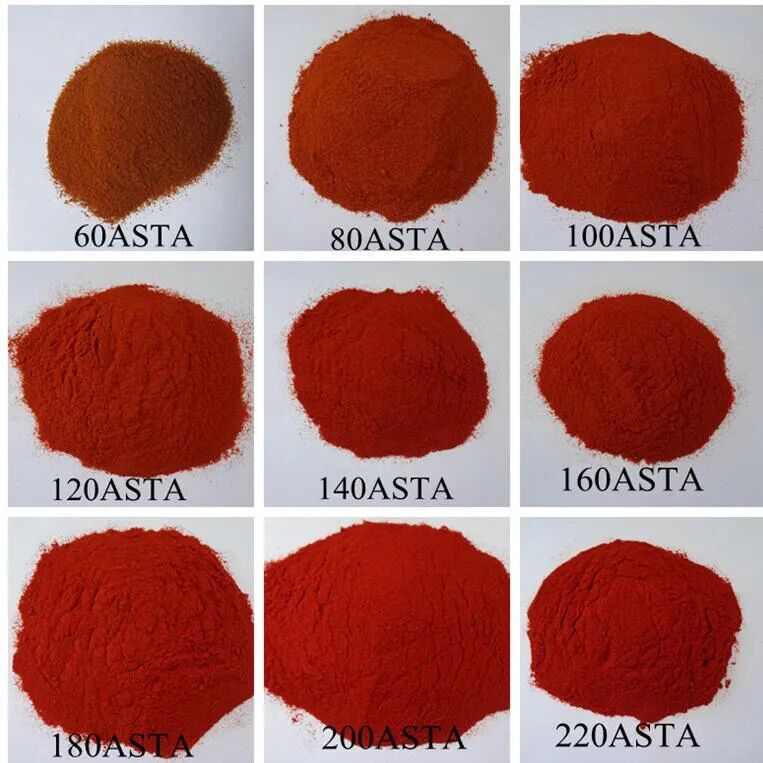
In commercial seasoning and snack-coating projects, a common operational vulnerability occurs when procurement teams focus heavily on extractable color values (ASTA) while overlooking the technical parameters of allergen control. During a recent supplier qualification review for a high-throughput snack seasoning line, the initial sample of a 140 ASTA sweet paprika met all color and microbiological specifications.
However, a deeper dive into the manufacturing workflow revealed that the processor was utilizing a shared blending line for both topical snack dustings (containing wheat-derived maltodextrin carriers) and pure pimentón en polvo. Without a lot-specific allergen validation strategy, the procurement team would have introduced an immediate cross-contact risk into an otherwise clean-label product line.
Supplier Audit Case Study: Cross-Contact Verification
During a physical facility audit at a primary spice-milling plant, our quality team verified that while the facility processed grain-based seasonings, they maintained an effective allergen mitigation matrix.
The On-Site Audit Verified:
- Physical Zoning: Complete physical separation between the grain blending sector and the dedicated capsicum milling line.
- Dust Containment: Negative pressure air-handling systems installed at every milling discharge point to prevent airborne cross-contact.
- Sanitation Validation: The plant’s wet-cleaning protocol for shared packaging equipment required total disassembly, followed by validated lateral flow strip testing. No processing runs were allowed to commence until swabs returned a non-detect result ($< 5\text{ ppm}$) for gluten residues.
Common Supplier Red Flags
When evaluating bulk spice exporters and distributors, the following operational indicators should prompt immediate secondary review by your QA department:
- Vague Anti-Caking Declarations: Technical specification sheets that list ambiguous ingredients like “processing aids” o “flow agents” without specifying the exact chemical compound.
- Generic COA Data: Certificates of Analysis that state “Gluten-Free: Yes” as a text field rather than providing an empirical value (e.g., “<20 ppm”) tied to a specific testing method and lot number.
- Scope Gaps in GFSI Audits: A supplier providing a valid BRCGS or IFS certificate where the formal audit scope only covers “sorting and packaging” while omitting the actual mechanical “milling, grinding, or blending” phases.
Supplier Evaluation Matrix: Assessing Origin and Processing Risks
Bulk Paprika Origin Risk Profile
China (Main Production Hubs like Xinjiang, Shandong)
- Scale & Infrastructure: Massive, industrialized agricultural footprint characterized by highly automated, vertically integrated processing infrastructure. Top-tier operations feature dedicated processing lines specialized exclusively for capsicum products.
- Gluten Risk Profile: Low to Moderate.
- Procurement Strategy: Prioritize large-scale, GFSI-certified processors who provide automated milling options completely segregated from grain-handling zones.
Spain (Murcia, La Vera)
- Scale & Infrastructure: World-renowned for specialized sweet and smoked pimentón. The supply chain includes highly advanced processing hubs alongside traditional, smaller-scale family cooperatives.
- Gluten Risk Profile: Moderate.
- Procurement Strategy: Smaller cooperative lines frequently run regional spice blends. Ensure your vendor provides a documented, validated equipment clean-down protocol between runs, or source from large-scale Spanish exporters utilizing automated allergen-segregated packaging equipment.
India (Guntur, Madhya Pradesh)
- Scale & Infrastructure: Global powerhouse for high-heat capsicum varieties, industrial paprika powder, and oleoresin extraction. Manufacturing quality varies significantly between regional trading houses and premium processing plants.
- Gluten Risk Profile: Moderate to High (in low-tier, uncertified mills).
- Procurement Strategy: Avoid unverified open-market spot buying. Secure direct contracts with Tier-1 processors holding active HACCP or FSSC 22000 certifications, and verify inbound raw material controls.
Commercial and Pricing Realities of Gluten-Free Paprika
Procurement directors must expect a structural price premium when sourcing verified gluten-free paprika. This price variance is driven directly by operational overhead:
- Sanitation Downtime: Validating an allergen clean-down on shared milling machinery requires mechanical tear-downs, intensive dry ice or specialized sanitation cycles, and validated allergen swab testing. This operational friction increases facility downtime and raises total processing costs.
- Testing Infrastructure: Implementing batch-by-batch ELISA validation protocols introduces fixed laboratory costs into every production lot, which is reflected in the final FOB or CIF price.
- Dedicated Line Capital Expenditure: Processors operating dedicated allergen-free zones must amortize specialized machinery costs across a narrower volume of material, affecting baseline margins.
Procurement Insight: Attempting to minimize raw material costs by sourcing unverified spot-market paprika can expose a food manufacturer to catastrophic product recalls, brand damage, and regulatory enforcement action that far outweighs initial margin savings.
Quality Evaluation Checklist for Procurement Managers
Before authorizing a new international paprika supplier for an allergen-sensitive formulation, verify that your compliance file contains the following technical documentation:
- [ ] GFSI Certification Scope: A valid BRCGS (Grade A or higher) or IFS Food certificate explicitly listing spice milling and grinding within its accredited scope.
- [ ] Allergen Control Plan (ACP): A formal copy of the facility’s written procedures covering airborne dust mitigation, tool segregation, and cross-contact prevention.
- [ ] Validated Cleaning Log: Documented validation of the plant’s equipment cleaning procedures, backed by routine lateral flow strip testing metrics.
- [ ] Lot-Specific COA: A current Certificate of Analysis validating that gluten levels sit below <20 ppm or <5 ppm if required by internal brand standards) using the R5 ELISA test method.
- [ ] Comprehensive Ingredient Flowchart: A structural manufacturing map proving that every production input—including anti-caking compounds and carriers—is completely accounted for and free of glutenous materials.
Industry Applications & Cross-Contamination Hazards
Meat Processing & Sausage Formulations
Paprika is widely utilized in industrial sausage production (such as chorizo or pepperoni) for its characteristic flavor and natural red color values. Because commercial meat processing environments frequently handle binders or hydrolyzed wheat proteins, the production floor is a high-risk zone for cross-contamination. Sourcing strictly verified, allergen-free bulk paprika ensures that the spice component does not add an unexpected allergen load to the formulation.
Snack Food Seasonings & Topical Coatings
Topical seasonings applied to potato chips, tortilla chips, and extruded snacks require high-flowability paprika with precise particle sizing. The natural oil fraction in paprika contributes significantly to uniform flavor dispersion and color distribution across liquid and dry systems. Utilizing premium paprika blended with verified mineral carriers (like silicon dioxide) prevents unexpected clumping without introducing hidden allergen risks.
Prepared Sauces, Marinades, and Culinary Bases
In wet applications like ready-meal bases or barbecue sauces, paprika must hydrate cleanly without formatting unblended aggregates. If a formulation inadvertently uses low-tier paprika containing unlisted grain starches as carriers, these starches can undergo gelatinization during retort or pasteurization phases, causing unwanted viscosity shifts in the liquid matrix.
Common Misconceptions in the B2B Spice Trade
“Organic Certified Equals Gluten-Free”
False. National organic standards govern pesticide use, crop inputs, and GMO restrictions. They do not regulate allergen cross-contamination. An organic paprika crop grown or milled adjacent to organic wheat fields faces the exact same cross-contact risks as conventional varieties.
“High-ASTA Paprika Cannot Be Contaminated”
False. ASTA color values measure extractable carotenoid pigments. While high-ASTA metrics (120–160+ ASTA) point to premium fruit selection and precise dehydration, they provide no structural defense against airborne grain dust contamination during final milling or packaging.
“Irradiation and Sterilization Eliminate Allergen Risks”
False. Standard commercial sterilization steps—including steam treatment, ETO (Ethylene Oxide), or irradiation—are highly effective at lowering microbial counts (Salmonella, E. coli, yeasts, and molds). However, these treatments do not alter, break down, or denature glutenous proteins. If gluten contamination exists prior to sterilization, it remains fully intact and detectable in the final ingredient.
Preguntas frecuentes
Can wheat starch be used legally as an anti-caking agent in paprika powder?
It can only be used legally if wheat is clearly and transparently declared on the master ingredient statement as an allergen. Using unlisted wheat starch to improve product flow or reduce formulation costs constitutes illegal food adulteration and misbranding under major global regulatory frameworks.
What is the operational difference between a dedicated line and a validated clean line?
A dedicated line runs exclusively allergen-free material, removing equipment-based cross-contact risks entirely. A validated clean line is shared between multiple products but undergoes mandatory, documented cleaning and analytical validation testing to ensure all allergen residues sit below actionable levels before the paprika run begins.
Does Spanish smoked paprika (Pimentón de la Vera) carry a higher gluten risk?
The traditional oak-smoke drying process does not introduce gluten. The risk profile is determined entirely by the downstream milling and packing facility. If a traditional mill processes regional seasoning blends containing wheat flour on shared stone mills, cross-contamination can occur.
Should we request a gluten COA for every incoming lot?
Yes. For industrial food manufacturers producing certified gluten-free consumer items, lot-specific verification is standard risk-management protocol. While a manufacturer’s systemic audit validates plant capability, a batch-specific COA confirms compliance for the exact lot entering your processing facility.
How does bulk paprika oleoresin compare to powder regarding gluten risk?
Paprika oleoresin is a highly concentrated liquid extract obtained via solvent extraction. Because this industrial process isolates lipophilic pigments and flavor compounds rather than heavy proteins, pure oleoresins naturally present a lower risk of gluten protein carryover. However, any carrier oils or emulsifiers utilized during standardizing must still be verified as gluten-free.
What is the standard shelf life of bulk gluten-free paprika, and does it affect allergen status?
The standard commercial shelf life ranges from 12 to 24 months when stored in cool (15∘C), dry warehouses away from direct UV exposure. While prolonged storage leads to natural color loss (ASTA degradation) and flavor fading, it does not alter or denature the structure of any existing gluten proteins.
Can cross-contamination occur during the solar drying phase in agricultural fields?
Yes. If raw pepper pods are laid out to dry on open concrete pads or tarps that were previously utilized for drying grain crops like wheat, barley, or rye, trace grain chaff and dust can mix with the pepper pods before processing.
How do BRCGS or IFS certifications protect against allergen cross-contact?
Both BRCGS and IFS are GFSI-recognized standards that require a formal, audited Allergen Management Section. This mandates strict protocols for physical segregation, dedicated air-filtration networks, color-coded cleaning implements, and mandatory verification testing to prevent cross-contact.
What is the limit of detection (LOD) required for a strict gluten-free claim?
While global standards define “gluten-free” as<20 ppm, many advanced commercial laboratories utilize R5 ELISA test kits with a Limit of Detection (LOD) down to 2.5 or 5 ppm to provide maximum safety margin for sensitive formulations.
How do airborne particulates affect allergen safety in multi-commodity blending facilities?
Fine spice and grain dust can remain suspended in facility air currents for hours. Without localized extraction hoods and physical partition barriers, airborne particulates settle onto open blending vats, causing unexpected cross-contact across clean lines.
Does the use of recycled bulk packaging pose a gluten risk?
Yes. Industrial spice procurement should strictly mandate new, food-grade poly-lined multi-wall paper bags or bulk tote bags. Utilizing recycled packaging or shared bulk containers that previously held grain products introduces an immediate risk of allergen cross-contact.
How should a QA manager handle an out-of-specification gluten result on an incoming lot?
The lot must be instantly quarantined. The procurement team should cross-verify the laboratory methodology with an independent ISO 17025 accredited facility using the R5 ELISA method to confirm the findings before initiating a formal rejection or return process.
Actionable Sourcing Recommendations for Procurement Teams
- Refine Raw Material Specifications: Explicitly insert a maximum gluten threshold (<20 ppm or <5 ppm) directly into your formal corporate raw material specification sheets for bulk paprika.
- Verify Audit Scope Details: Do not just accept a valid GFSI certificate face value; request the comprehensive, unredacted audit report to review the factory’s specific performance in allergen segregation and sanitation validation.
- Establish Independent Verification: Set up a routine skip-lot or first-article testing cadence through an independent, ISO 17025 certified laboratory to cross-analyze your vendor’s COA compliance data.
- Audit Free-Flow Additives: For applications demanding high-ASTA paprika, mandate that all anti-caking components are explicitly itemized as silicon dioxide or tricalcium phosphate, entirely avoiding generic, undeclared processing aids.
Partner with a Trusted Bulk Paprika Supplier
Ensuring your industrial supply chain remains entirely secure against undeclared allergens requires complete structural transparency, rigorous quality control frameworks, and verifiable documentation. At PaprikaBulk.com, we specialize in providing high-grade sweet, hot, and smoked paprika engineered to meet the strictest global food safety and regulatory compliance standards.
If this guide does not fully answer your technical or regulatory questions, contact our commercial team for direct support with detailed product specifications, lot-specific COA documents, regulatory compliance statements, allergen validation records, and custom packaging options.