Le paprika dans les assaisonnements pour snacks : applications industrielles et guide de formulation
Une affaire d'un milliard de dollars : le paprika et les snacks
Le marché mondial des snacks salés a dépassé 310 milliards de dollars américains en 2025, les snacks assaisonnés constituant le segment qui connaît la croissance la plus rapide. Paprika C'est l'un des ingrédients d'assaisonnement les plus polyvalents et les plus utilisés dans toutes les catégories de snacks — des chips de pomme de terre classiques aux snacks extrudés au maïs, en passant par les friandises au riz soufflé et les enrobages aux noix.
Pour les fabricants de snacks, le paprika présente trois qualités essentielles :
- Attrait visuel — Cette couleur rouge-orange éclatante stimule l'appétit dans les magasins
- Saveur douce et agréable — Contrairement au chili poudre, le paprika apporte de la couleur sans être trop piquant
- Compatibilité avec les étiquettes « clean label » — La mise en avant des épices naturelles séduit les consommateurs soucieux de leur santé
La Chine est devenue le premier fournisseur mondial de paprika en poudre destiné à l'industrie des assaisonnements pour snacks, proposant à grande échelle un produit de qualité constante certifié ASTA.
Exigences de l'ASTA en matière de couleurs par catégorie de snacks
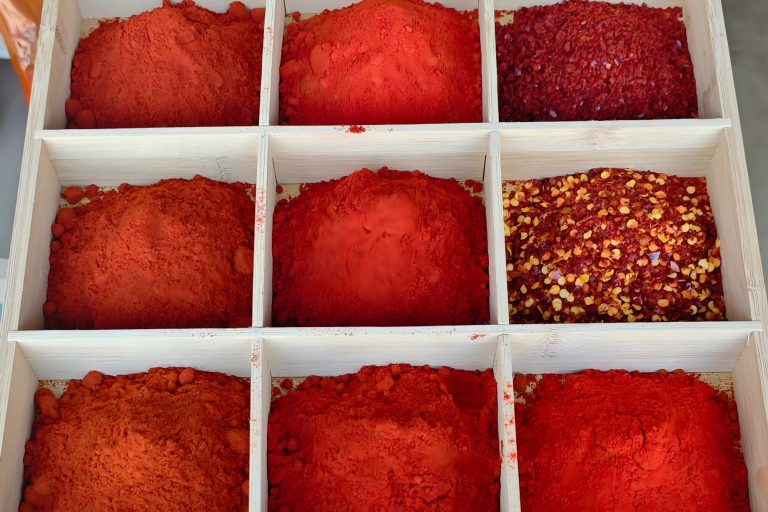
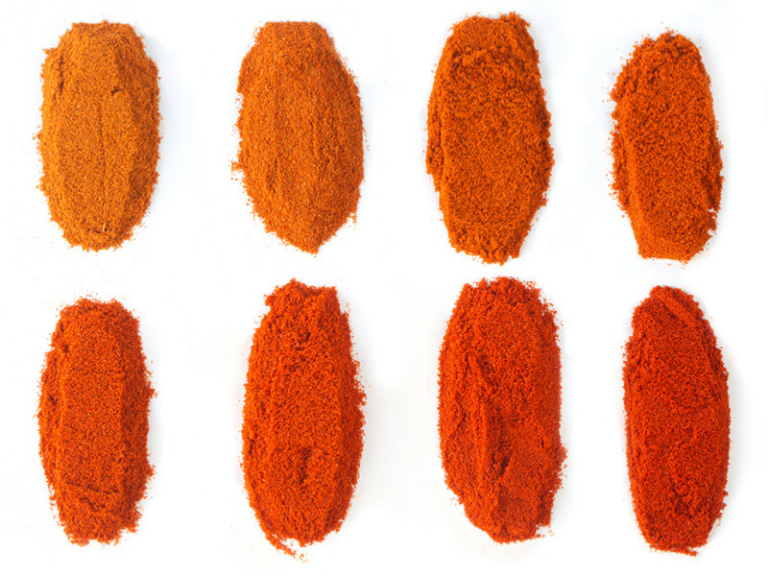
Les différents formats de snacks nécessitent des qualités ASTA différentes, en fonction de la surface, de la température de transformation et de l'aspect visuel recherché :
| Catégorie « En-cas » | Recommandé par l'ASTA | Éléments clés à prendre en compte |
|---|---|---|
| Chips de pommes de terre (frites) | 100–120 | L'exposition à la chaleur lors de la friture peut altérer la couleur ; un indice ASTA plus élevé permet de compenser cet effet. |
| Chips cuites au four | 80–100 | Des températures de transformation plus basses permettent de mieux préserver la couleur |
| Snacks extrudés | 120–150 | Une grande surface spécifique nécessite une couleur intense ; il est recommandé d'utiliser des particules fines. |
| Snacks au maïs soufflé et au fromage | 80–100 | Le mélange de couleurs avec de la poudre de fromage peut masquer une valeur ASTA plus faible |
| Enrobages pour fruits à coque et graines | 100–120 | L'adhérence à sec nécessite une granulométrie spécifique (60–80 mesh) |
| Snacks à base de riz et de céréales | 80–100 | Souvent mélangé à d'autres assaisonnements ; une couleur modérée est requise |
| Chips de tortilla | 80–120 | À la fois l'incorporation dans la pâte et l'assaisonnement en surface |
Méthodes d'utilisation du paprika comme assaisonnement
1. Dépoussiérage à sec (adhérence à la surface)
La méthode la plus courante pour les snacks assaisonnés. On saupoudre de paprika moulu la surface du snack après la cuisson :
- Exigences relatives à la granulométrie : 60 à 80 mesh (0,18 à 0,25 mm) pour une adhérence optimale
- Aides à l'adhésion : Spray à l'huile (3–8% du poids de la collation) ou adhésifs à base d'amidon
- Dose d'application : 1,5 à 51 TP3T du poids du produit fini
- Idéal pour : Chips de pomme de terre, chips de tortilla, snacks extrudés
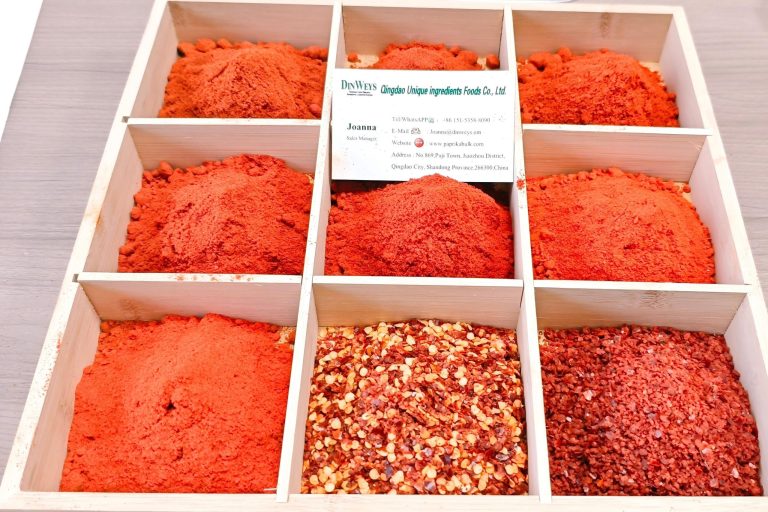
Conseil d'approvisionnement : Des fournisseurs chinois de paprika tels que Dinweys® Qingdao proposent des granulométries sur mesure, optimisées pour les applications d'adhérence à sec.
2. Incorporation de la pâte
Le paprika est incorporé directement à la pâte avant la cuisson :
- Granulométrie : Broyage fin (80–100 mesh) pour une répartition homogène
- Dose d'application : 0,5 à 31 TP3T de poids de pâte
- Idéal pour : Chips de tortilla, crackers, bouchées apéritives cuites au four
- Avertissement : Des températures plus élevées lors de la cuisson au four ou de la friture peuvent entraîner une perte de couleur pouvant atteindre 30% — utilisez des nuances ASTA haut de gamme pour compenser ce phénomène.
3. Mélanges d'assaisonnements (prémélangés)
Le paprika entre dans la composition de mélanges d'épices :
- Proportions de mélange habituelles : 15–40% de la formule d'assaisonnement totale
- Épices compatibles : Ail en poudre, oignon en poudre, cumin, poivre noir, sucre, sel, acide citrique
- Considérations relatives à la stabilité : Le paprika contenu dans les mélanges doit être conservé à une température inférieure à 25 °C et à l'abri de la lumière directe afin d'éviter toute altération de la couleur.
Paprika pur ou mélanges de paprika dans les assaisonnements pour en-cas
De nombreux assaisonnements pour snacks “ au paprika ” vendus dans le commerce sont en réalité des mélanges. Comprendre la différence permet aux acheteurs d'optimiser leurs coûts et leurs performances :
| Type | Composition | Équivalent ASTA | Indice des coûts | Candidature |
|---|---|---|---|---|
| Paprika en poudre pur | Mise à la terre 100% Capsicum annuum | 80–150+ | 1.0x | Produits haut de gamme, « clean label » |
| Mélange de paprika et de dextrose | 70–85% : mélange de paprika et de sucre | 60–100 | 0.7x | Chips économiques, assaisonnements en vrac |
| Paprika + maltodextrine | 60–80% paprika + agent anti-agglomérant | 50–80 | 0.6x | Snacks extrudés, mélanges secs |
| Oléorésine de paprika sur support | 5–15% : oléorésine sur support de sel/dextrose | 80–200+ (réglable) | 1.3–1.8x | Contrôle précis des couleurs, injection de liquide |
L'opportunité du “ Clean Label ” pour les marques de snacks
La demande des consommateurs pour des ingrédients simples et reconnaissables a transformé la composition des snacks. L'impact du paprika sur le positionnement « clean label » :
- Source de couleur naturelle : Sur de nombreux marchés, le paprika peut remplacer les colorants artificiels (rouge FD&C n° 40, jaune n° 6).
- Le marketing « sans » : Les étiquettes portant la mention “ coloré au paprika ” ou “ coloré naturellement ” permettent d'appliquer des prix plus élevés
- Tendance mondiale : La réglementation européenne impose des restrictions de plus en plus strictes sur les colorants synthétiques ; les grandes marques américaines optent volontairement pour des alternatives naturelles
Analyse du marché : Le marché mondial des colorants alimentaires naturels devrait connaître un taux de croissance annuel composé (TCAC) de 8,51 TP3T d'ici 2030, le paprika (E160c) figurant parmi les segments affichant la croissance la plus rapide.
Spécifications de qualité pour le paprika destiné à la fabrication d'en-cas
Lorsque vous vous approvisionnez en paprika en Chine pour l'assaisonnement de snacks, vérifiez les paramètres suivants :
Paramètres critiques
- Valeur de couleur (ASTA) : Doit correspondre aux spécifications que vous avez déclarées ; demandez un certificat d'analyse (COA) certifié par spectrophotomètre.
- Teneur en humidité : ≤ 10% — une humidité plus élevée provoque la formation d'agglomérats dans les applicateurs d'assaisonnement
- Granulométrie : 95% à travers un tamis de maillage spécifié — une granulométrie irrégulière entraîne l'apparition de taches de type “ sel et poivre ”
- Fluidité : La poudre à écoulement libre empêche la formation de ponts dans les trémies et les tambours de séchage
Normes microbiologiques (produits de consommation courante)
Les en-cas étant généralement prêts à consommer, leur qualité microbiologique revêt une importance capitale :
| Paramètre | Spécifications | Méthode d'essai |
|---|---|---|
| Standard Nombre de plaques | ≤ 10 000 UFC/g | AOAC 990.12 |
| Levures et moisissures | ≤ 100 UFC/g | FDA BAM |
| Salmonelle | Négatif/25 g | AOAC 967.26 |
| E. coli | Négatif | AOAC 991.14 |
| B. cereus | ≤ 100 UFC/g | FDA BAM |
Guide de formulation des mélanges d'assaisonnement au paprika
Assaisonnement classique pour chips au barbecue
| Ingrédient | Pourcentage |
|---|---|
| Paprika en poudre (ASTA 120) | 35.0% |
| Sucre (fin) | 25.0% |
| Sel (fin) | 20.0% |
| Dextrose | 8.0% |
| Poudre d'oignon | 5.0% |
| Poudre d'ail | 3.0% |
| Acide citrique | 2.0% |
| Arôme naturel de fumée | 1.5% |
| Dioxyde de silicium (anti-agglomérant) | 0.5% |
Assaisonnement épicé pour en-cas au maïs à la mexicaine
| Ingrédient | Pourcentage |
|---|---|
| Paprika en poudre (ASTA 100) | 25.0% |
| Poudre de piment | 15.0% |
| Sel (fin) | 20.0% |
| Sucre | 12.0% |
| Maltodextrine | 10.0% |
| Cumin en poudre | 5.0% |
| Poudre d'ail | 5.0% |
| Poudre d'oignon | 4.0% |
| Acide citrique | 3.0% |
| Poudre de chaux | 1.0% |
Pourquoi les fabricants de snacks s'approvisionnent-ils en paprika en Chine ?
La position dominante de la Chine sur le marché du paprika production offre aux fabricants de snacks trois avantages distincts :
1. Sécurité de l'approvisionnement
La Chine produit plus de 2 millions de tonnes de piments par an, le parc industriel de Jiaolai, dans la province du Shandong, traitant à lui seul des milliers de tonnes de paprika. Cette envergure garantit une disponibilité tout au long de l'année que les petits pays producteurs ne peuvent égaler.
2. Une qualité constante à grande échelle
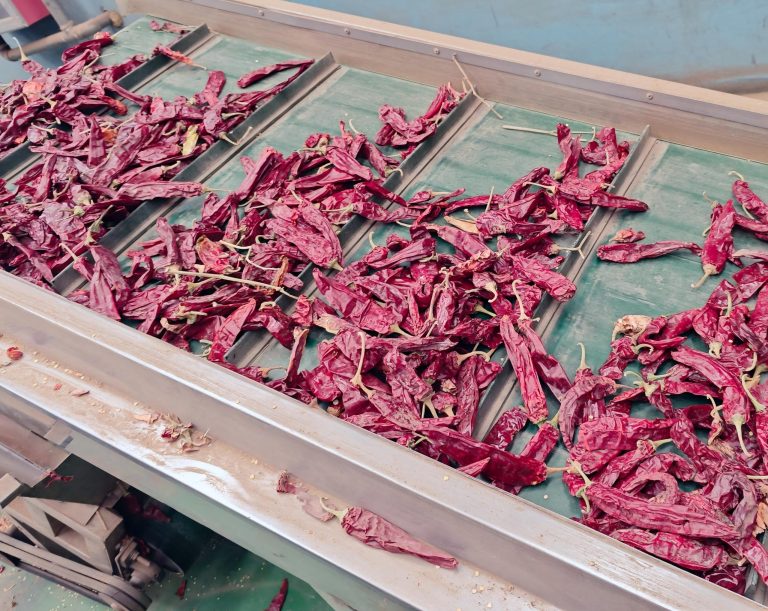
Les exportateurs chinois de paprika tels que Dinweys® recourir au tri au laser, à la séparation magnétique et à la détection des métaux pour garantir une couleur et une pureté homogènes sur des lots de plusieurs tonnes — un élément essentiel pour les grands fabricants de snacks exploitant des lignes de production en continu.
3. Des tarifs compétitifs pour les travaux de peinture
Le coût unitaire ASTA proposé par les fournisseurs chinois est généralement inférieur de 15 à 301 TP3T à celui des fournisseurs espagnols ou hongrois, tout en garantissant une uniformité de couleur comprise entre ±5 points ASTA par lot.
Prêt à optimiser la recette de votre assaisonnement pour snacks ? Contactez notre équipe technique pour obtenir des échantillons de paprika, des fiches techniques et une aide à la formulation.
Ressources connexes :