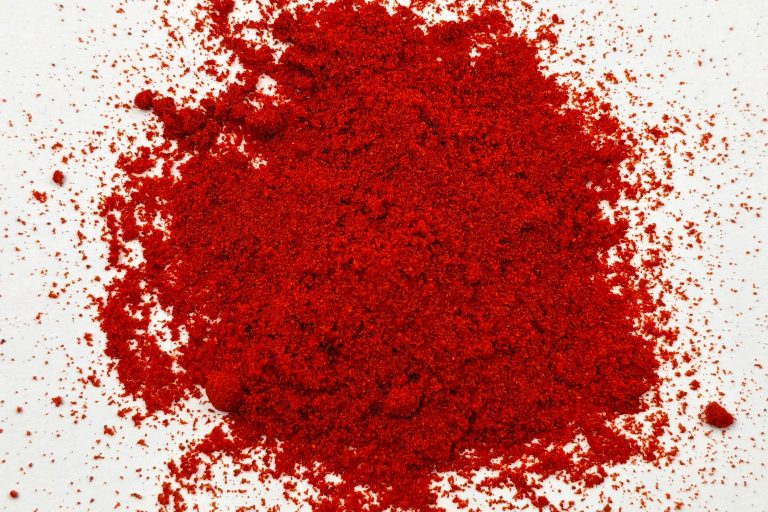
Analyse des globalen Paprika-Marktes 2026 und Prognose für 2026–2027
Market Intelligence for Industrial Food Ingredient Buyers
Executive Summary
The global Paprika market enters 2026 at a pivotal juncture. Structural demand growth — driven by the clean-label movement, synthetic color replacement, and expanding snack/plant-based food sectors — is colliding with climate-induced supply constraints in key growing regions. Spain faces its third consecutive drought year, Hungary is experiencing accelerated warming, and Peru’s coastal agriculture is under long-term water stress. These pressures are compressing premium-grade supply just as industrial demand for natural red-orange colorants (E160c) is accelerating.
China stands as both the market stabilizer and the growth opportunity. As the world’s largest paprika producer (~30–40% of global dried chili output) with the most cost-competitive export pricing, Chinese paprika — particularly from Xinjiang and Gansu — is positioned to capture market share from stressed European origins. For B2B food ingredient buyers, 2026–2027 demands a proactive procurement strategy: diversify origins, contract early, and evaluate oleoresin substitution where color is the primary functional requirement.
Key Data at a Glance
| Metrisch | Value |
|---|---|
| Global Paprika Spice Market (2025) | $550–650 million |
| Paprika Oleoresin Market (2025) | $180–220 million |
| Combined Market CAGR | 5–7% |
| Oleoresin CAGR | 6–8% (fastest segment) |
| Global Dried Chili/Paprika Produktion | ~4.0–4.5 million MT/year |
| China’s Global Production Share | ~30–40% |
| China Paprikapulver Exports | 120,000–160,000 MT/year ($300–400M) |
| Spain 2025 Harvest Deficit | -15 to -25% below normal |
| Premium Paprika Price Increase (2023→2026) | +25–40% |
PART I: 2026 GLOBAL PAPRIKA MARKET ANALYSIS
1. Market Size, Structure & Segmentation
1.1 Market Valuation
The paprika market operates across three interconnected tiers:
| Market Segment | 2025 Value | CAGR | Key Drivers |
|---|---|---|---|
| Paprika Spice (powder, Flocken, Schoten) | $550–650M | 5.2–5.8% | Food processing, snack seasonings, spice blends |
| Paprika Oleoresin (E160c extract) | $180–220M | 6–8% | Synthetic color replacement, industrial efficiency |
| Paprika Natural Color Market | $250–350M | 11.2% | Clean-label, regulatory tailwinds, plant-based foods |
| Combined Market | $1.0–1.2B | 5–7% | — |
The oleoresin segment is the fastest-growing component, driven by food manufacturers shifting from powder to standardized liquid extracts for better color uniformity, easier handling, and reduced microbial risk.
1.2 Regional Production Landscape
Global paprika/chili production (~4.0–4.5 million MT annually) is concentrated in Asia, with China dominant:
| Country / Region | Est. Production Share | Key Characteristics |
|---|---|---|
| China | 30–40% | World’s largest; Xinjiang & Gansu regions; highest ASTA values at lowest cost |
| Indien | 15–20% | Largest oleoresin processor (60–70% global capacity); mid-tier raw material |
| Spanien | 10–12% | Premium smoked PDO (Pimentón de la Vera); severe drought impacting supply |
| Peru | 8–10% | High-quality export-grade; water stress from glacial retreat |
| Ungarn | 5–7% | PDO Kalocsai/Szegedi; accelerated regional warming |
| Mexico | 5–7% | Northern drought reducing acreage |
| USA (CA, NM) | 3–5% | Western water allocation cuts |
| Others | 15–20% | Turkey, South Africa, Zimbabwe, Serbia, Morocco |
Global Paprika Production Share
China       ████████████████████████████████████  35%
India       ██████████████████                    18%
Spain       ████████████                          11%
Peru        █████████                              9%
Hungary     ██████                                 6%
Mexico      ██████                                 6%
USA         ████                                   4%
Others      ████████████                          11%
1.3 End-Use Segmentation
Paprika’s end-use is dominated by industrial food processing:
| Sector | Share of Demand | Key Applications |
|---|---|---|
| Gewürzmischungen für Snacks | ~30% | Potato chips, extruded snacks, popcorn, nut coatings |
| Meat & Poultry Processing | ~20% | Sausages, cured meats, marinated products, meat snacks |
| Soßen, Dressings und Würzmittel | ~15% | BBQ sauces, ketchup, mayonnaise, ethnic sauces |
| Spice Blends & Seasonings | ~12% | BBQ rubs, ethnic blends (harissa, baharat, tandoori) |
| Ready Meals & Convenience | ~10% | Frozen meals, instant noodles, meal kits |
| QSR / Foodservice | ~8% | Fried chicken coating, burger seasoning, pizza seasoning |
| Pet Food | ~3% | Natural color for premium kibble and treats |
| Other (Pharma, Cosmetics, Aquafeed) | ~2% | Nutraceuticals, natural cosmetics, salmon feed |
End-Use Demand Breakdown
Snacks        ██████████████████████████████  30%
Meat          ████████████████████            20%
Sauces        ███████████████                 15%
Spice Blends  ████████████                    12%
Ready Meals   ██████████                      10%
QSR           ████████                         8%
Pet Food      ███                              3%
Other         ██                               2%
2. China’s Dominance & Competitive Position
2.1 Production Base
China’s paprika industry centers on two dominant growing regions:
| Region | Share of China Output | ASTA Range | Advantage |
|---|---|---|---|
| Xinjiang (Yanqi, Korla, Aksu, Ili) | 40–50% | 120–180+ | High solar radiation, low humidity, ideal for color |
| Gansu (Hexi Corridor) | 20–25% | 100–150 | Semi-arid, long sunshine hours |
| Innere Mongolei | 10–15% | 90–130 | Expanding acreage, government support |
| Other (Henan, Shandong, Sichuan) | 15–20% | 60–100 | Diverse chili types |
Xinjiang’s climate — hot days, cool nights, and low rainfall — produces paprika with exceptionally high ASTA color values that rival the best Spanish and Hungarian product, at a fraction of the cost.
2.2 Export Position
- Paprika powder exports: 120,000–160,000 MT/year ($300–400M)
- Paprika oleoresin exports: 2,500–3,500 MT/year
- Top destinations: EU (Spain, Germany, Netherlands), USA, Japan, South Korea, Southeast Asia, Middle East
- Price advantage: Chinese export paprika at $1,800–2,500/MT vs. Spanish at $3,500–5,000/MT
2.3 Competitive Positioning: China vs. Traditional Origins
| Dimension | China (Xinjiang/Gansu) | Spain (Murcia/Vera) | Hungary (Szeged/Kalocsa) |
|---|---|---|---|
| Price per MT | ★★★★★ $1,800–2,800 | ★★☆☆ $3,500–5,500 | ★★☆☆ $4,000–5,000 |
| ASTA-Farbe | ★★★★★ 120–180+ | ★★★★☆ 90–140 | ★★★☆☆ 80–130 |
| Geschmacksprofil | ★★★☆☆ Mild-sweet | ★★★★★ Smoked/rich (PDO) | ★★★★★ Noble sweet (PDO) |
| Supply Stability | ★★★★★ Large-scale, reliable | ★★☆☆ Severe drought | ★★★☆☆ Climate stressed |
| Food Safety Trust | ★★★☆☆ Improving; Sudan Red legacy | ★★★★★ EU-regulated | ★★★★★ EU-regulated |
| Organic Availability | ★★★☆☆ Growing but limited | ★★★★☆ Established | ★★★★☆ Established |
| Volume Scalability | ★★★★★ Unmatched | ★★☆☆ Limited by land/water | ★★☆☆ Limited |
Wichtigste Erkenntnis: For industrial food processing where color strength (ASTA) and cost-effectiveness are the primary decision criteria, China’s value proposition is unmatched. For premium retail/gourmet applications where PDO heritage and flavor complexity command premiums, Spain and Hungary retain defensible positions — but their supply reliability is deteriorating.
3. Demand Drivers: What’s Fueling Growth
3.1 The Clean-Label Megatrend
The single strongest structural driver for paprika demand is the global shift from synthetic to natural food colorants:
- 65–70% of global consumers actively avoid artificial colors (NielsenIQ 2024)
- EU Titanium Dioxide (E171) banned 2022; ongoing review of synthetic azo dyes
- California Food Safety Act (effective 2027) bans Red 3 and other synthetic additives
- FDA advisory review of synthetic colors underway; “No Artificial Colors” claims growing 12% annually
Paprika extract (E160c) is the leading natural red-orange replacement due to superior heat/light stability compared to beetroot, anthocyanins, and lycopene — the critical functional advantage for processed foods with long shelf lives.
3.2 Snack Industry: The Largest Consumer
The global savory snacks market ($250B+, 5–6% CAGR) is the single largest industrial consumer of paprika:
- PepsiCo/Frito-Lay — the world’s largest paprika buyer — uses it across Lay’s Paprika, BBQ, and chili flavor lines
- Snack flavor innovation cycles demand continuous reformulation; paprika provides both color and flavor as a dual-function ingredient
- Asia-Pacific snack market growing fastest (8–10% CAGR), creating new demand for paprika in extruded snacks and rice-based products
3.3 Plant-Based Foods: The Emerging Accelerator
The global plant-based food market ($45–50B, 10–12% CAGR) is a structural growth driver for paprika oleoresin:
- Meat alternatives require paprika to simulate the raw-to-cooked red-to-brown color transition consumers expect
- Plant-based cheese uses paprika for cheddar-orange coloration
- Plant-based seafood (salmon, shrimp alternatives) — emerging application driving incremental oleoresin demand
- Formulation rates: 0.3–1.5% oleoresin by weight in plant-based meat products
3.4 Oleoresin: The Fastest-Growing Format
Industrial buyers are increasingly shifting from powder to oleoresin:
| Faktor | Pulver | Oleoresin |
|---|---|---|
| Color standardization | Variable by lot | Precise CU dosing |
| Handling | Dusty, hygiene concerns | Pumpable liquid, closed-system |
| Microbial risk | Higher (raw agricultural) | Near-zero (extraction process) |
| Dispersion | Requires mixing | Uniform in oil/water systems |
| Lagerung | Bulky, moisture-sensitive | Compact, stable |
Water-dispersible microencapsulated oleoresin is a key technical innovation opening new applications in beverages, dairy, and aqueous food systems.
3.5 QSR & Foodservice
- KFC/Yum! Brands — paprika is core to the original recipe seasoning; global fried chicken QSR growing 7–8% annually
- McDonald’s, Burger King — paprika in burger seasoning and specialty sauce formulations
- Mexican QSR (Chipotle, Taco Bell) — paprika in proteins, rice, and sauces
- Delivery/dark kitchen growth expanding QSR reach = more food volume = more paprika demand
4. The ASTA Standard: Quality That Drives Trade
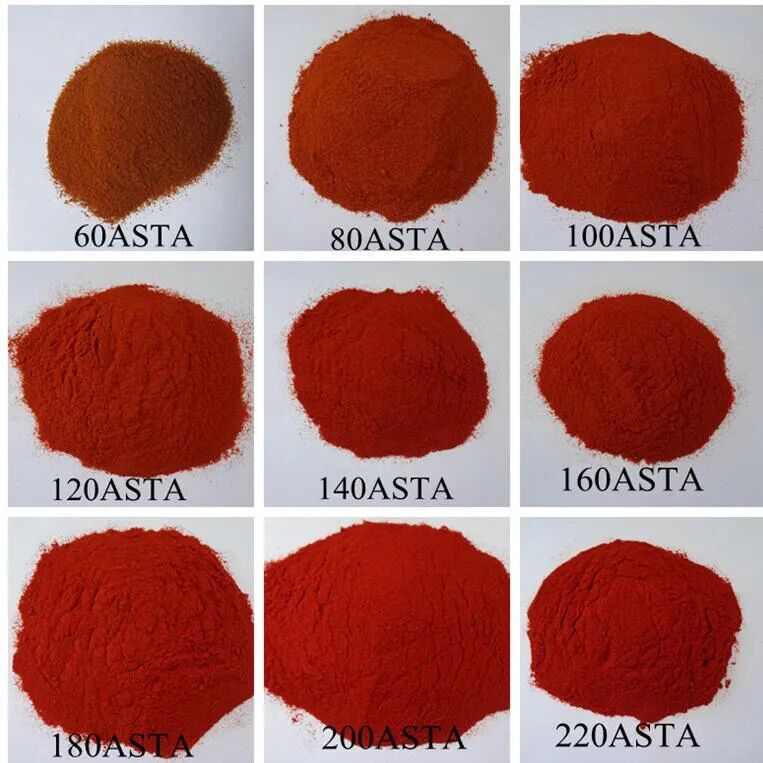
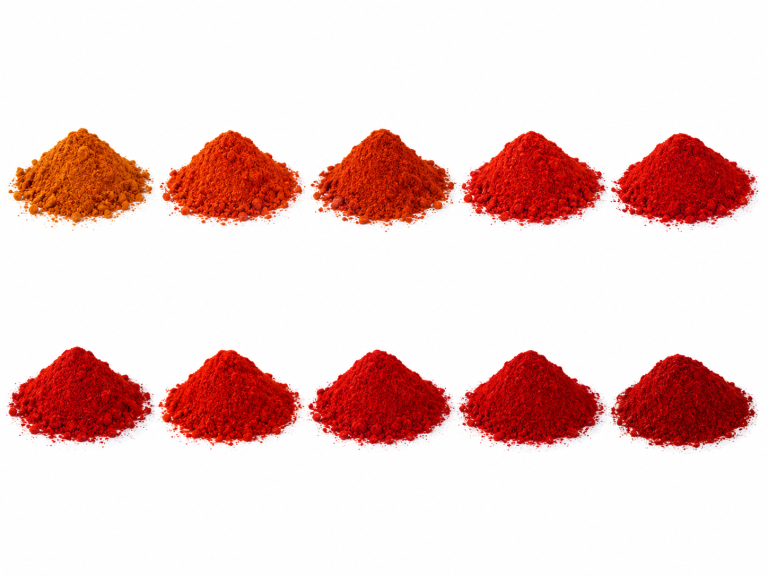
The American Spice Trade Association (ASTA) color grading system is the global benchmark for paprika quality, measuring extractable color spectrophotometrically at 460 nm:
| ASTA-Wert | Quality Grade | Typische Anwendung | China Availability |
|---|---|---|---|
| < 40 | Low / Industrial | Budget food processing | ✅ |
| 40–80 | Standard Commercial | Lebensmittelherstellung im Allgemeinen | ✅ |
| 80–120 | Good Quality | Premium food products | ✅ |
| 120–160 | High Quality | Premium retail, oleoresin extraction | ✅ (Chinese sweet spot) |
| 160–180 | Superior / Special | Top-tier oleoresin | ✅ (Xinjiang premium) |
| > 180 | Exceptional | Specialty high-color extract | ✅ (Select lots) |
Beyond ASTA, industrial buyers evaluate:
- Moisture: < 11% (critical for aflatoxin prevention)
- SHU (pungency): Sweet paprika < 500 SHU; semi-hot 500–2,000 SHU
- Mesh size: 40–80 mesh (industrial); 60–100 mesh (retail)
- Microbiological: TPC < 100,000 CFU/g; Salmonella absent in 25g; steam sterilization increasingly standard
- Heavy metals: EU MRL compliance (lead < 1.0 ppm, cadmium < 0.5 ppm)
5. Food Safety: The Critical Compliance Landscape
5.1 The Sudan Red Legacy
The 2003–2005 Sudan Red scandal — where carcinogenic industrial dyes (Sudan I–IV) were illegally added to paprika and chili powder to enhance color — triggered the UK’s largest food recall and fundamentally reshaped the industry:
- Lasting impact: Mandatory Sudan Red testing is now non-negotiable for any supplier serving EU/US markets
- Chinese response: Government crackdown, centralized testing requirements, and third-party lab certification
- Current state: Sudan Red contamination is rare in legitimate export supply chains but remains the #1 due diligence question buyers ask of Chinese suppliers
5.2 EU Maximum Residue Limits (MRLs)
EU MRL compliance is the primary technical barrier for Chinese paprika entering European markets:
| Pesticide | EU MRL (mg/kg) | Risk Level for Chinese Paprika |
|---|---|---|
| Chlorpyrifos | 0.01 | HIGH — widely used historically in China |
| Carbendazim | 0.1 | MEDIUM |
| Acetamiprid | 0.3 | LOW-MEDIUM |
| Imidacloprid | 0.5 | LOW |
| Lambda-Cyhalothrin | 0.1 | MEDIUM |
| Triadimefon | 0.1 | MEDIUM |
RASFF (Rapid Alert System for Food and Feed) notifications for Chinese paprika have declined from ~35/year (2015–2018) to ~15/year (2023–2025), reflecting significant improvement but ongoing vigilance requirements.
5.3 Aflatoxin Risk
Paprika is susceptible to aflatoxin (primarily B1) contamination if dried or stored improperly:
- EU limit: 5 µg/kg (B1), 10 µg/kg (total)
- Control measures: Moisture < 11%, rapid post-harvest drying, cold storage, regular batch testing
- Xinjiang’s arid climate provides a natural advantage in aflatoxin prevention
PART II: 2026–2027 MARKET FORECAST
6. Climate Impact on 2026–2027 Crop Outlook
6.1 Regional Crop Assessment
Spain: Critical Supply Stress
Andalusia and Extremadura — Spain’s primary paprika regions — are experiencing their third consecutive year of severe drought. Reservoir levels at historic lows forced agricultural water restrictions in 2025:
- 2025 harvest: 15–25% below normal; quality affected — smaller pods, lower ASTA values
- Pimentón de la Vera (PDO): Particularly impacted due to longer-cycle pepper varieties
- 2026 outlook: Water stress continues; farmers switching to less water-intensive crops (olives, almonds)
- Spanish premium supply likely constrained through 2026–2027
Hungary: Accelerated Regional Warming
The Carpathian Basin is warming at 2–2.5°C above pre-industrial levels (vs. global average 1.2–1.4°C):
- 2025 heatwaves during July–August (flowering/fruiting period) reduced yields significantly
- Szeged and Kalocsa regions face soil moisture deficits
- Kalocsai and Szegedi PDO quality declining for noble sweet grades
- 2026 outlook: Farmers adapting with drip irrigation where possible; moderate recovery if summer is less extreme
China (Xinjiang, Gansu): Supply Stabilizer
- 2025 growing season: Mixed conditions — northern Xinjiang had adequate snowmelt irrigation; southern areas experienced drought
- Chinese government agricultural policy shifting acreage from water-intensive crops has spared paprika (relatively drought-tolerant)
- 2026 outlook: Xinjiang production expected stable to slightly higher
- China’s role: Provides a price floor on global paprika, preventing the extreme spikes seen in premium European origins
India: Oleoresin Processing Hub
- India processes 60–70% of global paprika oleoresin (primarily for re-export), sourcing raw material domestically and from imports
- 2025 monsoon: Erratic but near-normal rainfall in key chili regions; unseasonal harvest rains caused some quality damage
- 2026 outlook: Favorable monsoon forecast (IMD predicts normal/above-normal). Indian oleoresin supply expected stable, moderating global oleoresin prices
Peru: Long-Term Water Stress
- Peru’s coastal paprika agriculture (Ica, Arequipa) depends on Andean meltwater — glaciers are retreating
- 2025–2026: Transitioning from El Niño to ENSO-neutral; coastal temperature anomalies affecting yields
- 2026 outlook: Moderately below trend; export-quality Peruvian paprika likely to command premium pricing
6.2 Aggregate Supply Scenarios (2026–2027)
| Scenario | Probability | Beschreibung | Price Impact |
|---|---|---|---|
| Supply Deficit | 40% | Spain + Hungary + Peru all below normal; India/China cannot fully offset quality gap | Premium grades +20–35% |
| Tight but Balanced | 35% | India/China good crops offset European/Peruvian shortfalls | +10–20% |
| Adequate Supply | 25% | Favorable weather in all regions | Stable to slight increase |
Base case (August 2026): Tight but balanced to moderate deficit. The structural shortfall in Spain — a key supplier of premium high-ASTA paprika — is significant and cannot be fully replaced by Chinese or Indian production for buyers requiring specific flavor profiles (smoked, PDO-designated). Premium paprika grades (120–160 ASTA, smoked, PDO) face the highest risk of significant price escalation.
7. 2026–2027 Price Forecast
7.1 Current Price Environment (Mid-2026)
| Origin / Grade | Price (USD/MT) | vs. 2023–2024 Avg |
|---|---|---|
| Spanish sweet (120 ASTA) | $4,500–5,500 | +25–35% |
| Hungarian noble sweet | $4,000–5,000 | +20–30% |
| Spanish smoked PDO (Pimentón) | $8,000–12,000 | +30–40% |
| Chinese dehydrated (80–100 ASTA) | $2,200–2,800 | +5–10% |
| Indian (80–100 ASTA) | $2,500–3,000 | Stable to +8% |
| Paprika oleoresin (100,000 CU) | $25–35/kg | +10–15% |
7.2 Forward Price Expectations
                     H2 2026               H1 2027              H2 2027
Premium Origins  ─────────────────────────────────────────────────────
(Spanish/Hungarian)   +15-25% ↑↑        PEAK PRICING          -10-25% ↓
                                                    (if new crop good)

Chinese/Indian    ─────────────────────────────────────────────────────
(Bulk industrial)     +5-10% ↑           +5-10% ↑             Stable →
                                                              (price floor)

Oleoresin         ─────────────────────────────────────────────────────
(E160c extract)       +10-18% ↑          +5-10% ↑             Stable →
                                                              (India supply)
7.3 Key Variables to Watch
- Spanish autumn/winter 2026 rainfall — determines reservoir levels for 2027 crop planting
- Indian monsoon 2027 — determines oleoresin raw material supply (60–70% of global capacity)
- EU regulatory developments — any further synthetic color restrictions accelerate E160c demand
- European energy prices — affect processing costs for smoked paprika (oak-burning drying)
- USD strength — paprika is primarily USD-traded; dollar strength impacts affordability for non-USD buyers
- China export policy — any changes to Xinjiang agricultural subsidies or export restrictions
8. Strategic Implications & Procurement Recommendations
8.1 For Industrial Buyers
| Priority | Action | Rationale |
|---|---|---|
| 🔴 HIGH | Diversify origins now | Over-reliance on Spanish/Hungarian premium creates supply vulnerability |
| 🔴 HIGH | Contract early for 2027 | Lock in pricing before new-crop uncertainty tightens the market |
| 🟡 MEDIUM | Evaluate oleoresin substitution | Where color (not flavor) is primary requirement, oleoresin offers cost-in-use advantages and supply stability |
| 🟡 MEDIUM | Qualify Chinese suppliers | Chinese paprika offers best price-stability ratio; invest in supplier audits and MRL testing protocols |
| 🟢 ONGOING | Monitor Spanish reservoir levels | Q4 2026–Q1 2027 rainfall data will be the leading indicator for 2027 supply |
8.2 For Paprika Producers & Exporters
| Priority | Action | Rationale |
|---|---|---|
| 🔴 HIGH | Invest in EU MRL compliance | The #1 differentiator separating Chinese exporters who access premium markets from those who don’t |
| 🔴 HIGH | Build organic certification pipeline | Organic paprika commands 30–50% price premium; demand growing 8–10% annually |
| 🟡 MEDIUM | Develop oleoresin extraction capacity | Captures value-add margin instead of exporting raw material to India for processing |
| 🟡 MEDIUM | Offer multi-origin portfolios | Buyers increasingly want single-supplier, multi-origin solutions for supply chain resilience |
| 🟢 ONGOING | Transparent food safety documentation | Sudan Red-free certificates, MRL batch testing, and aflatoxin reports are table stakes |
8.3 Why Chinese Paprika Wins for Industrial Buyers in 2026–2027
                Chinese Paprika         European Paprika
                (Xinjiang/Gansu)        (Spain/Hungary)

Price           ████████████ $2,200     ████████████████████ $5,000
ASTA Color      ████████████████ 160     ██████████ 120
Supply Stability ████████████████████    ██████ (DROUGHT)
Volume Scale    ████████████████████    ██████
Food Safety     ██████████ (improving)  ████████████████
Flavor Heritage ██████                  ████████████████████
Organic Avail.  ██████ (growing)        ██████████████
Verdict: For the 80% of industrial paprika use cases where color strength, cost predictability, and supply reliability matter most — Chinese paprika is the rational choice. The remaining 20% — premium retail, gourmet PDO applications, and smoke-forward flavor profiles — remains the domain of European origins, but even there, supply risk is pushing buyers to explore alternatives.
9. About PaprikaBulk / Dinweys® Qingdao
PaprikaBulk.com is the official B2B platform of Dinweys® Qingdao — a specialized Chinese manufacturer dedicated to industrial-scale paprika processing and global export.
Our Product Portfolio — View Full Catalog →
| Product Line | ASTA Grades | Format | Key Application |
|---|---|---|---|
| ASTA 40 Paprika Powder | 40 | Pulver | Budget industrial coloring |
| ASTA 80 Paprika Powder | 80 | Pulver | Mainstream food manufacturing |
| ASTA 100 Paprika Powder | 100 | Pulver | Premium commercial grade |
| ASTA 120 Paprikapulver | 120 | Pulver | Standard export specification |
| ASTA 120–150 Superior | 120–150 | Pulver | High-color food products |
| ASTA 160 Special Extra | 160 | Pulver | Top-tier oleoresin extraction |
| Paprikaflocken | 80–180 | Flocken | Visual texture, topical coatings |
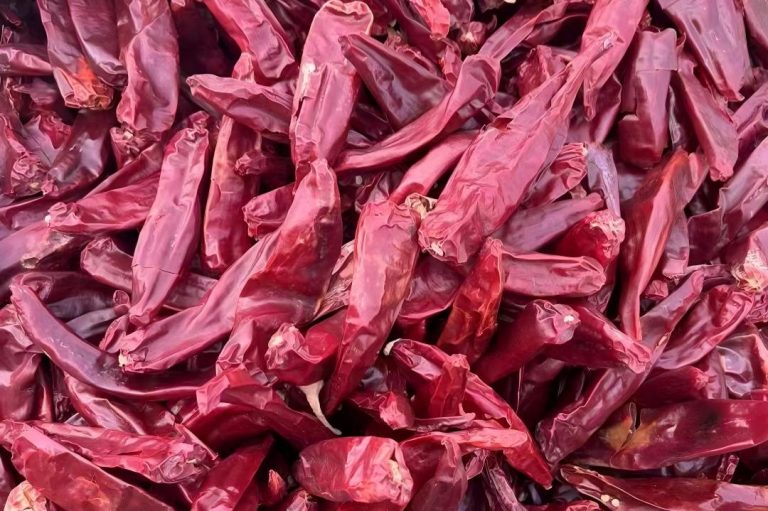
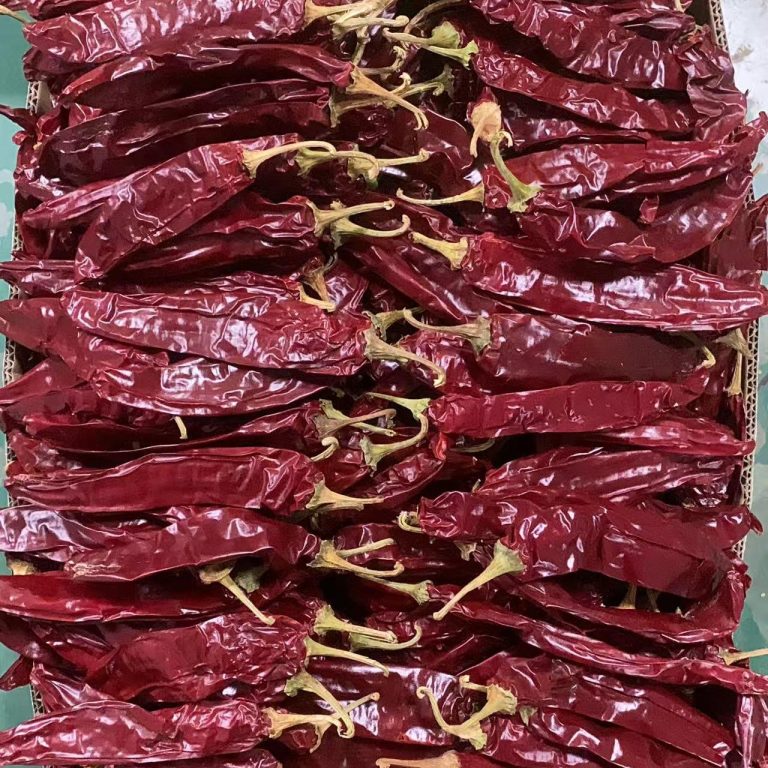
| Ganze Paprikaschoten | Export Grade | Ganz | Further processing, specialty |
Facility Specifications
| Metrisch | Value |
|---|---|
| Annual Processing Capacity | 4,500 metric tonnes |
| Daily Raw Material Intake | 20+ metric tonnes |
| Certifications | HACCP, ISO 22000 |
| Sudan Red Guarantee | 100% Sudan Red-Free; batch-level third-party testing |
| Location | Jiaozhou, near Qingdao Port, China |
Request a Quote → | Häufig gestellte Fragen | Produktnorm | Artikel
📚 Further Reading on PaprikaBulk:
- EU vs China Paprika Standards: What Buyers Should Actually Compare — Technical comparison guide
- Paprika Heavy Metal Limits Guide (China) — Compliance specifications
- Mikrobiologische Spezifikationen für Paprika in der industriellen Lebensmittelherstellung — Quality standards
- Grenzwerte für Pestizidrückstände in Paprika — MRL compliance
- Paprika Color E160c Explained for B2B Buyers — Oleoresin deep dive
- Feuchtigkeitsstandards für Paprika in der Lebensmittelherstellung — Aflatoxin prevention
- Wie wird Paprika hergestellt? — Production process
- Browse All Articles →
10. Methodology & Data Sources
Research Methodology
This report employs multi-source triangulation, synthesizing data from:
- Market research firms: Mordor Intelligence, Grand View Research, Allied Market Research, SkyQuest, Data Bridge, MarketsandMarkets
- Trade data platforms: Volza, Tridge, UN Comtrade
- Industry associations: ASTA (American Spice Trade Association), ESA (European Spice Association), International Pepper Community
- Government data: USDA Foreign Agricultural Service, EU RASFF portal, FAOStat
- Climate data: NOAA ENSO forecasts, European Drought Observatory, IPCC regional assessments
- Company disclosures: Synthite, Oterra, Kalsec, McCormick annual reports
Data Coverage Map
Source Type         Count    Credibility
━━━━━━━━━━━━━━━━━━━━━━━━━━━━━━━━━━━━━━
Market Research       6      ★★★★☆  (independent, scope-diverse)
Trade Data            3      ★★★★★  (primary transaction data)
Industry Assoc.       3      ★★★★★  (high authority)
Government Data       4      ★★★★★  (verified, public)
Climate Data          3      ★★★★☆  (scientific, probabilistic)
Corporate Discls.     4      ★★★★☆  (self-reported, verified)
Disclaimer
This report is compiled from publicly available information as of August 12, 2026. Market data originates from third-party research organizations; variations in statistical methodology and sample design may produce discrepancies across sources. Forward-looking projections involve inherent uncertainty, particularly given climate volatility and geopolitical factors. This report does not constitute investment or procurement advice. Real-time verification is recommended for trading decisions.
© 2026 Dinweys® Qingdao. This report may be reproduced in full with attribution to PaprikaBulk.com