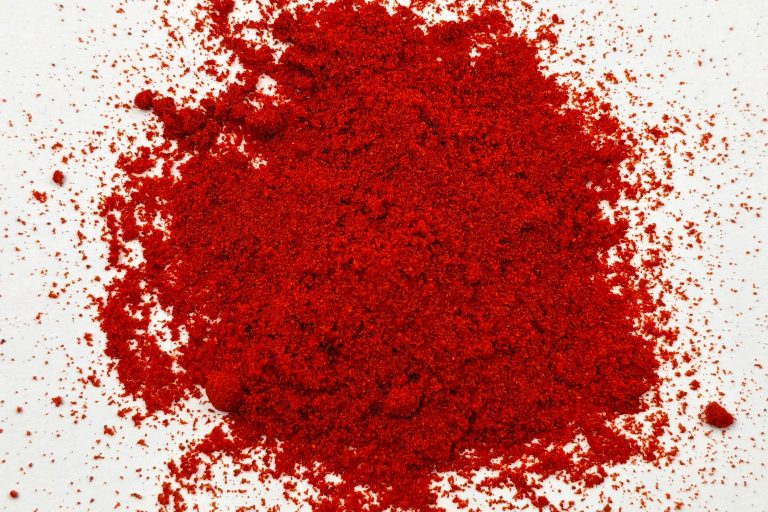
Extrait de la Le paprika dans l'industrie agroalimentaire guide — un aperçu complet de paprika applications dans l'ensemble du secteur agroalimentaire.
Le paprika dans les sauces, les soupes et les mélanges d'assaisonnements : guide de formulation industrielle
L'ingrédient secret de la cuisine du monde
Le paprika est l'un des ingrédients les plus répandus dans l'industrie mondiale des assaisonnements et des sauces. De la sauce barbecue américaine au gochujang coréen, en passant par les mélanges d'épices pour goulash hongrois et les mélanges d'épices du Moyen-Orient, le paprika apporte la couleur et la note sucrée fondamentales qui caractérisent d'innombrables produits commerciaux.
Pour les fabricants industriels, le paprika joue trois rôles essentiels dans les formulations de sauces et d'assaisonnements :
- Support de couleur de base — Définit l'identité visuelle du produit final
- Fondation Flavor — Apporte une douceur légère avec des notes terreuses
- Contributeur de textures — Sert d'épaississant naturel et d'agent de suspension dans certaines applications
Fabrication de paprika en sauce
Sauces à base de tomates (barbecue, pâtes, pizza)
Le paprika est le colorant secondaire le plus couramment utilisé dans les sauces à base de tomate ; il rehausse leur teinte rouge sans modifier de manière significative leur profil gustatif :
| Type de sauce | Formulaire Paprika | Niveau recommandé | Taux d'utilisation | Fonction |
|---|---|---|---|---|
| Sauce barbecue | Paprika en poudre | ASTA 80–100 | 0.5–2.0% | Renforcement de la couleur + saveur sucrée |
| Sauce pour pâtes | Oléorésine (E160c) | 40 000 à 80 000 CU | 0.005–0.02% | Rehaussement de la couleur rouge sans modification de la texture |
| Sauce à pizza | Paprika en poudre | ASTA 80–100 | 0.3–1.0% | Cohérence visuelle avec les autres pizzerias |
| Ketchup | oléorésine | 40 000 CU | 0.005–0.015% | Un agent naturel favorisant la coloration des tomates |
Conseil de préparation : Lorsque l'on utilise du paprika en poudre dans des sauces à forte acidité (pH 3,5–4,5), la couleur reste stable pendant toute la durée de conservation (18 à 24 mois). Toutefois, pour les sauces conservées dans des récipients en verre transparent, il est préférable d'opter pour de l'oléorésine, qui offre une meilleure stabilité à la lumière que la poudre.
Sauces à base d'huile (vinaigrettes, marinades, aïoli)
Dans les systèmes à base d'huile, les pigments liposolubles du paprika se répartissent naturellement et uniformément :
- Vinaigrettes : Paprika en poudre à une concentration de 0,5 à 1,51 TP3T en suspension dans une phase huileuse
- Concentrés de marinade : Oléorésine à raison de 0,01 à 0,051 TP3T pour obtenir une couleur homogène dans toute la viande
- Mayonnaise/aïoli : Paprika en poudre à raison de 0,3 à 1,01 TP3T pour les caractéristiques visuelles et la saveur
- Huile pimentée : Grossier flocons de paprika à 2–5%, tant pour l'extraction des couleurs que pour l'attrait visuel
Sauces asiatiques et ethniques
Le paprika est de plus en plus utilisé dans la fabrication de sauces asiatiques :
| Sauce | Candidature | Recommandé par l'ASTA |
|---|---|---|
| Sauce chili douce | Équilibre entre la couleur et une chaleur douce | ASTA 80–100 |
| À la manière du gochujang | Base de couleur rouge | ASTA 100–120 |
| Base pour sauce au curry | Fond de teint coloré | ASTA 80–100 |
| À la manière de la Sriracha | Couleur rouge + saveur | ASTA 80–100 (poudre) + additif à base d'oléorésine |
Le paprika dans la fabrication des soupes
Mélanges pour soupes instantanées (secs)
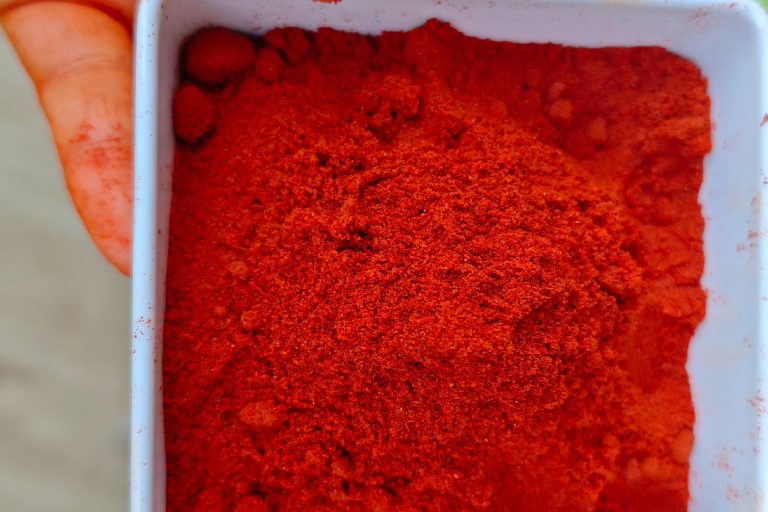
Pour les mélanges de soupe déshydratés, on ajoute directement le paprika en poudre :
- Taux d'utilisation : 0,5 à 3,01 TP3T du poids du mélange sec
- Granulométrie : Broyage fin (60 à 80 mesh) pour une réhydratation rapide
- Ordre de mélange : Mélanger le paprika avec des agents anti-agglomérants (dioxyde de silicium 0,5–1,0%) avant le malaxage afin d'éviter toute ségrégation.
- Durée de conservation : La couleur est préservée pendant 12 à 18 mois dans des sachets en papier d'aluminium
Utilisations courantes du paprika dans les soupes déshydratées :
- Base pour soupe à la tomate
- Mélange pour soupe aux légumes
- Assaisonnement pour soupe au goulasch
- Assaisonnement en poudre pour ramen/nouilles
- Bouillons et bouillons en poudre
Soupes liquides et concentrées
- Paprika en poudre : 0,3–1,01 TP3T — apporte à la fois de la couleur et un léger épaississement
- Oléorésine de paprika : 0,005–0,021 TP3T — couleur uniquement, aucun impact sur la texture
- Remarque supplémentaire : Vers la fin du cycle de cuisson, afin de réduire au minimum l'exposition à la chaleur
- Stabilité en autoclave : La couleur du paprika conserve 70–85% après un traitement en autoclave
Bases de soupe surgelées
- Avantage en termes de stabilité : La couleur du paprika résiste aux cycles de gel-dégel avec une dégradation minimale
- Forme recommandée : Oléorésine pour bases liquides ; poudre pour la composante sèche des kits de plats surgelés
Le paprika dans la fabrication des mélanges d'assaisonnements
Les mélanges d'assaisonnement constituent la principale application commerciale du paprika en poudre en termes de volume. Il est essentiel de comprendre comment le paprika interagit avec les autres ingrédients pour obtenir un résultat homogène production.
Le rôle du paprika dans les mélanges d'assaisonnement
| Fonction | En quoi le paprika apporte-t-il sa contribution ? | Caractéristiques optimales |
|---|---|---|
| Base de couleur | Définit le style visuel général du mélange | ASTA 80–120 |
| Pont des saveurs | Une douceur légère qui s'harmonise avec des notes salées et piquantes | Fraîcheur — ni rassis ni oxydé |
| Modificateur de débit | Influence la fluidité de la poudre dans les équipements de remplissage | Teneur en humidité ≤ 10%, anti-agglomérant à 0,5% |
| Indicateur visuel | Indique au consommateur la “ teneur en épices ” | Tache rouge visible dans les mélanges multicolores |
Éléments clés à prendre en compte concernant les interactions
Sel : Les mélanges de paprika et de sel (qui est hygroscopique) nécessitent une gestion rigoureuse de l'humidité. Conservez ces mélanges d'assaisonnement à un taux d'humidité relative (HR) inférieur à 45% afin d'éviter la formation de grumeaux et la migration des couleurs.
Ingrédients acides (acide citrique, poudre de citron) : L'acide permet de stabiliser la couleur rouge du paprika. Les mélanges contenant de l'acide citrique présentent souvent une meilleure tenue de la couleur.
Excipients à base de sucre : Le dextrose et la maltodextrine atténuent l'intensité de la couleur du paprika. Compensez cet effet en utilisant une concentration d'ASTA supérieure de 20 à 30% lorsque vous mélangez le paprika avec des excipients sucrés représentant plus de 25% de la formule.
Synergie antioxydante : L'ajout de 0,01 à 0,021 TP3T d'extrait de romarin ou de tocophérols mélangés à des mélanges riches en paprika prolonge la durée de conservation de la couleur de 30 à 501 TP3T.
Formulations d'assaisonnement spécifiques à certaines applications
Mélange d'épices classique pour barbecue (sec)
| Ingrédient | Pourcentage |
|---|---|
| Paprika en poudre (ASTA 120) | 35% |
| Sucre roux | 25% |
| Sel | 15% |
| Poivre noir | 8% |
| Poudre d'ail | 6% |
| Poudre d'oignon | 5% |
| Poudre de moutarde | 3% |
| Piment de Cayenne | 2% |
| Dioxyde de silicium | 1% |
Mélange d'épices cajun
| Ingrédient | Pourcentage |
|---|---|
| Paprika en poudre (ASTA 100) | 30% |
| Sel | 20% |
| Poudre d'ail | 12% |
| Poudre d'oignon | 10% |
| Poivre noir | 8% |
| Cayenne | 6% |
| Origan | 5% |
| Thym | 4% |
| Poivre blanc | 5% |
Mélange à la manière du dukkah du Moyen-Orient
| Ingrédient | Pourcentage |
|---|---|
| Paprika en poudre (ASTA 100) | 25% |
| Graines de sésame grillées | 20% |
| Graines de coriandre (moulues) | 18% |
| Cumin (moulu) | 15% |
| Poivre noir | 10% |
| Sel | 8% |
| Menthe (séchée) | 4% |
Mélange d'épices mexicain « Adobo »
| Ingrédient | Pourcentage |
|---|---|
| Paprika en poudre (ASTA 80–100) | 40% |
| Poudre d'ail | 15% |
| Origan (mexicain) | 12% |
| Cumin | 10% |
| Poivre noir | 8% |
| Sel | 8% |
| Poudre de chipotle | 5% |
| Feuille de laurier (moulue) | 2% |
Spécifications de qualité pour les applications liées aux sauces et aux assaisonnements
| Paramètre | Spécifications | Risque en cas de non-respect |
|---|---|---|
| Humidité | ≤ 10% | Formation de grumeaux dans les mélanges d'assaisonnements, prolifération microbienne pendant le stockage |
| Cohérence ASTA | ±5 points par lot | Variations de couleur d'un lot à l'autre dans le produit fini |
| Taille des particules | 95% à travers un maillage spécifié | Mélange irrégulier, ségrégation pendant le transport |
| Indice de peroxyde (IP) | ≤ 10 méq/kg dans la poudre stockée | Apparition d'un goût rance altérant la qualité de la sauce |
| Nombre de bactéries aérobies sur plaque | ≤ 10 000 UFC/g | Risque d'altération dans les préparations à base de sauce hydratée |
| Levures et moisissures | ≤ 100 UFC/g | Présence visible de moisissures dans les mélanges secs conditionnés |
Pourquoi les fabricants choisissent-ils le paprika chinois pour leurs sauces et leurs assaisonnements ?
Une solution à grande échelle pour l'industrie agroalimentaire mondiale
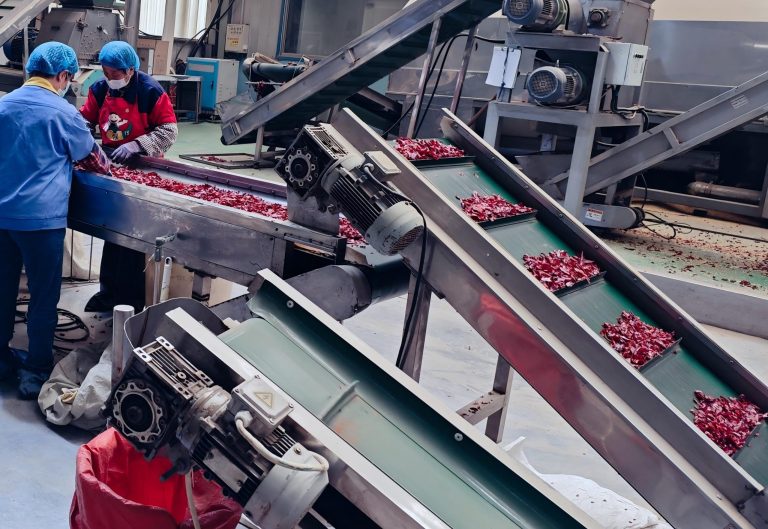
Les infrastructures chinoises de transformation du paprika, concentrées dans le parc industriel de Jiaolai, dans la province du Shandong, produisent des quantités qu’aucune autre région d’origine ne peut égaler. Pour les fabricants multinationaux de sauces et d’assaisonnements qui exploitent des chaînes de production en continu, cette ampleur se traduit par :
- Une tarification cohérente — Pas de pénuries saisonnières qui obligeraient à modifier la composition des produits à la dernière minute
- Disponible toute l'année — Les transformateurs disposent d'un stock de matières premières correspondant à 6 à 8 mois de production
- Traitement personnalisé — Granulométries spécifiques, services de mélange et formats de conditionnement
Impression couleur à un prix abordable
Dinweys® Qingdao propose du paprika en poudre à un rapport ASTA/coût qui est généralement 15–30% plus avantageux plutôt que d'origine européenne, sans pour autant compromettre la cohérence.
Partenariat technique
Au-delà du prix, les fournisseurs chinois de paprika proposent de plus en plus souvent une assistance technique :
- Correspondance ASTA personnalisée — Nous adaptons l'approvisionnement en matières premières afin de respecter vos spécifications de couleur
- Optimisation du mélange — Mélanges prêts à l'emploi de paprika + systèmes de support pour incorporation directe
- Certificat d'origine joint à chaque envoi — Documentation complète relative aux analyses microbiologiques et chimiques
Bonnes pratiques en matière de stockage et de stabilité
Pour tirer le meilleur parti du paprika dans les sauces, les soupes et les assaisonnements :
- Conserver le paprika à une température inférieure à 25 °C — Chaque augmentation de 10 °C au-delà de 20 °C double le taux de dégradation de la couleur
- Maintenez l'humidité relative en dessous de 55% — Empêche l'agglomération et la migration des couleurs dans les mélanges
- À consommer dans les 12 mois suivant la date de fabrication — La valeur de couleur ASTA diminue d'environ 5 à 101 TP3T par an dans des conditions de stockage adéquates
- Évitez la lumière directe — L'exposition aux UV altère les pigments caroténoïdes ; utilisez des emballages opaques pour le stockage en vrac
Dinweys® Qingdao fournit du paprika en poudre et en flocons classés selon les normes ASTA aux fabricants de sauces, aux producteurs de soupes et aux entreprises spécialisées dans les assaisonnements du monde entier. Contactez notre équipe commerciale technique pour obtenir des échantillons, des fiches techniques et des formulations sur mesure.
Ressources connexes :