Warum sieht Paprika mit niedrigem ASTA-Wert “dunkler” aus, weist aber einen niedrigeren Messwert auf? Das kontraintuitive optische Geheimnis
Ob Sie nun ein erfahrener Einkaufsleiter, ein internationaler Gewürzhändler oder ein frischgebackener Qualitätsingenieur in der Lebensmittelindustrie sind – wahrscheinlich sind Sie bei einer Laborinspektion schon einmal auf dieses verwirrende, knifflige Paradoxon gestoßen:
Man stellt zwei Proben nebeneinander Paprikapulver.
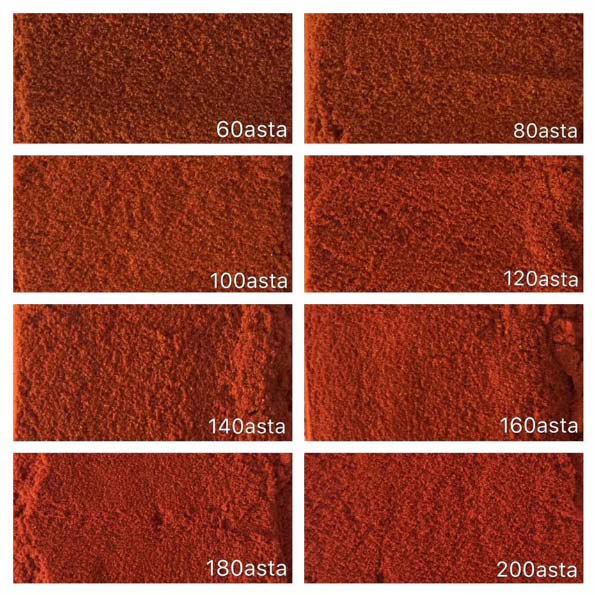
- Probe A (ASTA 60) sieht blass und fahl aus und wirkt optisch “grau” oder “stumpf”.”
- Probe B (ASTA 200) sieht unglaublich satt, tief und edel aus – ein atemberaubender purpurroter Samt.
Logischerweise sagt dir dein Gehirn: “Dunkle, kräftige Farben sollten doch eine höhere Dichte aufweisen, oder? Warum gibt das Spektralphotometer dann für die matte Probe einen winzigen Wert aus, für die tiefe, satte Probe aber einen enorm hohen?”
Willkommen bei dem berühmtesten, eine kontraintuitive optische Täuschung in der Paprikaindustrie. Lassen Sie uns heute einen Blick hinter die Kulissen der Wissenschaft werfen und anhand einiger einfacher Alltagsmetaphern genau erklären, warum das, was Ihre Augen als “dunkel” wahrnehmen, von der Maschine tatsächlich als “hell” registriert wird.
Die Espresso-Metapher: Leichtigkeit vs. Dichte
Um zu verstehen, warum das so ist, verlassen wir für einen Moment das Gewürzlabor und gehen in ein Café.
Stell dir vor, du hast zwei Tassen auf einem Tisch:
- Tasse 1: Ein Americano (Ein Espresso, verdünnt mit einem großen Glas Wasser).
- Tasse 2: Ein Ristretto (Ein doppelter Espresso, fest gepresst, mit sehr wenig Wasser extrahiert).
Wenn man beide Tassen an ein Fenster hält, Tasse 1 (Americano) lässt viel Sonnenlicht durch. Es sieht wässrig und blass aus. Tasse 2 (Ristretto), ist jedoch ein sattes, tintenartiges Dunkelbraun. Es hält das Licht vollständig ab.
In welcher Tasse ist “mehr Kaffee”? Im dunklen, kräftigen Ristretto, ganz klar.
In der Welt des Paprikas, ASTA 60 ist Ihr Americano, und ASTA 200 ist Ihr reines Ristretto.
Wenn wir sagen, dass ein Paprika mit niedrigem ASTA-Wert “dunkel” oder “matt” aussieht, meinen wir damit nicht eine hohe Farbdichte – vielmehr geht es um eine mangelnde Pigmentsättigung. Er sieht aus wie eine “schlammige, verwässerte Pfütze”, weil einfach nicht genügend leuchtend rote Pigmentmoleküle vorhanden sind, um das Licht zu Ihren Augen zurückzuwerfen.
Hinter den Kulissen: Was misst das Spektralphotometer eigentlich?
Die Ursache für die Verwirrung liegt darin, wie ein Labor die ASTA-Werte offiziell testet (gemäß der weltweit anerkannten ASTA-Methode 20.1 Standard).
Ein Spektralphotometer untersucht nicht einfach nur einen trockenen Pulverhaufen auf einer Platte. Das Gerät benötigt eine Flüssigextraktion. Hier ist der genaue, schrittweise wissenschaftliche Prozess, den weltweite Gewürzhersteller anwenden:
- Die Extraktion: Labortechniker verwenden Isopropylalkohol als Lösungsmittel, um die natürlichen Pigmente vollständig zu extrahieren – vor allem Capsanthin und Capsorubbin—aus dem festen Paprikapulver, wodurch eine klare, gefilterte rote Flüssigkeit entsteht.
- Der Lichtstrahl: Diese Flüssigkeit wird in das Gerät gegeben, und ein mikroskopisch kleiner Lichtstrahl mit einer präzisen Wellenlänge von $460\text{ nm}$ wird direkt durch das Fläschchen geschossen.
- Die Berechnung: Die Maschine berechnet Extinktion ($A$)– das heißt, es misst wie viel Licht von der Flüssigkeit eingefangen und abgeschirmt wurde, und nicht, wie viel Licht auf die andere Seite durchdrang.
Laut Das Beer-Lambert-Gesetz (das Grundgesetz der optischen Physik) ist der ASTA-Wert direkt proportional zu dieser Extinktion:
$$\text{ASTA-Wert} \propto \text{Extinktion } A$$
- Niedriger ASTA-Wert (z. B. ASTA 40–60): Die Pigmentflüssigkeit ist stark verdünnt und dünnflüssig. Wenn das Gerät den Lichtstrahl aussendet, durchdringt das Licht die Flüssigkeit mühelos wie durch ein offenes Fenster. Weil Es wird nur sehr wenig Licht absorbiert, … die Maschine liefert einen sehr niedrigen ASTA-Wert.
- Hoher ASTA-Wert (z. B. ASTA 200–240): Die Flüssigkeit hat eine satte, dunkelrote, juwelenartige Farbe und ist reich an Capsanthin-Molekülen. Trifft Licht auf sie, wird es von den Pigmenten vollständig verschluckt und absorbiert. Weil Die Absorption ist extrem hoch, zeigt das Gerät eine riesige, hochwertige ASTA-Nummer an.
Die Sprachbarriere: Menschliches Auge vs. industrielle Messgrößen
Die Verwirrung verschwindet gänzlich, sobald wir erkennen, dass die Alltagssprache und die Fachsprache der chemischen Industrie völlig unterschiedliche Vokabularen verwenden, um genau dasselbe Phänomen zu beschreiben:
| Metrisch | Produkt mit niedrigem ASTA-Wert (z. B. ASTA 60) | Produkt mit hohem ASTA-Wert (z. B. ASTA 200) |
| Maschinendaten | Niedrige Zahl (Geringe Absorption) | Hohe Zahl (Hohe Absorption) |
| Optische Realität | Geringe Pigmentkonzentration | Hohe Pigmentkonzentration |
| Alltägliche Bilder | Sieht “blass”, “trüb” oder “grau-dunkel” aus” | Wirkt “intensiv”, “lebhaft” oder “tief” |
| Begriff aus dem B2B-Einkauf | Blass / Matt (geringer Farbwert) | Intensiv / Lebhaft / Satt (hoher Farbwert) |
Profi-Tipp: So redest du wie ein Gewürzexperte
Bei Verhandlungen über Großmengen an Zutaten mit multinationalen Lebensmittelherstellern oder Gewürzmühlen kann die Verwendung vager Begriffe wie “hell” oder “dunkel” zu erheblichen Missverständnissen in den Vertragsbedingungen führen.
Um eine strenge Qualitätskontrolle zu gewährleisten und echte technische Kompetenz im B2B-Bereich zu etablieren, sollten Sie amateurhafte Beschreibungen durch professionelle, branchenübliche Formulierungen ersetzen:
- ❌ Anstatt zu sagen: “ASTA 60 ist dunkler und ASTA 200 ist heller.” (Das verwirrt Ihr Qualitätssicherungsteam.).
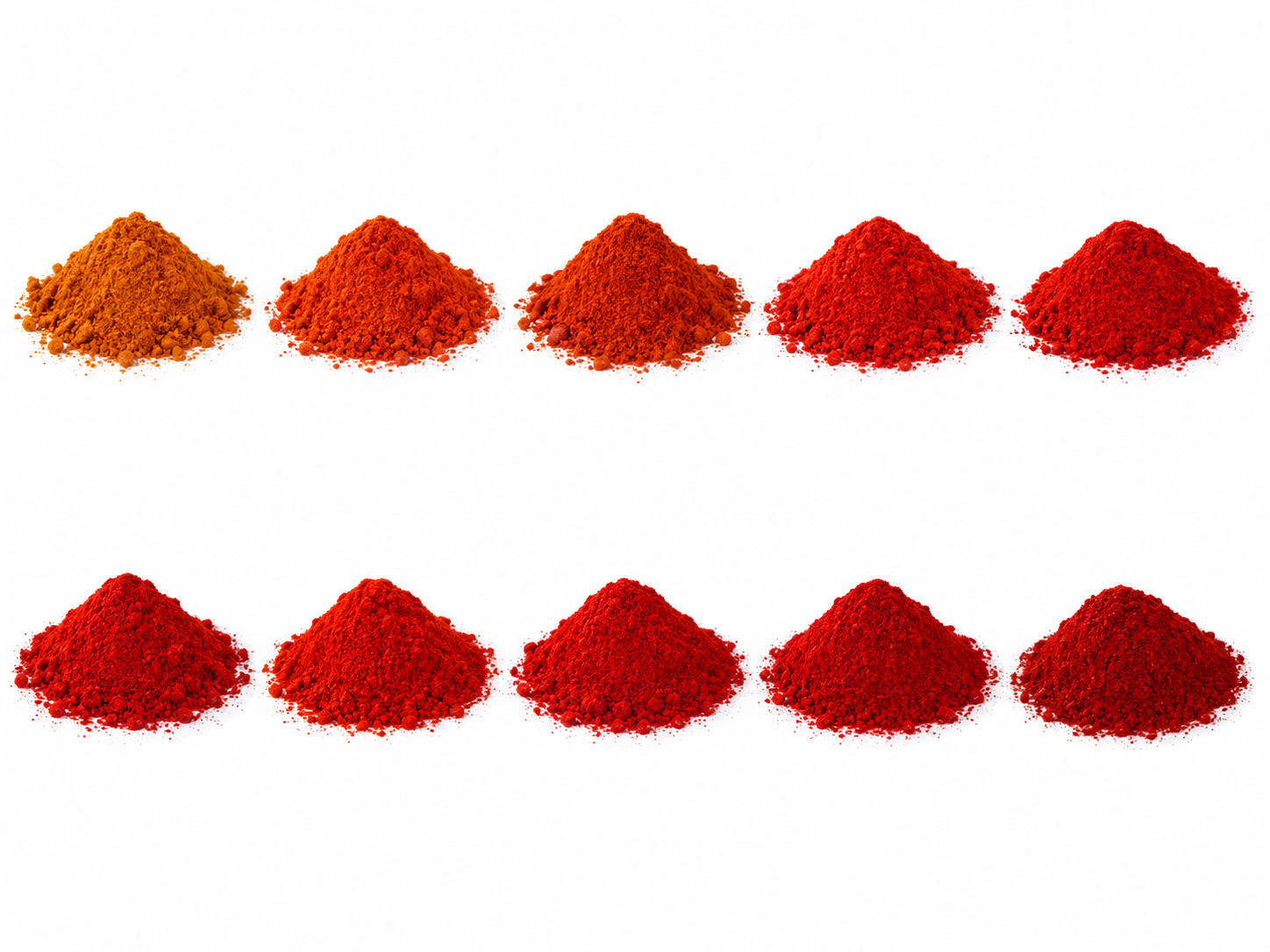
- Sag stattdessen: “Produkte mit niedrigerem ASTA-Wert weisen eine geringere Capsanthin-Konzentration auf, was sich in einem blassen, matten, orangefarbenen Erscheinungsbild äußert. Umgekehrt enthalten Produkte mit höherem ASTA-Wert eine hohe Pigmentkonzentration, was ihnen ein intensives, hochgesättigtes, tiefrotes Aussehen verleiht.”
Indem sie die wissenschaftlichen Grundlagen dieser optischen Täuschung verstehen, können Lebensmittelhersteller ihre visuellen Produktvorstellungen besser mit den strengen, objektiven mathematischen Daten aus dem Labor in Einklang bringen.
Suchen Sie nach gleichbleibendem, hochstabilisiertem Paprika mit hohem ASTA-Wert für Ihre industrielle Produktion? Entdecken Sie unsere lückenlos rückverfolgbaren, exportkonformen Paprikasorten unter paprikabulk.com.