China Paprika Flakes (Dried Capsicum Annuum Flakes)

Industrial-Grade Paprika Flakes for Global Food Manufacturing

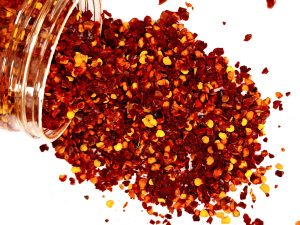
Paprika Flakes (also designated as Paprika Pepper Flakes or Crushed Paprika) are coarsely cut, premium dried capsicum matrixes engineered strictly for industrial food processing, complex seasoning blocks, processed meat formulas, culinary sauces, and high-end ready-to-eat meals.

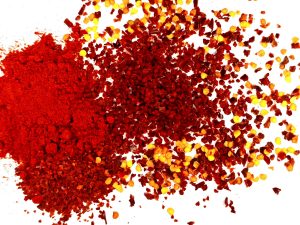
Compared with standard finely ground paprika powder, these calibrated flakes provide a highly visible red color profile, controlled localized heat release, and a distinct visual texture impact in finished food matrices.

At Dinweys® Qingdao, we manufacture ASTA-grade, industrial paprika flakes calibrated for precise particle size distribution, long-term color value retention, and reliable heat intensity to satisfy the rigorous supply chain compliance of global food production corporations.

Technical Specifications & Quality Matrix

To ensure absolute cross-page consistency and zero integration risk for your QA team, every batch of our paprika flakes is standardized to the following continuous industrial baseline:

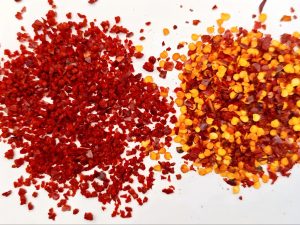
  • Calibrated Particle Size (Flake Gauge): Standard 1mm to 8mm cut size distribution (Custom mesh and cut parameters available upon technical request).

  • Seed-to-Pod Ratio Management: Available in 100% De-seeded variants (for maximum red visual purity) or customized, standardized seed-inclusion ratios to regulate specific visual textures.

  • Moisture Control Boundary: Guaranteed < 11.0% via precision halogen drying analysis and toluene distillation, completely mitigating micro-biological degradation.

  • Pungency Spectrum: Formulated within the Sweet range (< 500 SHU) or customized up to specific mild pungent thresholds via on-site HPLC validation.

  • Color Density Benchmark: 60 ASTA up to 180+ ASTA Grade, calibrated via UV-Vis Spectrophotometry (ASTA Method 20.1).

Advanced Processing Framework

Unlike generic retail crushed chili blends, Dinweys® industrial paprika flakes maintain a clean, vibrant red hue, stable pungency, and near-zero impurity levels. Our advanced manufacturing chain guarantees this through:

  1. Direct Contract Farming Yields: Raw materials sourced exclusively from GAP-managed agricultural blocks with full control over pesticide inputs.

  2. Pneumatic Cleaning Blocks: Raw pods undergo multi-stage pneumatic air-washing and dry aspiration to strip environmental field dust.

  3. Controlled Thermal Dehydration: Gentle, moisture-monitored drying loops that preserve the natural capsanthin pigments from heat-induced oxidative fading.

  4. Precision Sifting & Sorting: Utilizing high-speed optical color sorters and continuous Rare-Earth magnetic separators to eliminate light/heavy foreign materials (FM).

Key Industrial Applications

Our paprika flakes are specifically cut to resist floating or bleeding unevenly during intensive food processing processing:

  • Meat & Poultry Processing: Provides high-impact, uniform red particle distribution in sausages, gourmet hams, salami, and cured meat coatings.

  • Topical Snack Seasoning: Engineered with superior surface adhesion properties for potato chips, rice crackers, nuts, and puffed snack extrudates.

  • Industrial Sauces & Dressings: Delivers stable, heat-resistant decorative flecks in continuous retort, pasteurized hot-fill sauces, and oily condiments.

  • Spice Blending & Dry Rubs: Standardized bulk density ensuring absolute blending accuracy in automated commercial spice packaging lines.

Smart MES Manufacturing & Traceability

Operating under a centralized MES digital production platform, our Qingdao processing facility enables real-time sensor monitoring of milling temperatures, cutting size alignment, and moisture mechanics.

Every bulk shipment is issued with a unique digital MES barcode, connecting your final product batch directly back to the raw crop block, providing the exhaustive transparency required for international BRC, ISO 22000, HALAL, and KOSHER compliance audits.

Technical FAQ

What are the main processing advantages of using paprika flakes over paprika powder?

Paprika flakes are utilized when a food formulation requires localized visual impact and a controlled, gradual flavor release. Powder blends homogeneously into matrices, whereas flakes stay suspended as visible, premium red indicators, making them highly valuable for visual branding in sausages and topical snack dustings.

How does Dinweys® prevent flavor bitterness in its bulk paprika flakes?

Bitterness in crushed capsicum often stems from oxidized seed lipids. Dinweys® solves this by offering fully de-seeded paprika flakes. By mechanically separating the seeds prior to the cutting phase, we eliminate lipid-induced flavor bitterness and maximize the visual purity of the natural capsanthin red pigment.

Are your paprika flakes compliant with strict European Union and US pesticide regulations?

Yes. Standard domestic flakes adhere to GB 2763, but our export blocks are managed under rigid GAP controls. Every export batch undergoes comprehensive pre-shipment GC-MS/MS validation to ensure strict compliance with the EU default 0.01 mg/kg MRL thresholds (EC 396/2005) and US EPA 40 CFR Part 180 regulations.

What is the standard bulk packaging and shelf-life framework for B2B orders?

Our standard industrial packaging consists of high-barrier, food-grade PE-lined multi-wall paper bags or vacuum-sealed aluminum bags. Under cool, dry, and dark storage conditions (10°C – 15°C, relative humidity < 60%), the product carries a certified shelf-life of 24 months with minimal ASTA color degradation.

Secure Your Compliance Audit Portfolio

Validate our particle mechanics, seed-to-pod purity, and ASTA retention levels in your own corporate laboratory.

Specification Sheet Download

Paprika Flakes — Standard Grade Specification Sheet Download

Paprika Flakes Premium Grade Specification Sheet Download

Paprika Flakes (Special / Extra Grade) Specification Sheet


Showing all 3 results

  • ASTA 120–140 paprika flakes

    ASTA 120–140 Paprika Flakes (Sweet/Mild) Premium Grade Bulk Supplier from China

    Paprika Flakes Premium Grade Specification Sheet Download

    ASTA 120–140 paprika flakes are a mainstream export-grade dehydrated pepper ingredient designed for industrial food production and seasoning manufacturers. Sourced primarily from Xinjiang and Gansu in China, or controlled Hungarian-variety cultivation, this grade provides a balanced combination of visual red color, mild heat profile, and cost stability.

    As a paprika manufacturer and exporter, we often see this grade chosen by mid-to-large scale food processors who need consistent color performance but must control formulation cost per ton. Unlike higher ASTA 160–200 flakes, which are typically used in premium labeling or high-color-demand applications, ASTA 120–140 is the “workhorse grade” in global seasoning production.

    In export markets, many buyers select this grade when they are reformulating sausages, spice mixes, or instant meal bases and need predictable performance in large batches. A common procurement mistake is over-specifying ASTA 160+ for applications where 120–140 performs identically after cooking, leading to unnecessary cost inflation.

    This product is supplied in 10–25kg export packaging with flexible MOQ (3–5 tons), supporting both container-load and trial shipment procurement strategies.

  • ASTA 160–180 Premium Paprika Flakes

    ASTA 160–180 Special Grade Paprika Flakes

    Paprika Flakes (Special / Extra Grade) Specification Sheet

    ASTA 160–180 paprika flakes are a premium decorative-grade food ingredient designed for high-visibility applications in modern food manufacturing. Unlike industrial paprika flakes used for bulk seasoning or color blending, this grade focuses on flake integrity, visual appeal, and clean-label presentation.

    As a professional paprika manufacturer and exporter, we often see this grade chosen by high-end food brands that prioritize “on-shelf visual impact” over cost per kilogram. In export markets, especially Europe and Japan, buyers frequently upgrade from ASTA 120–140 to 160–180 when they shift from industrial seasoning applications to retail-ready gourmet products.

    A common procurement mistake is treating all paprika flakes as functionally identical. In reality, this grade is engineered differently: larger particle size (8–12mm), lower fine powder content, and stricter microbiological limits. From a production standpoint, maintaining flake integrity requires gentler drying, precision cutting, and tighter sieving control, which directly increases cost but ensures premium appearance.

    This product is widely used in salad toppings, cheese blends, ready meal decoration, and premium private label spice jars.

  • Sweet Paprika Flakes Supplier & Manufacturer

    ASTA 80–100 Sweet Paprika Flakes Supplier & Manufacturer

    Paprika Flakes — Standard Grade Specification Sheet Download

    ASTA 80–100 sweet paprika flakes are an economical-grade dehydrated pepper ingredient designed for large-scale food manufacturing and seasoning production. Sourced primarily from major Chinese growing regions including Xinjiang, Gansu, and Inner Mongolia, this grade balances acceptable red color performance with cost efficiency.

    In export markets, we often observe that buyers choose this grade when formulation cost control is more important than vivid color intensity. Unlike higher ASTA 120–200 grades, this product is not intended for premium visual applications but performs reliably in industrial blending systems where paprika is one of multiple coloring and flavor contributors.

    Many procurement teams in Southeast Asia and Africa select ASTA 80–100 flakes because they allow flexible blending with chili powder, salt, and MSG-based seasoning systems without significantly increasing raw material cost. A common procurement mistake, however, is using this grade in high-visibility snack coatings where color degradation becomes noticeable after frying or storage.

    From a manufacturing standpoint, this grade is produced using mixed-size flakes (3–12mm), minimizing processing cost and allowing high throughput. It is ideal for buyers prioritizing stability, volume supply, and predictable annual pricing rather than premium color precision.