ASTA 100: مورد مسحوق الفلفل الحلو بالجملة من الصين
ورقة مواصفات الدرجة القياسية (ASTA 80-100) — تنزيل ملف PDF
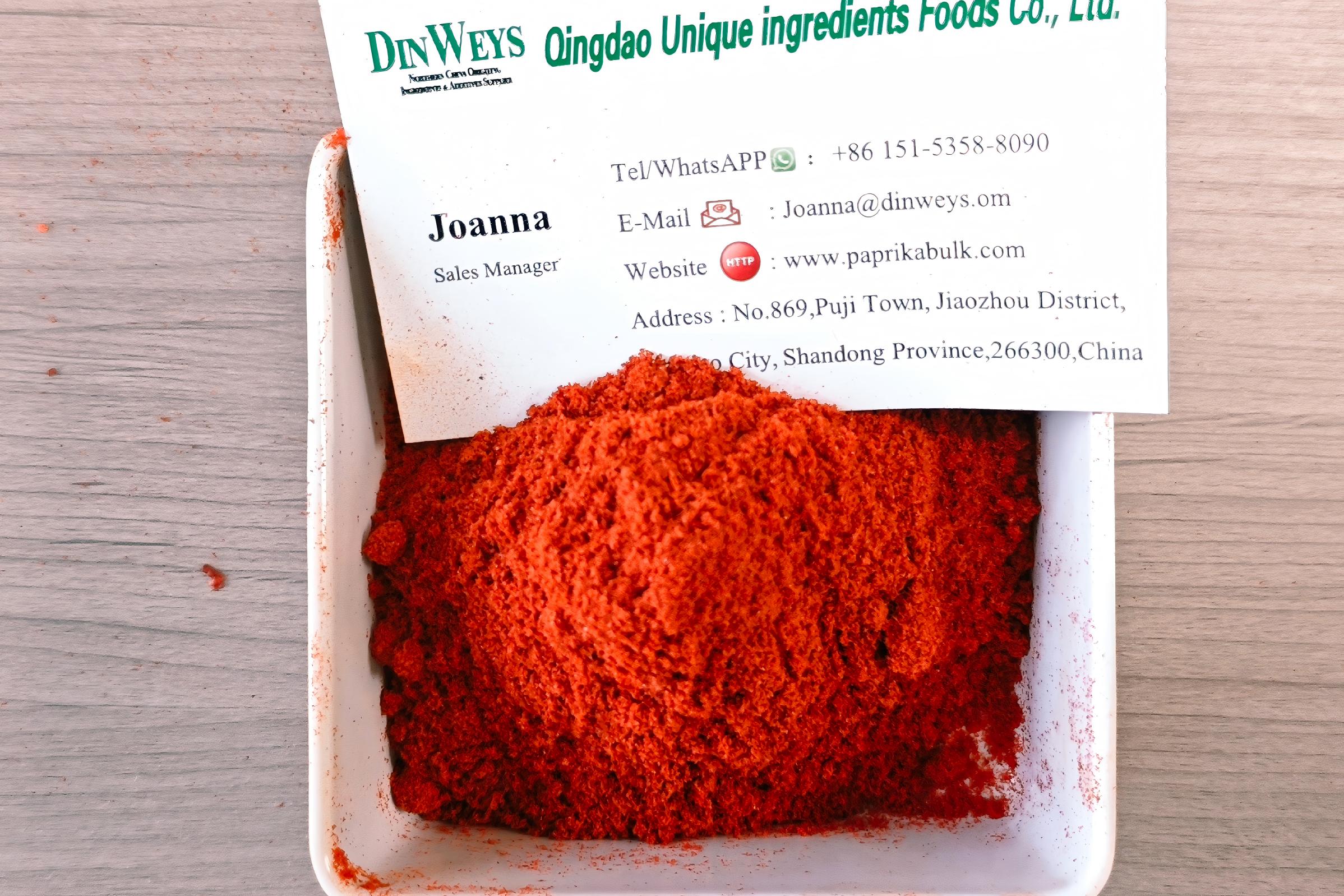
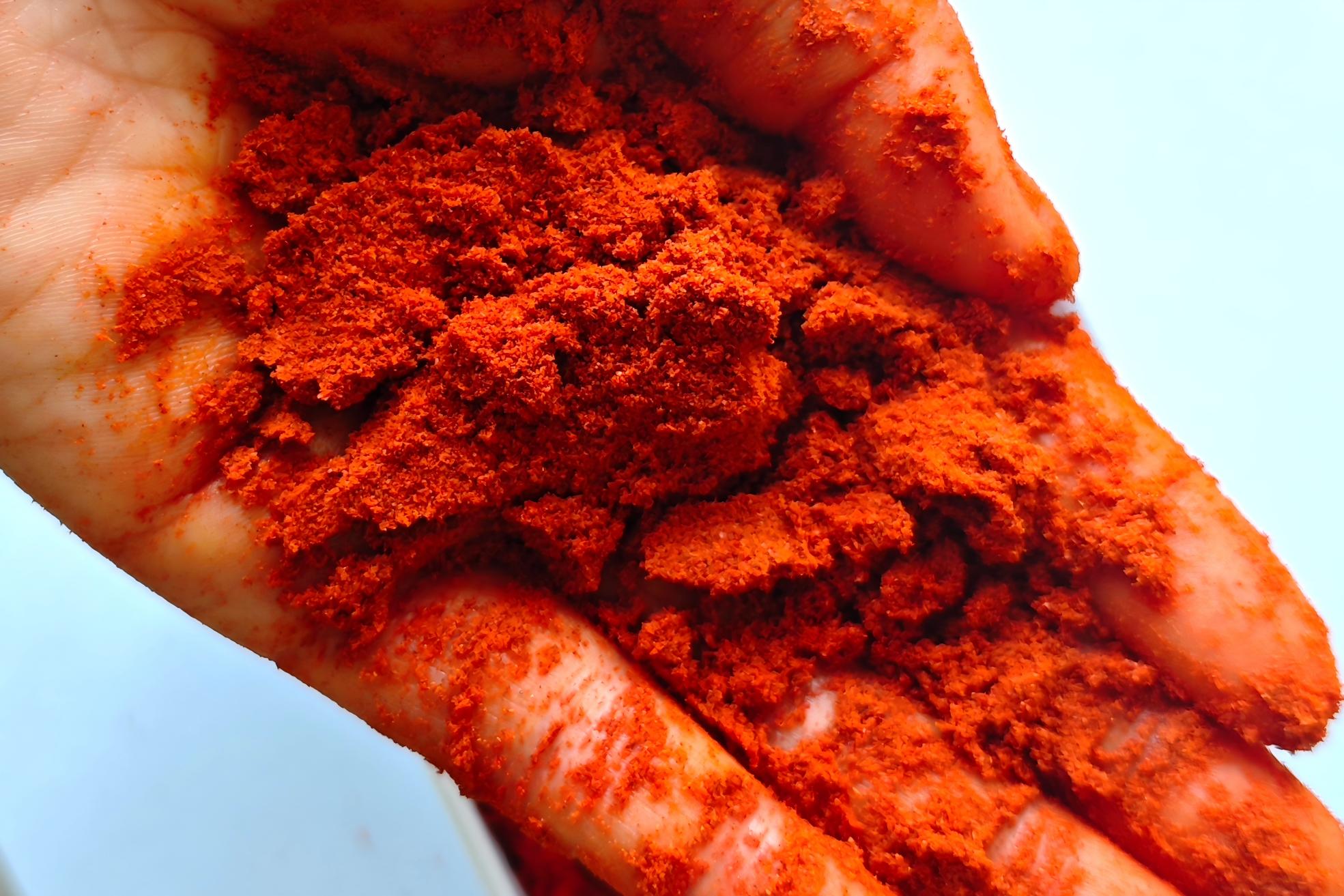
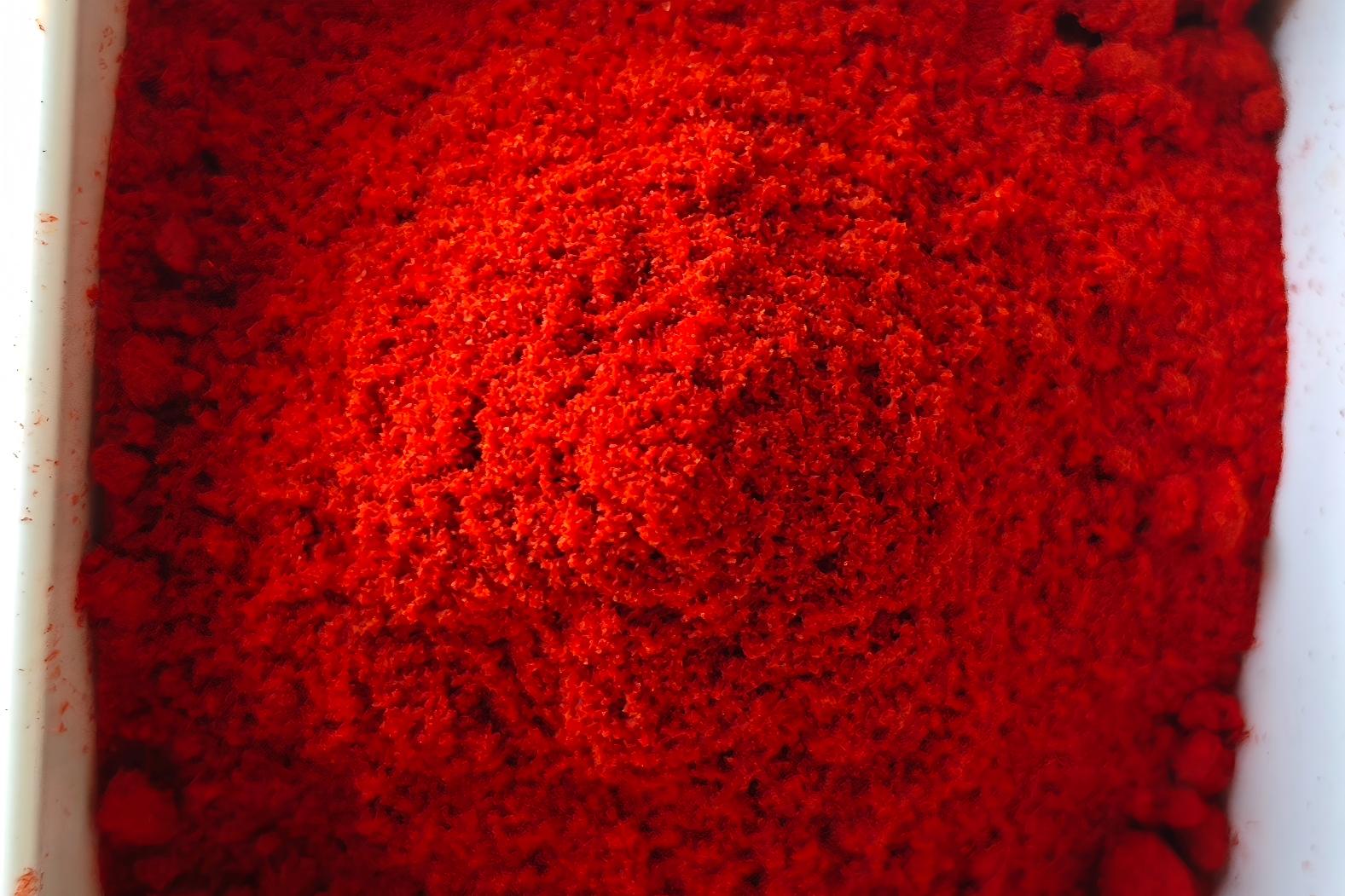
مسحوق الفلفل الأحمر «ASTA 100» هو مسحوق فلفل أحمر مجفف من الدرجة الصناعية وذو تكلفة فعالة، مصمم لتصنيع الأغذية على نطاق واسع. ويُنتج هذا النوع من أصناف الفلفل الصيني المختارة في شينجيانغ وقانسو ومنغوليا الداخلية، ويحقق التوازن بين أداء لوني أحمر مقبول وإمدادات مستقرة وأسعار تنافسية.
في أسواق التصدير، نلاحظ غالبًا أن ASTA 100 يُعد “الدرجة الأساسية” للمصنعين الذين ينتجون أنظمة التوابل بكميات كبيرة، مثل المعكرونة سريعة التحضير، وطلاءات الوجبات الخفيفة، ومخاليط التوابل، وتتبيلات اللحوم المصنعة. وعلى عكس الدرجات الأعلى من ASTA، فإن هذه الدرجة لم تُصمم لتحقيق أقصى درجات لمعان الألوان الفاخر، بل لتوفير استقرار التركيبة والتحكم في التكلفة.
يختار العديد من مصنعي الأغذية هذه الدرجة عندما يقومون بتوسيع نطاق الإنتاج ويحتاجون إلى أسعار سنوية يمكن التنبؤ بها، دون الإفراط في الاستثمار في كثافة اللون التي قد لا تكون مرئية في المكونات الغذائية المعقدة. ومن الأخطاء الشائعة في عملية الشراء الإفراط في تحديد مستويات ASTA في التطبيقات التي يتم فيها إخفاء اللون بفعل الزيت أو النشا أو مواد التوابل الحاملة.
من الناحية الإنتاجية، يُفضل استخدام ASTA 100 أيضًا لأنه يوفر توافرًا كبيرًا للدفعات ومرونة في التوريد مقارنةً بالدرجات الأعلى من ASTA التي تعتمد بشكل أكبر على دفعات الحصاد الموسمية المتميزة.
ASTA 100 paprika powder is an entry-to-mid level industrial coloring ingredient used in seasoning blends, snacks, sauces, and processed foods. It is widely selected by cost-sensitive food manufacturers who require stable red color performance at a controlled budget. This grade is commonly used in bulk industrial formulations where consistency and price efficiency matter more than high pigment intensity.
PRODUCT OVERVIEW
ASTA 100 paprika powder is positioned as an economy industrial coloring and seasoning ingredient designed for large-scale food manufacturing where cost-performance balance is more important than premium pigment intensity.
From 15+ years of export experience, we observe that ASTA 100 consistently performs as the most widely purchased baseline grade across Southeast Asia, Africa, and parts of Eastern Europe. It is not selected for visual perfection but for its ability to deliver stable red tone integration in complex food systems.
This grade typically shows an ASTA range of 90–110 (average ~100), which provides moderate coloring strength suitable for blended systems such as seasoning powders, noodle soup bases, and snack coatings. In real production environments, the visual difference between ASTA 100 and ASTA 120 often becomes negligible once mixed with salt, sugar, starch, or oil-based carriers.
Many procurement teams choose ASTA 100 when they are under pressure to reduce raw material costs without changing final product appearance significantly. In export markets, we often observe that buyers downgrade from ASTA 120–140 to ASTA 100 after pilot production confirms that higher color intensity is not visually necessary in their formulation.
A common procurement mistake is assuming that higher ASTA always improves product quality. In reality, for applications like instant noodles or curry powders, color saturation is often masked by fats and seasoning matrices. Over-specifying ASTA level leads to unnecessary cost inflation without consumer-visible benefit.
From a supply chain standpoint, ASTA 100 also provides stronger raw material availability and price stability, since it can be produced from broader harvest batches rather than limited premium pepper lots. This makes it a preferred choice for annual contracts and large-scale tenders.
Cost-performance positioning is the key reason buyers repeatedly return to this grade. It is not the strongest color option, but it is one of the most economically efficient choices for industrial food systems where formulation engineering matters more than standalone ingredient appearance.
TECHNICAL SPECIFICATIONS
| المعلمة | المواصفات |
|---|---|
| Product Name | Dehydrated Paprika Powder |
| قيمة ASTA | 90–110 (Avg. 100) |
| نموذج | Fine powder |
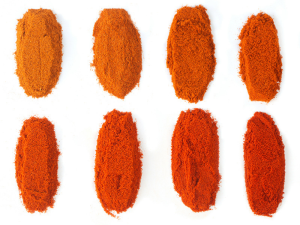
| اللون | Deep red / slightly dark tone |
| الرطوبة | ≤ 10% |
| Ash | ≤ 8% |
| حجم الجسيمات | 40–60 mesh (customizable) |
| Heat Level | Sweet (SHU < 500) |
| SO₂ | < 30 ppm (trace possible) |
| علم الأحياء الدقيقة | TPC ≤ 100,000 cfu/g |
| Packaging | 20–25 kg kraft paper bag + PE liner |
| مدة الصلاحية | 24 months |
| Storage | Cool, dry, away from sunlight |
| Origin | China (Xinjiang, Gansu, Inner Mongolia) |
KEY FEATURES & BENEFITS
- Cost-efficient formulation base – reduces total seasoning cost per ton in industrial production
- Stable ASTA 100 color performance – suitable for blended food systems
- High supply availability – easier sourcing than premium ASTA grades
- Flexible application compatibility – works in sauces, snacks, noodles
- Reduced procurement risk – less seasonal price volatility than high ASTA grades
- Optimized for bulk shipping – consistent 20kg packaging for container loading
- Formulation-friendly particle size – easy dispersion in dry blends
- Balanced sensory profile – mild flavor avoids overpowering final product
BUYER GUIDE (VERY IMPORTANT)
Who should buy this grade
- Instant noodle manufacturers
- Snack seasoning producers
- Bulk spice blending factories
- Budget food brands
- Industrial sauce formulators
Who should NOT buy
- Premium retail spice brands
- Gourmet color-focused applications
- Clean-label high-visibility seasoning products
Procurement logic (real-world insight)
In export transactions, ASTA 100 is often selected after pilot testing shows that ASTA 120+ does not improve final product appearance in oil-rich or starch-heavy formulations. Many buyers initially over-specify color strength, then adjust downward after cost audits.
Common procurement mistake
A frequent error is purchasing ASTA 150+ for applications where paprika is only 0.5–1.5% of the formula. In such cases, pigment intensity is diluted, making higher ASTA economically inefficient.
APPLICATIONS (DETAILED & UNIQUE)
1. Instant noodle seasoning powder
ASTA 100 is widely used because broth opacity masks color differences. Dosage: 1–3%. Higher ASTA grades rarely justify cost increase.
2. Snack seasoning (chips, puffed snacks)
Provides stable red coating in oil-based seasoning systems. Lower ASTA avoids overspending in high-volume coating lines.
3. Sauce & marinade systems
Used in base sauces where paprika is one of multiple coloring agents. Performance is sufficient due to emulsification effects.
4. Spice blends
Works well in curry powders and mixed seasoning systems where turmeric and chili also contribute color.
Regional usage differences
- Southeast Asia: price-sensitive noodle seasoning
- Africa: bulk spice blends and institutional food supply
- Middle East: mixed seasoning bases for meat processing
- Eastern Europe: industrial soup bases
PROCUREMENT INSIGHT (CRITICAL SECTION)
From exporter experience, ASTA 100 is typically purchased in full container orders (12–14 tons per 20FT container). Many buyers switch to annual contracts due to price sensitivity.
Typical behavior patterns:
- First order: 1–2 ton trial
- Second order: 5–8 tons
- Stable buyers: 2–6 containers/year
A common procurement strategy is ASTA downgrading after formulation optimization, saving 8–18% raw material cost annually.
Seasonal pricing impact is significant:
- Harvest season (Aug–Nov): lower pricing
- Off-season: 5–12% price increase
Many experienced buyers lock pricing before harvest volatility.
ASTA VALUE EXPLAINED
ASTA measures pigment concentration in paprika. Higher ASTA = stronger color extraction but higher cost.
However, in industrial systems:
- Oil-rich foods reduce color visibility
- Heat processing reduces pigment stability
- Mixing systems dilute ASTA advantage
Therefore, ASTA selection is a formulation engineering decision, not just a quality decision.
ASTA GRADE COMPARISON (40–240)
| ASTA | شدة اللون | التطبيق | Cost Level | Buyer Type |
|---|---|---|---|---|
| 40–60 | منخفض | Institutional bulk | Very low | Price-driven buyers |
| 60–80 | Low-mid | Basic seasoning | منخفض | Mass food producers |
| 80–100 | Mid | Industrial standard | Balanced | High-volume factories |
| 100–120 | Mid-high | Better visual blends | متوسط | Mid-tier brands |
| 120–150 | مرتفع | Retail seasoning | Higher | Branding-focused |
| 150–200 | Very high | Premium color systems | مرتفع | Export retail |
| 200–240 | Ultra premium | Specialty applications | Very high | Gourmet/industrial niche |
MANUFACTURING PROCESS
- Raw pepper sourcing (contract farms)
- Washing and impurity removal
- Sorting by color maturity
- Low-temperature drying
- Grinding to controlled mesh size
- ASTA color standardization blending
- Metal detection & quality inspection
- Packaging (20–25kg bags)
- Container loading optimization
- Export documentation preparation
QUALITY CONTROL
- ASTA spectrophotometer testing per batch
- Moisture ≤10% to prevent clumping
- Microbiological screening (TPC, coliforms)
- Heavy metal compliance testing
- Pesticide residue monitoring
- Batch traceability system
INDUSTRY INSIGHTS (HIGH VALUE)
- Many buyers overpay for ASTA levels they do not visually perceive
- Color degradation often caused by oxygen exposure, not ASTA grade
- Storage temperature impacts color stability more than ASTA difference
- Harvest variability in China creates seasonal ASTA fluctuations
- Southeast Asia prioritizes cost stability over pigment strength
MARKET INTELLIGENCE
- Southeast Asia: price-driven, ASTA 80–100 dominant
- Middle East: balanced cost + color, ASTA 100–120
- Africa: lowest-cost sourcing, ASTA 60–100
- Europe: stricter specs, higher documentation requirements
- Latin America: mixed demand, seasoning-focused usage
EXPORT & LOGISTICS
- Packaging: 20kg kraft bags + PE liner
- Loading: 12–14 tons per 20FT container
- Documents: COA, ISO, HACCP, certificate of origin
- Shipping: FOB China ports (Qingdao, Tianjin, Shanghai)
SAMPLE & DOCUMENTATION
- Free/paid samples available for testing
- COA provided per batch
- Full specification sheet
- Production photos available
- Export compliance documents included
WHY CHOOSE PAPRIKABULK.COM
- Direct manufacturer supply chain
- Stable raw material sourcing base
- 15+ years export experience
- Strict ASTA standardization system
- Flexible MOQ for trial orders
- Large-scale bulk production capability
- Long-term contract supply support
As part of the DINWEYS product portfolio, while our ASTA 120 focuses on strict EU compliance, our ASTA 100 is engineered exclusively to solve the cost-performance challenges of high-volume industrial lines.
الأسئلة الشائعة
Q1: Why do manufacturers choose ASTA 100 instead of higher ASTA grades?
Because in most industrial formulations, paprika is diluted within complex systems (oil, starch, seasoning blends). Once processed, the visual difference between ASTA 100 and higher grades is often minimal, making ASTA 100 the most cost-efficient baseline.
Q2: What is ASTA 100 best used for?
ASTA 100 is designed for high-volume industrial applications, including instant noodles, snack seasoning, spice blends, soup bases, and marinades. It is optimized for stability and scalability rather than premium visual presentation.
Q3: Is ASTA 100 consistent between batches?
Yes. Professional suppliers maintain ASTA 100 within a controlled range (typically 90–110) using blending systems and spectrophotometer testing. This ensures stable performance in continuous manufacturing environments.
Q4: Does ASTA 100 affect flavor compared to higher ASTA grades?
No. ASTA measures pigment concentration, not taste. Flavor is determined by the spice formulation, not ASTA level, so higher grades do not provide stronger flavor.
Q5: When is ASTA 100 enough for a formulation (2% rule)?
When paprika usage is below approximately 2% of the total formula, color is heavily diluted by other ingredients. In these cases, higher ASTA levels rarely produce visible improvements in the final product.
Q6: Why do some buyers downgrade from ASTA 120–150 to ASTA 100?
After pilot production, many manufacturers find that higher ASTA does not improve final product appearance in oil-rich or starch-heavy systems. Switching to ASTA 100 reduces cost without affecting consumer-visible quality.
Q7: Why not always choose ASTA 80 for lower cost?
ASTA 80 may reduce cost slightly, but in real processing conditions (heat, mixing, dilution), color often becomes too weak. Many buyers revert to ASTA 100 after failed visual consistency in production trials.
Q8: How stable is ASTA 100 during shipping and storage?
ASTA stability depends more on oxygen, heat, and moisture exposure than on grade level. Proper packaging (PE liner + sealed kraft bags) is critical to maintaining color quality during long sea freight.
Q9: Can ASTA 100 be blended with other ASTA grades?
Yes. Industrial buyers often blend ASTA 100 with higher grades (120–150) to optimize both cost and color strength. This is a common formulation engineering strategy in large-scale production.
Q10: How does seasonal harvest affect ASTA 100 pricing?
Pricing is typically lowest during harvest season (Aug–Nov in China). Off-season supply tightening can increase prices by about 5–12%, so many buyers use annual contracts to stabilize procurement costs.
INQUIRY
For pricing, samples, or container quotations:
- Request Free Samples
- Request COA & Specification Sheet
- Get Bulk Pricing (FOB/CIF)
- Discuss Annual Supply Contract
- Optimize ASTA Grade for Your Formula
👉 Contact PaprikaBulk.com for industrial procurement support and long-term supply solutions.