
مصنع معالجة الفلفل الحلو الصناعي: تدفق إنتاج متطور وضوابط جودة
تفصيل تقني شامل لنظام Dinweys® Qingdao الآلي،, نظام تحليل المخاطر ونقاط التحكم الحرجة (HACCP)عمليات طحن وتكرير الفلفل الحار المتوافقة مع المعايير، بالإضافة إلى سير عمل التصدير الذي يتم تتبعه عبر نظام MES.
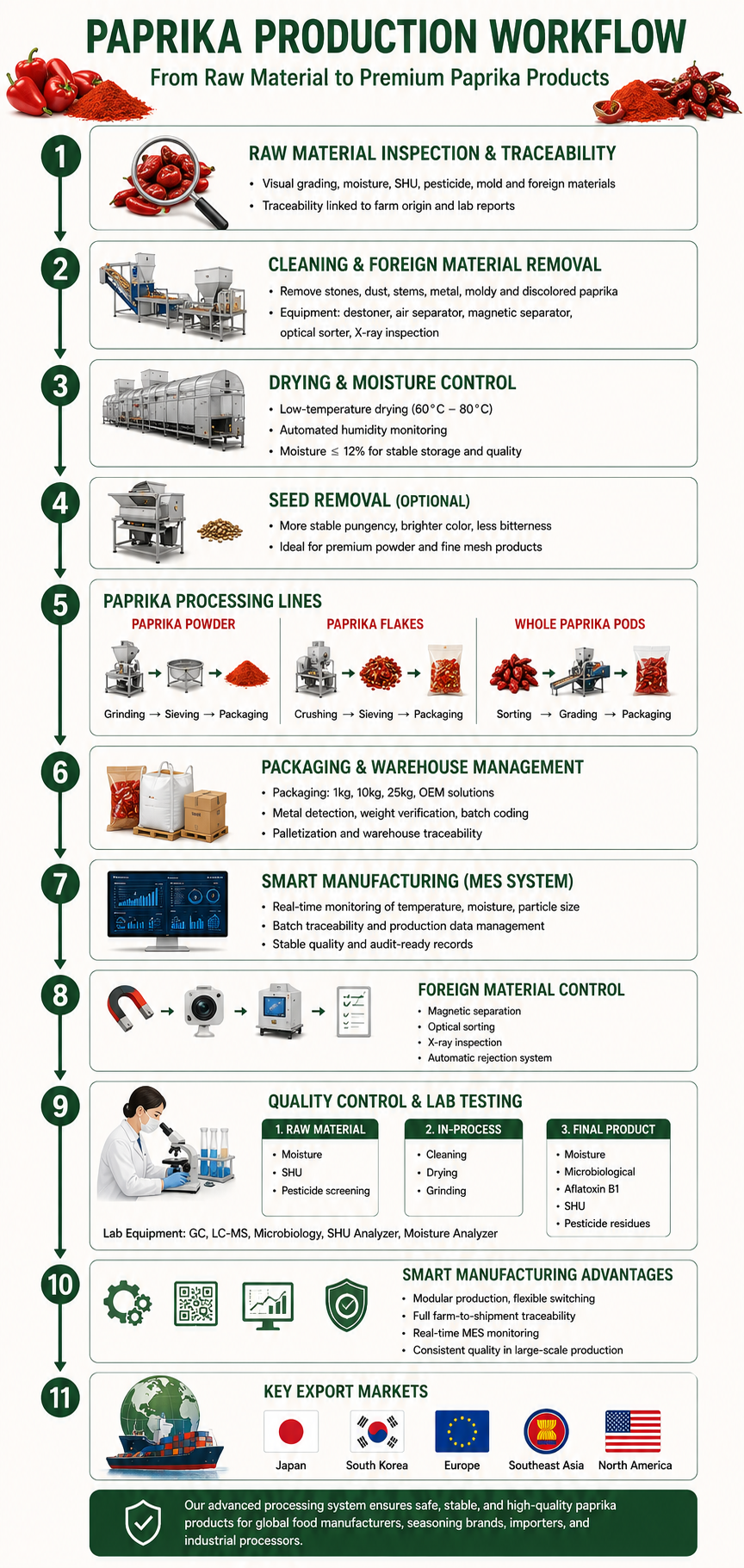
1. إطار المعالجة المتكامل
تتيح خطوط الإنتاج المعيارية لدينا الانتقال السلس بين مسحوق, ، منظمة رقائق, ، وكاملة القرون مع استخدام نظام ذكي لتنفيذ عمليات التصنيع (MES) لمراقبة نقاط المراقبة الحرجة (CCPs).
الخط أ: مسحوق الفلفل الحلو عالي الجودة (60–120 ميش)
استلام المواد الخام → الغربلة متعددة المراحل → التجفيف الحراري (60 درجة مئوية – 80 درجة مئوية) → الفصل الدقيق للبذور → الطحن الهوائي فائق الدقة → الكشف عن الشوائب بالأشعة السينية واستبعادها → التعبئة الآلية بالجملة
الميزة التقنية: تمنع حلقات الطحن التي تعمل في درجات حرارة منخفضة حدوث احتكاك حراري يؤدي إلى تدهور أصباغ الكابسانثين الطبيعية، مما يضمن احتفاظ المسحوق النهائي بخصائصه الأصلية قيمة اللون ASTA والزيوت العطرية المتطايرة.
الخط ب: تدفق منتظم لرقائق البابريكا (مطحونة بحجم 3–8 مم)
استلام البذور الخام → إزالة الساق بالهواء المضغوط → التكسير الميكانيكي المتحكم فيه → الغربلة الاهتزازية متعددة الطبقات → الفرز البصري بالأشعة تحت الحمراء → الفصل المغناطيسي للمعادن → ختم الحاويات الصناعية
الميزة التقنية: مصممة خصيصًا لإضفاء مظهر مميز على منتجات اللحوم الفاخرة وتوابل الوجبات الخفيفة، مما يضمن انخفاضًا تامًا في نسبة التفتت والغبار.
الخط ج: مسار حبات الفلفل الحلو الكاملة المخصصة للتصدير
المعايرة الحسية اليدوية → التنظيف بالغسل الهوائي → تثبيت الرطوبة (≤12%) → تصنيف الألوان بصريًّا → التعقيم → التعبئة بالضغط الفراغي
الميزة التقنية: يحافظ على البنية الخلوية للقرنة سليمة تمامًا، مما يضمن تقلبات ضئيلة في الرطوبة وأقصى درجات النظافة الهيكلية لمصانع الطحن في الخارج.
2. التدخل في حالات الطوارئ المتعلقة بسلامة الأغذية والمواد الغريبة
التدفق العام لعملية التنقية الفيزيائية
وصول المواد الخام → إزالة الحجارة بالاهتزاز (الفصل حسب الكثافة) → الفصل المغناطيسي (إزالة المواد الحديدية) → الفرز البصري بالأشعة تحت الحمراء (الكشف عن العيوب اللونية) → الفحص بالأشعة السينية (الكشف عن الأجسام الغريبة عالية الكثافة) → 100% منتج آمن للاستخدام الغذائي
الامتثال لمعايير الاستيراد الصارمة للغاية التي تحظر وجود أي مواد غريبة في اليابان وكوريا الجنوبية والاتحاد الأوروبي, تطبق شركة Dinweys® مصفوفة متعددة المستويات للقضاء على المخاطر المادية:
- آلات إزالة الحصى بالاهتزاز وفواصل الهواء: افصل على الفور الحطام الكثيف الموجود في الحقل، والحجارة، والتربة، وبقايا النباتات الزراعية (السيقان/الأوراق).
- التسلسلات المغناطيسية للأتربة النادرة: عزل وجمع الشظايا المعدنية المجهرية الحديدية وغير الحديدية خلال مرحلة الغربلة الكثيفة.
- أنظمة الفرز البصري بالأشعة تحت الحمراء وأنظمة الأشعة السينية: تقوم خوارزميات الفحص في الوقت الفعلي تلقائيًا برفض الحبوب المتغيرة اللون أو المصابة بالعفن، أو قطع البلاستيك أو الزجاج أو الحجارة المخبأة داخل تدفق المنتج.
3. التحقق المختبري على ثلاث مراحل
يتم تخصيص بصمة تتبع رقمية مخصصة لكل دفعة إنتاج، تربط الباركودات النهائية للمنصات مباشرةً ببيانات الكروماتوغرافيا GC-MS وLC-MS في الموقع.
المرحلة الأولى: مراقبة الدخول: تخضع الفلفل الحار الطازج لفحص دقيق الفحص باستخدام تقنية GC-MS/MS للتحقق من بقايا المبيدات، والتحقق من الرطوبة باستخدام أجهزة تحليل الهالوجين الدقيقة، ومعايرة وحدة سكوفيل للحرارة (SHU).
المرحلة الثانية: ضوابط أثناء العملية: تعمل الدورات الآلية التي يتم التحكم فيها بواسطة وحدة التحكم المنطقية القابلة للبرمجة (PLC) على ضبط درجات حرارة التجفيف باستمرار في نطاق يتراوح بين 60 و80 درجة مئوية، مما يمنع الرطوبة المتبقية من تجاوز الحد الحرج < 11.0% (أو < 10.0% حسب مواصفات الشبكة) حد الامتثال.
المرحلة الثالثة: التخليص الجمركي للصادرات: تتأكد الاختبارات النهائية من الغياب التام لـ الأفلاتوكسين B1، والأوكراتوكسين A، و السالمونيلا قبل التعبئة والتغليف وإصدار الشحن.
الأسئلة الشائعة
س: لماذا تستخدم شركة Dinweys® نظام طحن متخصص يعمل بدرجات حرارة منخفضة لإنتاج مسحوق الفلفل الحلو؟
ج: يولد الطحن التقليدي عالي السرعة حرارة احتكاك شديدة تتجاوز $65^\circ\text{C}$، مما يؤدي إلى تدهور حراري سريع لمادة الكابسانثين، مما يتسبب في الفلفل الحلو’تتلاشى درجة لون ASTA وتخفت رائحتها الطبيعية. منتجنا خط طحن معياري يعمل بدرجات حرارة منخفضة يثبت غرف الطحن، ويحافظ بشكل مثالي على كثافة الصبغة الحمراء الطبيعية والزيوت العطرية المتطايرة التي تتطلبها آلات خلط التوابل الصناعية.
س: كيف تفيد عملية إزالة البذور الاختيارية شركات تصنيع الأغذية الكبيرة؟
ج: تحتوي بذور الفلفل الحلو على دهون ومرارة خفيفة يمكن أن تغير المذاق وتقلل من سطوع اللون الظاهري. من خلال استخدام آلات فصل البذور الآلية, ، يمكننا إزالة البذور من القرون جزئيًا أو كليًّا قبل الطحن. وبالنسبة للمشترين في اليابان وكوريا الجنوبية وقطاعات الطهي الراقية، فإن هذا التخصيص يرفع بشكل كبير من كثافة اللون (أحمر أكثر إشراقًا) ويضمن ثباتًا تامًا في قيم حدة الفلفل (SHU).
س: كيف تم تنظيم خط الإنتاج لديكم لتسهيل الامتثال للوائح التنظيمية في مختلف البلدان؟
ج: تتم إدارة خطوط الإنتاج لدينا من خلال نظام مركزي منصة التنفيذ الرقمية MES. وهذا يعني أن متغيرات مثل شبكة الجسيمات، ومستوى تحمل الرطوبة، وإجراءات التدخل الميكروبيولوجي يتم تخصيصها بالكامل وفقًا لكل طلب. وعندما يتم تخصيص دفعة ما للاتحاد الأوروبي أو أمريكا الشمالية، يقوم النظام تلقائيًا بتمييز خط الإنتاج وتهيئته لفرض معايير سلامة الأغذية الدولية ذات الصلة، مما يؤدي إلى سجل ورقي فوري وجاهز للتدقيق لمسؤولي الامتثال في الخارج.