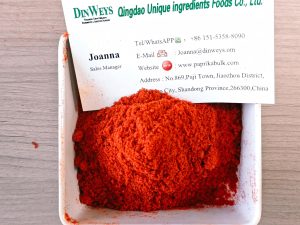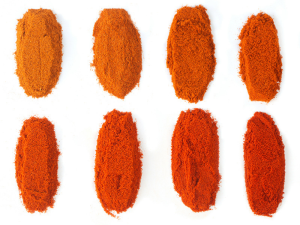
ASTA 120–150+ Paprikapulver-Lieferant aus China | Hervorragende Farbqualität für die industrielle und private Lebensmittelherstellung
TECHNISCHES DATENBLATT DER HOCHWERTIGEN QUALITÄT (ASTA 120–150+) ALS PDF HERUNTERLADEN
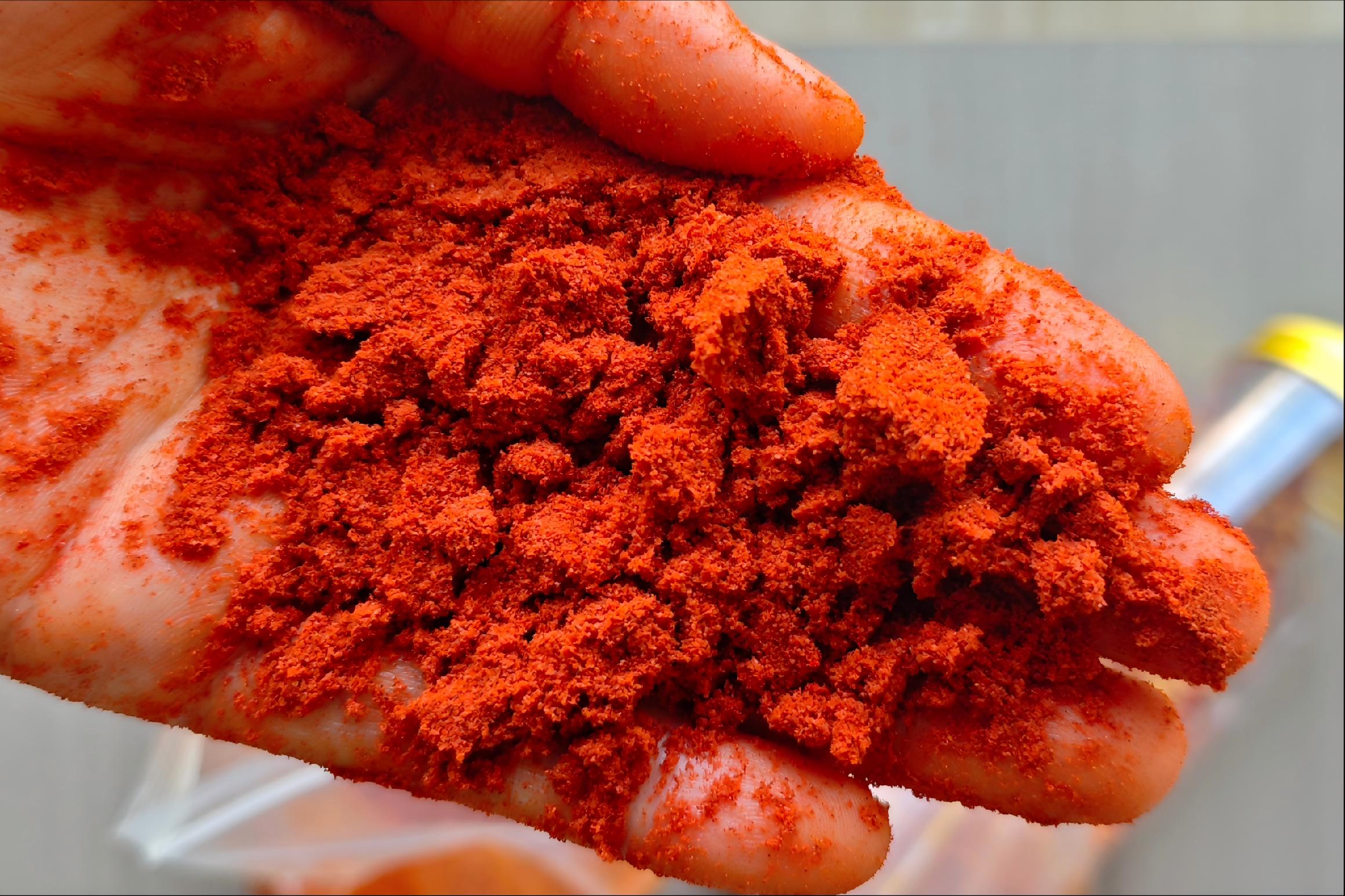
ASTA 120+ Paprikapulver ist ein dehydriertes Paprikapulver in Industriequalität mit hoher Farbintensität Entwickelt für Lebensmittelhersteller, die starke visuelle Wirkung, klarere Rotfarbwiedergabe und Positionierung als Premium-Formel.
Diese Sorte wird aus ausgewählten, besonders pigmentreichen Pfeffersorten aus den besten Anbaugebieten Chinas (Xinjiang, Innere Mongolei, Gansu) hergestellt und durch strenge Farbauswahl, kontrollierte Trocknung und Mischsysteme nach ASTA-Standard um eine gleichbleibend hohe ASTA-Leistung zu erzielen.
Im Gegensatz zu herkömmlichen Industriequalitäten wurde ASTA 120+ nicht nur im Hinblick auf ein ausgewogenes Preis-Leistungs-Verhältnis entwickelt, sondern auch für deutliche Farbdominanz in fertigen Lebensmittelsystemen, insbesondere wenn Paprika als wesentliches Markenmerkmal oder als sensorischer Farbtreiber eingesetzt wird.
PRODUCT DESCRIPTION
ASTA 120–150+ paprika powder is a superior industrial coloring ingredient designed for applications where red color visibility is a functional quality requirement, not just a background attribute.
It is widely used in premium seasoning systems, export retail blends, branded snack products, and high-visibility sauces where consumers can directly perceive color intensity.
From 15+ years of export experience, ASTA 120–150+ is typically selected when manufacturers move from cost-driven formulation logic → brand-driven visual engineering logic.
PRODUKTÜBERSICHT
ASTA 120–150+ sits above standard industrial grades (ASTA 80–100) and is positioned as a high-performance color system input, not a baseline bulk ingredient.
This grade typically shows:
- ASTA-Sortiment: 120–150+ (varies by batch selection)
- Entwickelt für high pigment retention and stronger red tone visibility
- Optimized for lower dilution tolerance systems
In real production environments, ASTA 120–150+ maintains visible superiority in:
- Oil-based coatings
- Low dilution seasoning systems
- Retail-packaged spice blends
- Direct consumer-facing products
Unlike lower ASTA grades where color is often masked, ASTA 120–150+ is selected specifically when color must remain identifiable after processing.
WHY BUYERS SWITCH TO ASTA 120–150+
Many manufacturers upgrade from ASTA 100 → ASTA 120–150+ after discovering:
- Final product color is a key selling factor
- Brand consistency requires visual control
- Retail packaging demands stronger red tone
- Export compliance requires stricter color standardization
In these cases, ASTA becomes not a cost factor, but a brand perception engineering tool.
TECHNISCHE DATEN
| Parameter | Spezifikation |
|---|---|
| Produktname | Getrocknetes Paprikapulver |
| ASTA-Wert | 120–150+ (Premium Selected Range) |
| Formular | Fine powder / ultrafine optional |
| Farbe | Bright red / high chroma red tone |
| Feuchtigkeit | ≤ 8.5–9.0% (low-moisture premium control) |
| Asche | ≤ 8% |
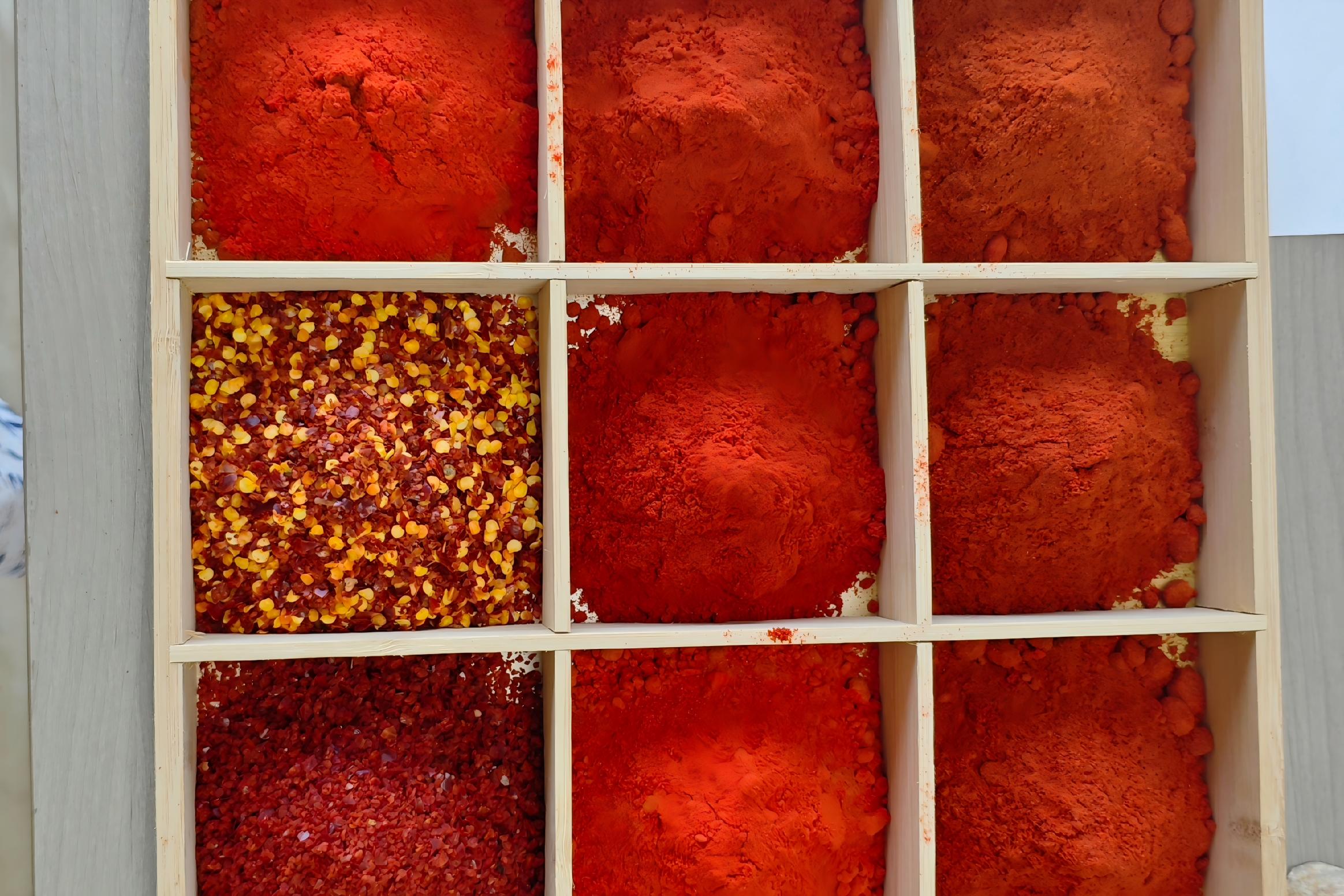
| Partikelgröße | 40–60 mesh / 60–80 mesh (ultrafine retail blends optional) |
| Schärfegrad | Süß (SHU < 500) |
| Sterilisation | Steam sterilized / HTST thermal treatment optional |
| SO₂ | < 30 ppm (Spuren möglich) |
| Mikrobiologie | TPC ≤ 50,000 cfu/g (premium export standard) |
| Verpackung | 20–25 kg kraft bag + PE liner / vacuum-sealed retail packs optional |
| Haltbarkeit | 24 Monate |
| Lagerung | Cool, dry, UV-protected environment |
| Herkunft | China (premium controlled cultivation zones) |
HAUPTMERKMALE UND VORTEILE
- High visual color intensity (strong red tone retention)
- Stable ASTA 120–150+ performance grading system
- Suitable for premium food positioning systems
- Better visibility in low-dose applications
- Enhanced branding value in retail products
- Strong batch selection control for export compliance
- Compatible with blended formulation engineering
- Improved consumer-facing color perception
KAUFRATGEBER
Who should buy ASTA 120–150+
- Premium snack brands (chips, coated snacks)
- Retail spice packaging companies
- Export seasoning brands
- Branded sauce manufacturers
- High-visibility food product developers
Wer sollte das Produkt NICHT kaufen?
- Pure cost-driven bulk manufacturers
- Hidden-color industrial formulations
- Large-volume low-margin seasoning systems
FORMULATION LOGIC
ASTA 120–150+ becomes critical when:
- Paprika ist ein visible ingredient (not masked)
- Dosage is relatively low but must remain visually dominant
- Final product is evaluated by color perception
- Brand differentiation depends on appearance consistency
In contrast to ASTA 100, which optimizes cost efficiency, ASTA 120–150+ optimizes:
👉 visual engineering + brand perception control
ANWENDUNGEN
1. Premium snack coatings
Maintains strong red appearance even after oil frying or seasoning adhesion.
2. Retail spice blends
Used in branded spice packaging where visual shelf impact is critical.
3. Export-ready seasoning systems
Supports stricter EU / US labeling expectations for color consistency.
4. High-end sauce systems
Used where paprika contributes directly to perceived freshness and richness.
EINBLICK IN DIE BESCHAFFUNG
ASTA 120–150+ is typically selected after:
- Pilot testing confirms visual requirements exceed cost sensitivity
- Brand positioning shifts from OEM supply → branded retail strategy
- Quality control standards require tighter ASTA range control
Unlike ASTA 100, procurement decisions are less price-driven and more specification-driven.
MARKET POSITIONING
- Europe: High compliance + visual consistency demand
- Middle East: Balanced premium seasoning blends
- Latin America: Brand-driven snack products
- Southeast Asia: selective premium snack segment
- China domestic export OEM: growing adoption in branded food lines
EXPORT & LOGISTIK
- Packaging: 20–25 kg kraft bags + PE liner
- Container load: 12–14 tons / 20FT
- Shipping terms: FOB China ports (Qingdao / Tianjin / Shanghai)
- Documentation: COA, ISO, HACCP, origin certificate
QUALITÄTSKONTROLLE
- High-resolution ASTA spectrophotometer grading
- Batch color selection system (premium sorting stage)
- Moisture and oxidation control (<10%)
- Heavy metal & pesticide residue compliance
- Traceability system per export batch
WARUM SICH FÜR UNS ENTSCHEIDEN DINWEYS
- Direkte Lieferkette vom Hersteller
- Controlled ASTA grading system (80 → 240 full range)
- Strong export consistency control
- Flexible OEM / bulk customization
- Stable long-term supply contracts
- Industrial + retail dual-grade capability
ERLÄUTERUNG DES ASTA-WERTS
ASTA 120–150+ is not simply “stronger color”.
It represents:
- Higher pigment density selection
- Lower tolerance for batch variation
- Stronger visual retention after processing
- Better performance in consumer-facing products
Häufig gestellte Fragen
Q1: Why is ASTA 120–150+ considered a “superior grade” compared to ASTA 100?
ASTA 120–150+ is not only higher in color intensity but also engineered for visual performance stability in finished retail products. Unlike ASTA 100, which is optimized for cost-performance in bulk systems, ASTA 120+ is designed to maintain visible red chroma after processing, dilution, and packaging.
Q2: What makes ASTA 120–150+ suitable for premium retail and branded food products?
ASTA 120–150+ is selected when paprika becomes a consumer-visible ingredient, such as in branded snack coatings, retail spice jars, and export seasoning packs. Its higher pigment density ensures that red color remains identifiable even after oil coating, heat processing, or seasoning blending.
Q3: How does low moisture control improve ASTA 120–150+ color stability?
Moisture is one of the main drivers of pigment oxidation. ASTA 120+ is controlled at ≤8.5–9.0% moisture, which significantly reduces enzymatic and oxidative degradation during storage and transport, improving long-term color retention compared to standard industrial grades.
Q4: Does ASTA 120–150+ require sterilization for export-grade applications?
Yes, in many premium and EU-oriented applications, steam sterilization or HTST thermal treatment (optional) is applied to reduce microbial load while preserving carotenoid pigments. This ensures compliance with stricter food safety requirements without affecting color performance.
Q5: What particle size options are available and why does it matter?
ASTA 120+ supports both standard (40–60 mesh) and ultrafine 60–80 mesh options. Finer particle size improves dispersion uniformity in seasoning systems and enhances perceived color consistency in retail products, especially dry blends.
Q6: How does DINWEYS prevent color fading under UV light in retail packaging?
Color fading is mainly caused by oxygen exposure and UV radiation, not ASTA value itself. ASTA 120+ systems are typically paired with oxygen-barrier packaging recommendations and UV-protective film structures, helping preserve red tone stability in shelf-display environments.
Q7: Why is pigment stability maintained during high-speed industrial blending?
ASTA 120–150+ maintains stability due to low-temperature grinding and controlled mechanical energy input, optionally supported by water-cooled milling systems. This prevents friction heat from degrading carotenoid chains responsible for red pigment intensity.
Q8: Is ASTA 120–150+ stable under frying, baking, or thermal processing?
Yes. While all paprika pigments are heat-sensitive to some degree, ASTA 120+ provides higher initial pigment density, which improves final color retention after thermal processing compared to lower ASTA grades.
Q9: Can ASTA 120–150+ be blended with lower ASTA grades like ASTA 100?
Yes. Many manufacturers use blending strategies (120+ + 100) to achieve a cost-to-color optimization balance, especially in large-scale seasoning production where both visual consistency and budget control are required.
Q10: When should a manufacturer NOT use ASTA 120–150+?
ASTA 120–150+ is not necessary in systems where paprika is:
- Fully masked by strong sauces or emulsions
- Used only as background color input
- Prioritized for cost reduction over visual performance
In these cases, ASTA 100 remains more economically efficient.
ANFRAGE
For pricing, samples, or container quotation:
- Kostenlose Muster anfordern
- Get COA & Specification Sheet
- Bulk Pricing (FOB / CIF)
- Unterstützung für OEM- und Eigenmarkenprodukte
- Annual Supply Contract
👉 Contact PaprikaBulk.com for superior-grade industrial procurement solutions.