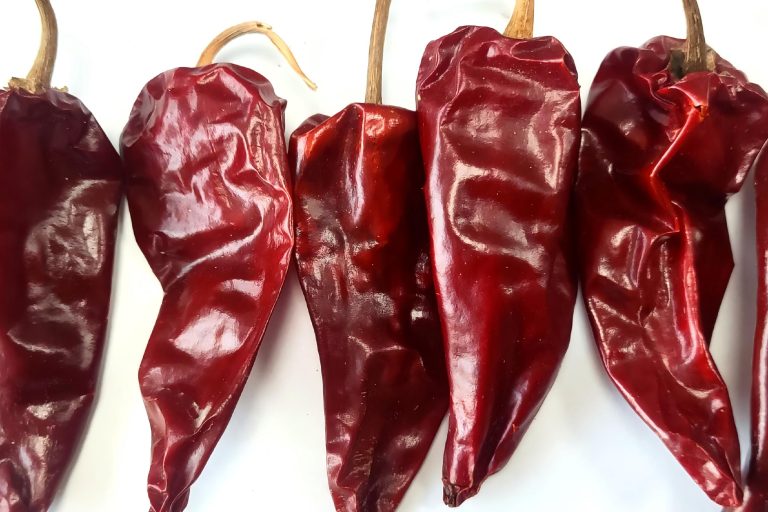
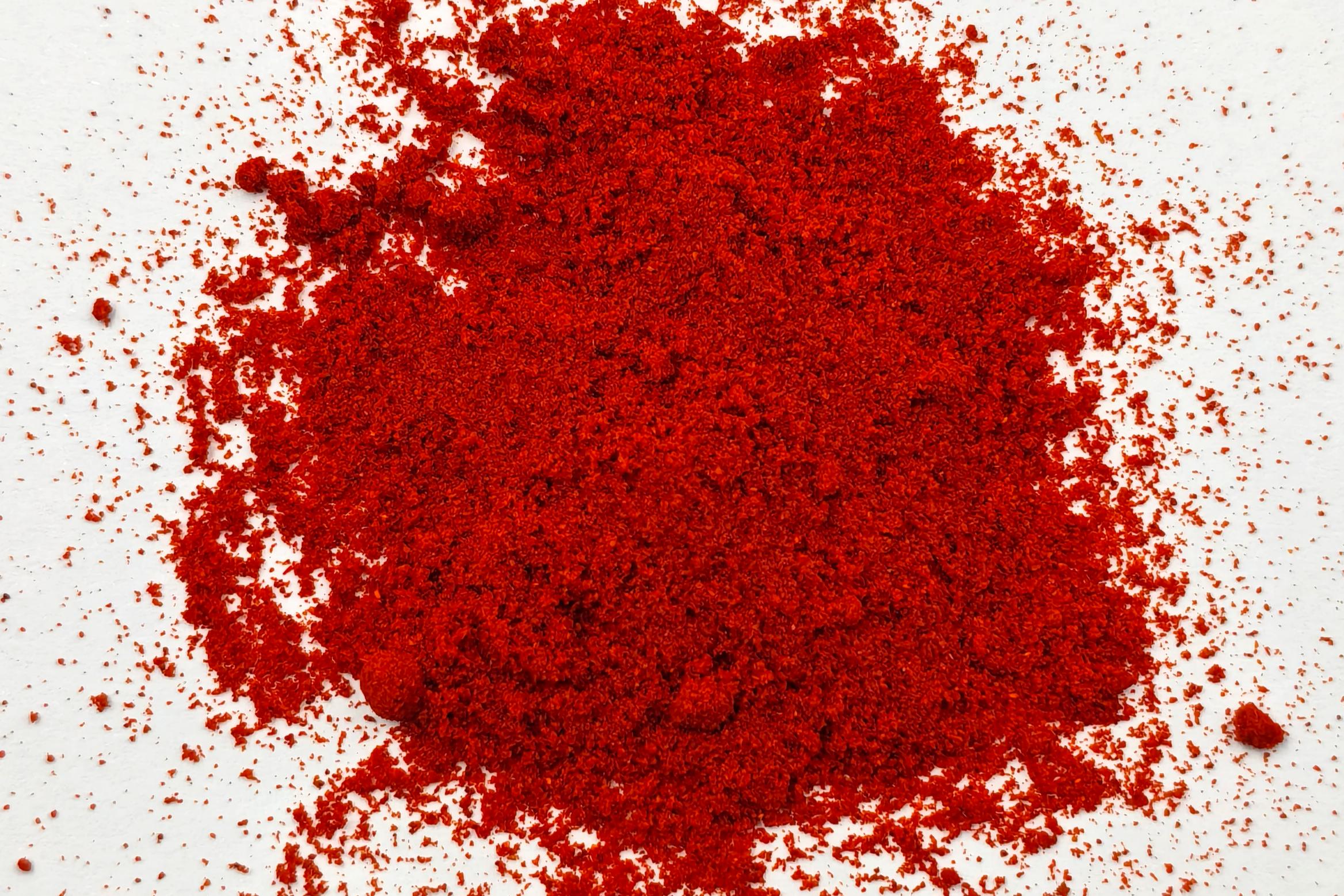
هل الفلفل الحلو والفلفل الحلو الحلو هما نفس الشيء؟
Overview Answer
In most Western cooking, especially in the United States and Europe, الفلفل الحلو and sweet paprika are essentially the same thing. When a recipe calls for “paprika,” it usually refers to the mild, sweet variety unless otherwise specified (such as hot paprika or smoked paprika).
If a spice bottle simply says “paprika,” it is most often sweet paprika.
Think of it like ordering “milk.” In most cases, people assume regular milk unless a specific type such as oat milk or almond milk is mentioned.
It is important to note that “sweet” does not mean sugary. Sweet paprika refers to a mild flavor profile with low pungency, used mainly for color and gentle aroma.
However, in real supply chains, paprika products can still vary significantly in color strength, flavor intensity, and processing quality depending on raw materials and manufacturing methods.
What We Frequently See in the Market
In practice, we often see buyers assume that “paprika” and “sweet paprika” are two different ingredients.
However, in real food ingredient sourcing, both terms usually refer to the same mild paprika category derived from red pepper varieties (Capsicum annuum).
The real variation comes from:
- Pepper variety selection
- Seed and membrane removal ratio
- Drying method
- Grinding fineness
- ASTA color level
- Sterilization process
Over time, we have observed that supplier processing differences often have a greater impact on product performance than the naming itself.
Paprika vs Sweet Paprika
| Feature | البابريكا | Sweet Paprika |
|---|---|---|
| Meaning | General category of ground red pepper spices | Mild subtype of paprika |
| Heat level | Varies (mild to hot) | Very low |
| النكهة | Sweet, hot, or smoky depending on type | Mild, slightly fruity |
| Usage | General culinary seasoning | قياسي Western cooking spice |
| Relationship | Umbrella term | Default market form |
Key takeaway
In most American and European food applications, paprika and sweet paprika refer to the same default mild product.
What Is Paprika and Why Sweet Paprika Is the Standard
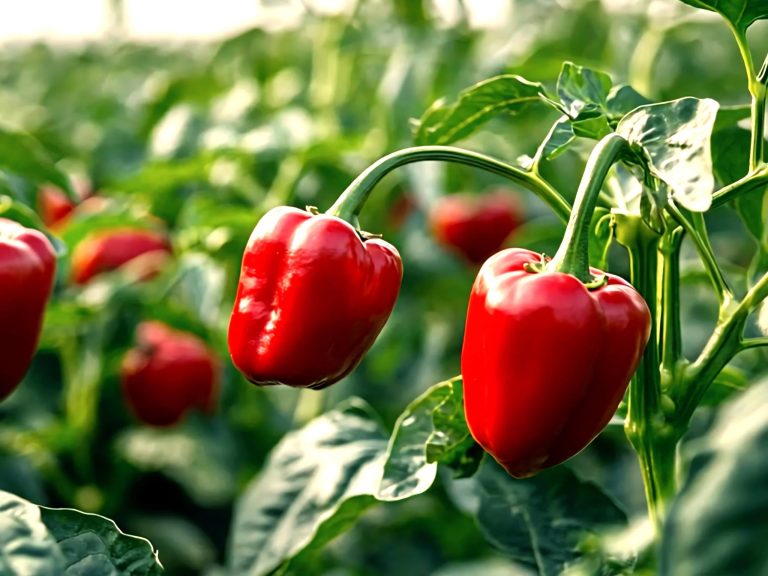
Paprika is a ground spice made from dried red peppers, mainly from Capsicum annuum varieties.
It can be categorized into:
- Sweet paprika (mild, low heat)
- Hot paprika (higher capsaicin content)
- Smoked paprika (smoked drying process)
Sweet paprika is the most widely produced and commonly used type globally.
Production process typically includes:
- Selecting mature red peppers
- Removing seeds and inner membranes (reduces heat)
- Drying (air drying or controlled low-temperature drying)
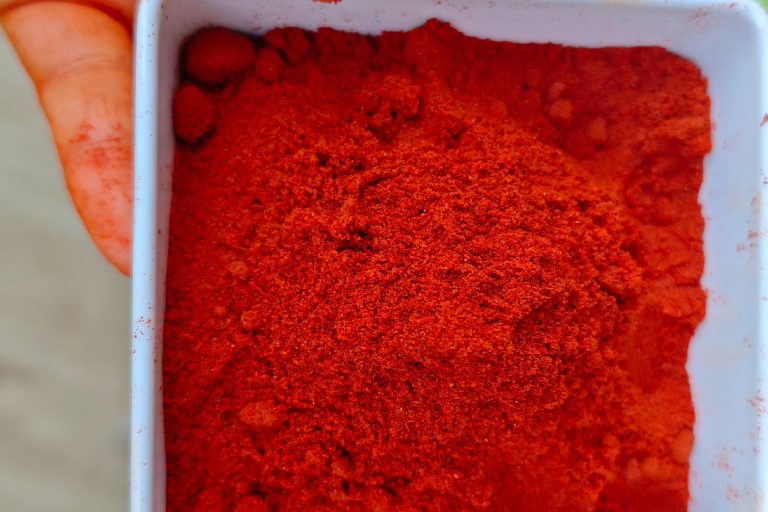
- Grinding into مسحوق
Smoked paprika (such as Pimentón de la Vera) uses oak wood smoking, which creates a distinct smoky aroma.
Typical Industrial Specifications (B2B Reality)
Although products may share the same label, industrial paprika can vary significantly in specification.
| المعلمة | Typical Range |
|---|---|
| قيمة اللون ASTA | 80–220 ASTA |
| الرطوبة | ≤11% |
| Mesh size | 40–80 mesh |
| وحدات سكوفيل للحرارة (SHU) | 0–500 |
| Total plate count | <100,000 cfu/g |
| السالمونيلا | سلبي |
| الأفلاتوكسين | Controlled per destination standards |
For food manufacturers, specification consistency is usually more important than product naming.
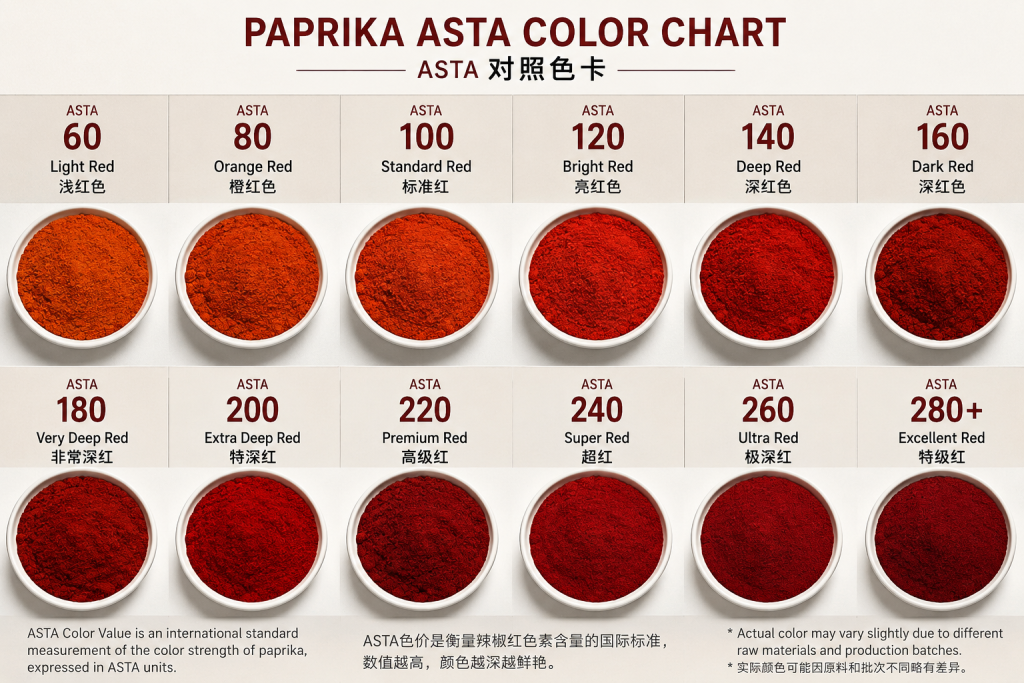
Paprika Color Grades (ASTA Value)
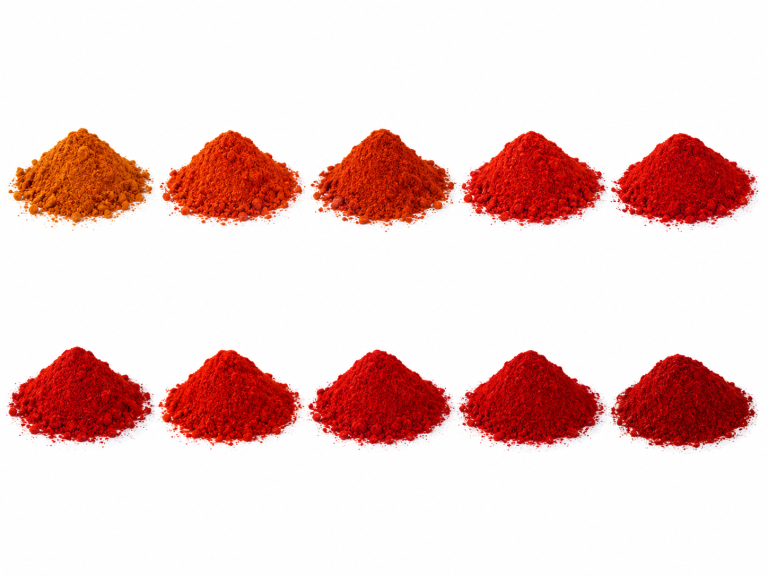
Color strength is one of the most important quality indicators in paprika powder.
| الصف | قيمة ASTA | Typical Application |
|---|---|---|
| Economy | 80–100 | Basic seasoning blends |
| قياسي | 100–140 | Sauces and processed foods |
| Premium | 140–180 | Meat products, snacks |
| High Color | 180–220 | Natural coloring applications |
Higher ASTA values generally provide stronger red color intensity, but stability also depends on storage and processing conditions.
Real Supply Chain Reality
Pepper Variety Matters
Paprika quality depends heavily on raw material selection. Different Capsicum annuum cultivars can produce very different flavor and color profiles.
Seed and Membrane Removal
Most heat in peppers comes from seeds and inner membranes. Their removal reduces pungency and creates a milder product.
Drying Method Impacts Flavor
- Air drying: preserves natural color and aroma
- Low-temperature drying: better color retention
- Smoking: creates smoked paprika profile
Supplier Variability
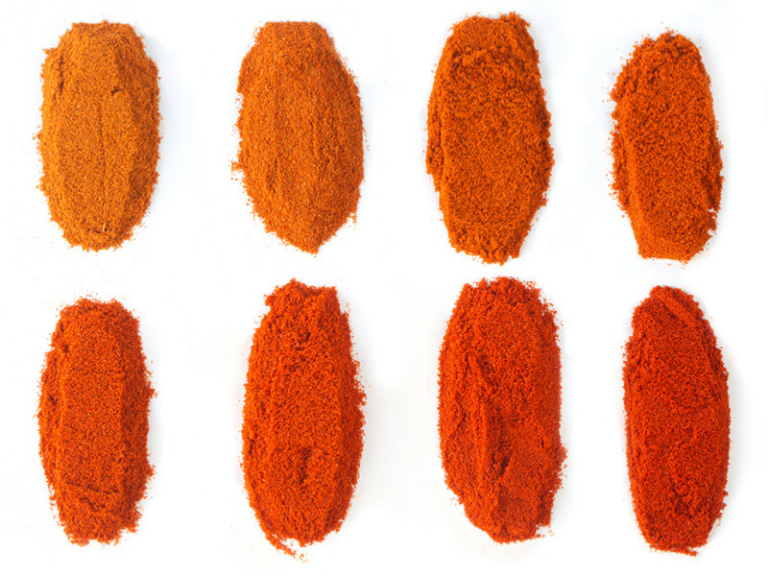
Two products labeled “sweet paprika” can still differ significantly in:
- شدة اللون
- Mild heat perception
- Aroma strength
- أداء التطبيق
A Common Situation We Encounter
One frequent issue in seasoning manufacturing is unexpected formulation change after switching suppliers.
For example, two paprika samples labeled “sweet paprika” may both meet specification sheets, yet one may measure 100 ASTA while another reaches 160 ASTA.
In finished products such as sausages or seasoning blends, this difference can significantly affect color and sensory perception.
This is why experienced buyers rely more on specification data and application testing than on product names alone.
Where QA Teams Often Get Misled
Common misunderstandings include:
- “Sweet paprika means zero heat”
- “All paprika has the same color strength”
- “Country of origin determines quality”
- “Certification guarantees consistency”
In reality, certifications confirm compliance systems, but they do not fully reflect sensory performance or batch consistency.
What Buyers Should Check
Before sourcing paprika or sweet paprika, professional buyers typically evaluate:
- Lot-specific COA (ASTA, moisture, microbiology)
- Raw material origin and pepper varieties
- Seed removal process
- Drying and sterilization method
- Steam sterilization availability
- Salmonella control system
- Aflatoxin testing compliance
- Cross-contamination risks (smoked vs non-smoked lines)
- الاتساق بين الدُفعات
Global Sourcing Reality
الصين
China is a major global supplier of paprika powder with strong الإنتاج capacity and competitive pricing.
Many processors can supply high-ASTA paprika and customized specifications for food manufacturers.
However, quality consistency can vary between suppliers depending on raw material sourcing and processing controls.
For buyers, transparency and lot-level data are more important than origin alone.
إسبانيا
Spain is globally known for smoked paprika (Pimentón de la Vera), produced using traditional oak wood smoking methods.
It is best suited for applications requiring authentic smoky flavor, though cost is typically higher.
المجر
Hungary has a long tradition of paprika production and offers refined grading systems and rich flavor profiles.
It is often positioned in premium and specialty spice markets.
الهند
India offers competitive pricing and large-scale pepper production.
However, variation in pungency and color can be higher, requiring stricter specification control and batch testing.
Key Buyer Mistakes
- Treating paprika and sweet paprika as always different products
- Assuming “sweet” means sugary taste
- Relying only on labeling instead of specifications
- Assuming certification guarantees sensory consistency
- Ignoring processing differences between suppliers
الأسئلة الشائعة
Is paprika the same as sweet paprika?
In most Western culinary usage, yes. Paprika usually refers to sweet paprika unless otherwise specified.
Does sweet paprika taste sweet?
No. “Sweet” refers to mild flavor, not sugar content.
Can two sweet paprika products taste different?
Yes. Differences in raw materials, drying methods, and ASTA color can significantly affect flavor and appearance.
Is smoked paprika the same as sweet paprika?
No. Smoked paprika is produced through a smoking process, typically using oak wood, creating a distinct smoky flavor.
Does origin determine quality?
Origin influences style, but quality depends more on processing control and supplier consistency.
Why is ASTA important?
ASTA color value indicates red color intensity, which is critical for visual performance in food applications.
Final Takeaway
For most consumers and food manufacturers, paprika and sweet paprika refer to the same mild variety of ground red pepper.
The term “sweet” does not indicate sugar content. It simply distinguishes mild paprika from hot or smoked variants.
From a sourcing perspective, the label alone does not guarantee performance consistency. Factors such as pepper variety, processing method, ASTA color value, and quality control systems have a far greater impact.
بعبارة أخرى:
Paprika is the category, and sweet paprika is its most common form.
For professional buyers, understanding the production process is often more important than relying on terminology alone.