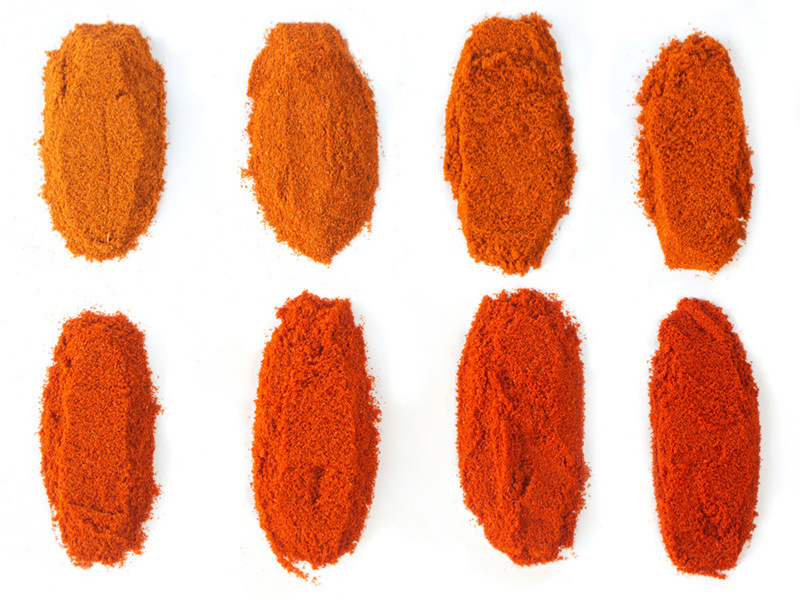
Bulk ASTA 40 Paprika Powder: Wholesale Industrial Supply & Specifications
PaprikaBulk.com is an audited, vertically integrated China manufacturer and global wholesale exporter of Industrial-grade ASTA 40 Paprika Powder. Engineered precisely for high-volume commercial supply, our sweet (non-pungent) capsicum ingredient delivers an optimized cost-to-benefit matrix for large-scale food manufacturing, dry-mix compound seasonings, and industrial food ingredient distribution networks. Operating with an annual processing capacity exceeding 5,000 Metric Tons, our facility provides verified supply security, flexible minimum order quantities (MOQs starting at 1 Metric Ton), and reliable maritime logistics integration. Every commercial shipment is backed by a batch-specific Certificate of Analysis (COA) to ensure complete regulatory compliance.
Commercial Product Overview & Supply Chain Matrix
Sourcing & Cost-to-Performance Calibration
In high-volume consumer goods (FMCG) and industrial seasoning formulation, balancing raw material expenses with functional performance is a critical operational mandate. Our ASTA 40 Paprika Powder is specifically milled for application environments where maximizing manufacturing margins is vital and dark red, high-intensity surface coloration is structurally secondary. At a standardized color strength window of 40–55 ASTA, this wholesale grade delivers natural capsicum vegetable solids and a highly subtle, gentle flavor profile (<100 SHU). This parameters allow corporate R&D managers to establish a stable, highly cost-effective botanical base without altering the primary visual attributes or base flavor balances of the finished consumer food matrix.
Supply Security & Variance Control
As an integrated paprika manufacturer, PaprikaBulk.com addresses the global food supply chain’s primary vulnerability: natural agricultural raw material drift. Because capsicum crops are inherently subject to seasonal crop year, regional climate, and soil fluctuations, we enforce vertical integration over the entire production cycle. Our processing workflow controls everything from localized non-GMO seed selection and audited contract farming zone harvesting to hot-air convection dehydration and multi-stage roller milling. By managing the supply chain from field to factory gate, we smooth out natural carotenoid variance, enabling international purchasing departments to secure predictable physical and chemical parameters across high-volume annual contracts.
Automated Processing Adaptability
Our powder undergoes specialized mechanical refining to meet the rigid handling tolerances of modern, automated processing lines. Through automated high-velocity air-sieving, we achieve a highly uniform 40–60 mesh particle size distribution. This specific particle geometry optimizes the surface-area-to-mass ratio, effectively preventing electrostatic clumping, compaction, and bridge-forming inside automated pneumatic conveying systems and dry-dosing hoppers under standard factory humidity levels. Furthermore, the natural capsanthin and capsorubin pigments within our raw pods demonstrate excellent thermal stability under typical food processing boundaries. The powder retains its baseline warm orange-red undertones safely through twin-screw cooking extrusion, flash frying, and retort pasteurization cycles, serving as an exceptionally uniform carrier matrix for custom flavor houses to load with oleoresins or essential oils.
Technical Specifications: Industrial Paprika Powder ASTA 40
| Parameter | Industrial Specification Matrix | Verification Method |
| Product Grade Name | Industrial Paprika Powder ASTA 40 | Visual / Organoleptic |
| Primary Color Metric | 40 – 55 ASTA Color Units (Tolerance: ±5) | Spectrophotometric (ASTA Method 20.1) |
| Secondary Technical Indicator | Non-pungent < 100 Scoville Heat Units / SHU) | High-Performance Liquid Chromatography (HPLC) |
| Color Profile | Consistent light brownish-red to warm orange-red | Colorimeter (L*, a*, b* values) |
| Moisture Content | ≤11.0% | Vacuum Oven Drying (2 hours at 105°C) |
| Water Activity ($a_w$) | Target ≤0.60 | Chilled Mirror Dew Point |
| Particle Size Distribution | Minimum 95% passing through 40–60 mesh screens | Mechanical Sieve Shaker / Ro-Tap Testing |
| Foreign Matter & Ash | Completely Absent / Total Ash ≤ 8.5% | Physical Inspection / Magnetic / Incineration |
| Total Heavy Metals (as Pb) | ≤10.0 ppm | ICP-MS |
| Lead (Pb) & Arsenic (As) | Pb ≤ 2.0 ppm / As ≤ 1.0 ppm | ICP-MS |
| Mycotoxins / Contaminants | Aflatoxin ≤ 10.0 ppb, Ochratoxin A ≤ 20.0 ppb | LC-MS/MS (Compliant with EU & FDA mandates) |
| Total Plate Count (TPC) | ≤ 100,000 cfu/g | AOAC / ISO Standard |
| Yeast & Mold | ≤ 500 cfu/g | AOAC / ISO Standard |
| E. coli & Salmonella | Negative in 1g (E. coli) / Negative in 25g (Salmonella) | AOAC / ISO Standard |
| Sterilization / Decontamination | Continuous High-Temperature Short-Time (HTST) Steam | Process Log PLC Verified |
| Global Plant Certifications | BRCGS (Grade A), HACCP, ISO 22000, Kosher, Halal | Third-Party Audited Certificates On File |
Key Technical Features & Manufacturing Benefits
Cost-to-Benefit Optimization: Delivers maximum purchasing efficiency as our most budget-friendly wholesale ingredient, protecting manufacturer margins in applications where premium color intensity is unnecessary.
Anti-Caking Flowability & Dosing Efficiency: Milled to a uniform 40–60 mesh profile to ensure free-flowing characteristics, eliminating machine downtime caused by clogging or bridge-forming in automated industrial feeders.
Dissolution & Carrier Matrix Performance: Features an optimized surface geometry that serves as an excellent carrier, comfortably absorbing liquid oleoresins, essential oils, and flavor extracts without losing dry powder fluidity.
Thermal Degradation Resilience: The natural carotenoid profile resists rapid thermal breakdown, ensuring background color profiles survive twin-screw pet food extrusion, hot-fill packaging, and frying lines.
HPLC-Verified Pungency Control: Rigorously tested to guarantee capsaicinoid levels remain below 100 SHU, eliminating the risk of flavor profile distortion or cross-contamination in delicate sweet seasoning mixes.
Validated Microbiological Reduction: Treated via a continuous HTST dry-steam pasteurization loop, yielding reliable microbial counts that easily clear stringent EU and FDA import safety compliance checks.
Hermetic Multi-Wall Barrier Protection: Packed in a heavy-duty multi-wall kraft outer shell with a heat-sealed PE inner liner to halt ambient moisture ingress and slow oxidation during long-distance maritime transport.
End-to-End Batch Traceability: Monitored by an automated lot-numbering protocol that links every delivered 20 kg bag back to our audited processing lines and direct contract agricultural fields in China.
Industrial Applications & Formulations
Mass-Market Dry Mixes & Instant Noodle Seasoning Packets
In high-volume FMCG processing, the formulation of instant noodle seasoning packets, dehydrated soup bases, and commercial bouillon cubes demands strict cost control and consistent bulk density. Our ASTA 40 Paprika Powder is a preferred plant-based matrix for industrial seasoning blenders. It functions as a clean-label texturizer that evenly distributes fine sugars, salts, MSG, and yeast extracts. Because secondary oleoresins or synthetic colorants typically drive the primary target visual identity in these products, ASTA 40 provides the required capsicum vegetable structure and gentle aroma without inflating raw material costs.
Industrial Base Matrix for Oleoresin Intermediates
Custom flavor houses and bulk spice extractors utilize our ASTA 40 powder as a high-surface-area functional carrier for high-potency spice concentrates. The sieved, non-oily vegetable structure binds uniformly with liquid paprika oleoresins or oil-soluble smoke extracts. By leveraging ASTA 40 as the dry base powder, R&D labs can accurately standardize the final color values, capsaicin heat metrics, and bulk density of commercial rubs, preventing oil separation during secondary industrial mixing.
Commercial Breading, Batters, and Flour Blends
For large-scale poultry, seafood, and plant-based protein processing facilities manufacturing breaded nuggets, tenders, and patties, ASTA 40 integrates smoothly into automated coating systems. When blended into dry flour dredging lines or liquid batters, it ensures a warm, subtle golden-brown undertone upon par-frying or industrial baking. Its precise mesh sizing prevents clumping inside high-humidity processing environments, supporting a uniform surface coating and consistent adhesion across the food substrate.
Large-Scale Pet Food & Aquaculture Feed Formulations
In the commercial aquaculture and pet food sectors, natural plant particulates are introduced to adjust visual texture consistency and provide stable botanical fibers. Our ASTA 40 grade offers an accessible, fully traceable source of stable Capsicum annuum carotenoids. The organic matrix withstands the extreme mechanical shear, pressure, and high thermal limits of industrial twin-screw feed extruders, ensuring that finished kibbles or feed pellets retain a uniform appearance without spotty surface defects or heat-induced browning.
Understanding ASTA Value: Sourcing Guidance
The acronym ASTA stands for the American Spice Trade Association, which established the definitive analytical benchmark used by the global spice trade to quantify extractable color intensity. Unlike subjective human visual inspection, which can be distorted by lighting variables and particle sizes, the ASTA value is derived mathematically via standardized UV-Vis spectrophotometric analysis at a fixed wavelength of 460 nm (ASTA Official Method 20.1).
ASTA Paprika Color Grades & Application Segments
ASTA 40–55 (DINWEYS)
→ Economy Base Grade
→ Industrial carriers, bulk blends
→ Cost-efficient coloring for large-volume formulations
ASTA 80–120
→ Commercial Grade
→ Mainstream processing & foodservice applications
→ Balanced color performance and cost efficiency
ASTA 140–180
→ Premium Grade
→ Snacks, export-quality products, clean-label positioning
→ Vibrant color with improved intensity and consistency
ASTA 200–240
→ Ultra-Premium Grade
→ High-end coloring solutions
→ Intense pigmentation for specialty products, snack glazes, and refined applications
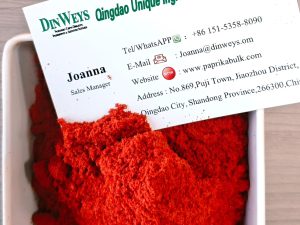
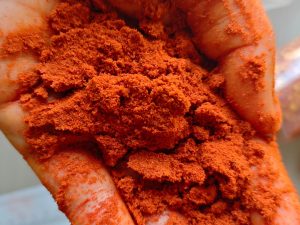
An ASTA 40 rating designates our entry-level, economy-driven color profile. It exhibits a subtle, warm red-orange to light brownish-red appearance, acting primarily as a functional carrier or formulation baseline rather than an intense natural dye.
Sourcing Guidance for Industrial Purchasing Managers:
When to Stay with ASTA 40: Maintain procurement of this grade if your application is purely cost-driven, where paprika functions as an analytical background carrier or filler matrix within highly processed systems (bulk dry seasoning bases, par-baked flour coaters, animal feeds) and primary visual impact is handled by secondary extract injections or synthetic color additives.
When to Upgrade to ASTA 80-120: Step up to our mid-tier commercial grades if your application requires immediate, recognizable surface red coloration where the paprika must act as a multi-functional component providing both color intensity and flavor, such as snack seasonings or sausage formulations.
When to Upgrade to ASTA 140+: Transition to our premium specifications if you are formulating clean-label retail items (such as high-end gourmet sauces or artisan marinades) where the powder must serve as the primary, high-intensity natural coloring agent, replacing synthetic red dyes completely.
Industrial Manufacturing Process & Refining Timeline
Paprika Processing Workflow (Industrial Standard)
Contract Farm Selection
→ Sourcing from qualified, traceable cultivation partners with controlled agronomic practices
Mechanical Sorting & Magnetic Cleaning
→ Removal of foreign matter, stones, metal impurities, and defective raw material
Low-Temperature Convection Dehydration
→ Gentle drying under controlled airflow to preserve color compounds and volatile quality
Water-Cooled Roller Milling (<60°C)
→ Low-heat grinding system to prevent pigment degradation and maintain ASTA color integrity
Pneumatic Air Classification (40–60 Mesh)
→ Precision particle sizing for uniform fineness and consistent dispersibility
Validated HTST Steam Sterilization
→ High-Temperature Short-Time microbial reduction ensuring food safety compliance
Automated Sealed Packaging
→ Oxygen-controlled, moisture-protected packaging for extended shelf life and export stability
Contract Farm Sourcing: High-yield Capsicum annuum varieties are harvested directly from our managed agricultural contract zones across China. Material selection is bound by strict parameters, ensuring minimal natural pungency (<100 SHU) and clear compliance with trace pesticide limits.
Mechanical Sorting & Cleaning: Upon factory arrival, pods pass through automated air-blowing loops, high-pressure drum washers, and heavy-duty magnetic separators to strip away field soil, stones, foliage, and metallic contaminants.
Convection Dehydration: Clean pods enter multi-stage stainless steel belt dryers. Moisture levels are systematically forced down to safe thresholds (≤ 11.0%) using low-temperature hot-air convection, preventing surface scorching and protecting the delicate capsorubin pigment chains.
Water-Cooled Roller Milling: Dried materials move into specialized, water-cooled roller and hammer mills. Internal processing temperatures are kept strictly below 60°C to prevent friction-induced heating, preserving the natural volatile oils and shielding the natural carotenoid payload from heat browning.
Pneumatic Air Classification: The ground powder is directed through high-velocity pneumatic separators and automated industrial sieves to isolate a uniform 40–60 mesh profile. Oversized flakes are automatically routed back to the milling loop to eliminate density fluctuations.
Validated HTST Steam Sterilization: The sieved powder passes through a continuous High-Temperature Short-Time (HTST) dry-steam pasteurization loop. This reduces microbial loads to strict international compliance standards while preserving color stability. The powder then clears a final rare-earth magnetic field before entering automated holding bins.
Automated Sealed Packaging: The validated ASTA 40 powder is packed into 20 kg multi-wall food-grade kraft paper bags lined with integrated, heavy-duty PE inner barriers. Bags are immediately hermetically sealed to block out humidity, oxygen, and UV degradation.
Quality Control & Analytical Laboratory Auditing
At PaprikaBulk.com, operating as an established paprika manufacturer means enforcing rigorous, science-backed safety checks across every batch. Our centralized analytical laboratory performs detailed quality assurance steps before validating any shipment for export:
Spectrophotometric ASTA Verification: Every milling lot is verified via a calibrated UV-Vis spectrophotometer at 460 nm (ASTA Method 20.1) to guarantee the final color value sits securely inside the 40 to 55 specification window.
HPLC Capsaicinoid Assay: High-Performance Liquid Chromatography testing confirms that pungency levels remain strictly under 100 SHU, eliminating the risk of unexpected heat profile cross-contamination.
Moisture & Water Activity Monitoring: Constant vacuum-oven drying checks keep moisture ≤ 11.0% and water activity target ≤ 0.60, preventing product caking and locking out microbial reactivation during maritime transit.
Microbiological Assay Compliance: Multi-point testing for TPC, Yeast & Mold, E. coli, and Salmonella is conducted via standardized AOAC/ISO methodologies to ensure clean compliance with global health codes.
Heavy Metal & Contaminant Screening: Utilizing ICP-MS and LC-MS/MS machinery, we screen every batch for trace heavy metals (Lead, Arsenic, Cadmium) and mycotoxins (Aflatoxin, Ochratoxin A) to meet or exceed European and FDA threshold limits.
Lot-Traceability Indexing: Every single pallet is marked with an automated barcode that traces the finished 20 kg bags directly back through the specific milling log, processing date, and agricultural field of origin.
Export, Logistics & Container Load Performance
Packaging Architecture
Our standard export packaging consists of an ultra-tough, 20 kg multi-wall food-grade kraft paper bag. The interior features an integrated, high-barrier polyethylene (PE) inner liner that provides robust resistance against ambient humidity, moisture ingress, oxygen exposure, and volatile oil migration during ocean transit.
Container Loading Performance
We optimize shipping efficiencies depending on your destination port and warehouse infrastructure:
20ft FCL (Full Container Load) Volumetric Yield: For loose, unpalletized configurations optimized for maximum payload density, we load between 15.0 and 17.0 Metric Tons per container. For palletized delivery, the configuration accommodates 12.0 to 14.0 Metric Tons, thoroughly shrink-wrapped on secure wooden/plastic pallets.
40ft FCL Volumetric Yield: Accommodates between 25.0 and 27.0 Metric Tons, subject to regional road weight constraints at the destination country.
Documentation & Customs Support
Every shipment moves alongside a complete, professional B2B documentation package to ensure rapid customs clearance:
Clean Shipped on Board Bill of Lading (B/L)
Commercial Invoice & Comprehensive Packing List
Certificate of Analysis (COA) cross-referenced to specific bag lot numbers
Official Phytosanitary Certificate issued by customs authorities
Certificate of Origin (Form A / Form E / CO depending on trade zones)
Why Partner with PaprikaBulk.com as Your Paprika Powder Supplier
Direct Factory Manufacturer Pricing: By bypassing third-party trading intermediaries, we provide direct tier-one wholesale pricing that optimizes your manufacturing spend and increases your bottom-line margins.
Advanced Multi-Stage Variance Mitigation: Our automated, water-cooled processing infrastructure allows us to blend and mill agricultural crops with high accuracy, ensuring ASTA color values and moisture contents remain consistent across standard seasonal adjustments.
Global Compliance Framework: Our manufacturing plant maintains active, third-party audited certifications with BRCGS (Grade A), HACCP, ISO 22000, Kosher, and Halal, drastically reducing vendor onboarding friction for international compliance officers.
Agile Technical & R&D Support: Our in-house food scientists and laboratory technicians provide rapid support for custom particle mesh sizing adjustments, technical documentation matching, and regulatory compliance paperwork.
Scalable Bulk Contractual Capacity: With a massive annual capacity processing footprint, we can comfortably secure high-volume container-load contracts, ensuring your production lines never experience material stockouts.
Technical FAQ: Bulk Paprika Powder Procurement
What separates ASTA 40 from higher ASTA 80 commercial powders?
ASTA 40 is classified as an economy-driven grade engineered for cost-to-performance optimization. It functions primarily as a functional botanical carrier or background matrix component. In contrast, ASTA 80 contains a higher concentration of natural carotenoid pigments, providing a more vibrant red-orange color profile suitable for direct surface seasonings and coatings.
Can ASTA 40 Paprika Powder comfortably absorb secondary oleoresins?
Yes. Thanks to its uniform mechanical grinding and sieved 40–60 mesh particle structure, ASTA 40 possesses an excellent surface-area-to-mass ratio. It serves as a highly compatible carrier matrix that absorbs liquid oleoresins, essential oils, and oil-soluble flavors evenly without losing dry powder flowability.
What steps do you take to guarantee a 24-month shelf life stability?
We dehydrate our pods to a strict moisture threshold ($\le 11.0\%$) and a target water activity of $\le 0.60$ to stop microbial activity. The freshly ground powder is then immediately packed in multi-wall kraft bags with high-barrier PE liners to eliminate moisture ingress, slow oxidation, and preserve color stability during storage.
Can ASTA 40 Paprika Powder withstand high-heat extrusion?
Yes. The natural capsanthin and capsorubin pigments found in our China-origin pods demonstrate excellent thermal stability under standard industrial food processing limits. It safely maintains its baseline warm background hues through industrial pet food or snack extrusion without experiencing severe heat-induced degradation.
Is this product treated with irradiation or chemicals?
No. Our default decontamination protocol uses a validated continuous High-Temperature Short-Time (HTST) dry-steam sterilization system. This process significantly reduces microbiological counts to clear international import mandates cleanly, providing a clean-label ingredient option free from chemical residues.
Can we obtain a physical laboratory sample before confirming a container order?
We welcome technical evaluations by corporate procurement and QA managers. Contact our commercial sales division to request an industrial evaluation sample (typically 200g–500g), which will be dispatched via express courier alongside its corresponding technical data sheet and batch-specific Certificate of Analysis (COA).
Secure Your Industrial Bulk Supply Chain Today
Streamline your ingredient procurement by partnering directly with an experienced, BRCGS-certified paprika manufacturer. The commercial sales division at PaprikaBulk.com is fully equipped to support your corporate supply chain with transparent tier-one wholesale pricing, rigorous quality control logs, and guaranteed annual volume contract fulfillment.
Request Specification Sheets & Batch COA Now
Use our corporate B2B inquiry channels to submit your request today:
Request an Industrial Evaluation Sample for your internal R&D laboratory testing.
Request a Third-Party Plant Audit Record or complete technical Specification Sheets.
Request a Customized Wholesale Quote based on your target annual volume or multi-container contract shipping schedule.
Contact Our Global Export Office: Fill out our commercial inquiry form today to receive a comprehensive, tailored B2B quote within 24 business hours. Let us optimize your formulation costs while securing your bulk ingredient supply chain.